SacyrNewsSacyr Water wins award in Australia for innovative solution at Binningup Desalination Plant
Share:
Sacyr Water wins award in Australia for innovative solution at Binningup Desalination Plant
A new approach that makes the plant’s cartridge filters last six times longer, while reducing waste and maintenance, has won a Western Australian Water Award.
17/11/2026
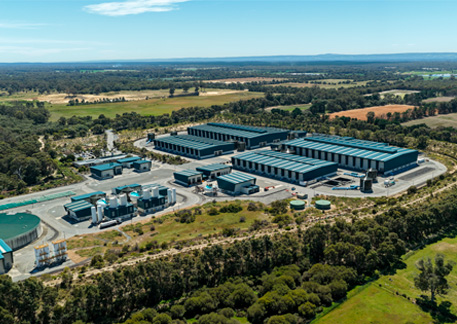
Sacyr Water has won the “Innovation for Sustainable Water and Environmental Outcomes” award at the 2026 Western Australian Water Awards for a solution it developed at the Southern Seawater Desalination Plant, which it operates in Binningup.
The solution lets the plant clean and reuse its cartridge filters on site instead of discarding them after a single use, as is standard practice. Through a chemical cleaning process that uses the plant’s existing infrastructure, the filters now last an average of 167 days, up from 27.
The volume of water each cartridge filters has also jumped, from an average of 556,000 m³ to 2.7 million m³. The approach reduces material use and waste, cuts manual handling and maintenance work, and increases plant availability.
The initiative is a practical example of the circular economy in water treatment and offers a template that other desalination plants could follow.
The winners will now represent Western Australia at the Australian Water Awards, which will take place in Sydney in 2027.
Binningup desalination plant
The Southern Seawater desalination plant in Binningup can produce 305,000 m³ of drinking water a day, meeting more than 34% of Perth’s water demand. It is the second-largest desalination plant in Australia by output and the seventh largest in the world. It is also the largest anywhere to use ultrafiltration as a pre-treatment, a technology that has made it an industry benchmark.
The plant recently reached a milestone, producing 103.3 gigalitres (GL) in a single year and exceeding its design capacity of 100 GL.
The plant was built by a consortium led by Sacyr Water. Its first phase began operating in 2011, followed by the second in 2013.
Info:The document preview may not show all pages. Download it to see the full document.
Info:The document preview may not show all pages. Download it to see the full document.
0 Folders
3 Documents
Our latest results
Sacyr's results demonstrate the soundness of the group's strategy, focused on the concession's activity.
Resultados 9M 2026
SacyrNewsA Restoration Miracle in Sierra Espuña (Murcia)
Share:
A Restoration Miracle in Sierra Espuña (Murcia)
Many of the ancient forests we enjoy today exist thanks to humanity's stubborn determination to recover woodland lost over the centuries.
13/11/2026
Jesús Alcanda Vergara
Sacyr Energy
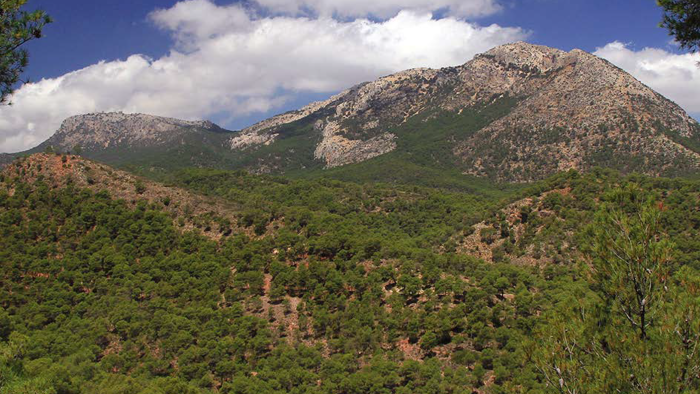
One of Spain's largest forest restoration projects, if not the largest, has a story worth telling. It took place on the edge of the desert, in the arid lands of Murcia, and is known as the "Hydrological and Forest Restoration of Sierra Espuña."
Back in the third quarter of the 19th century, Sierra Espuña was an utterly desolate landscape.
First, in 1748, the Spanish Royal Navy seized the timber rights to its forests on the pretext of rebuilding the country's naval power. The local population lost its communal use of the land, and the forests became a target for speculation.
Later came the great sell-offs of municipal land (the desamortizaciones) to shrewd profiteers. Starting in the 1830s and continuing for the next fifty years, they led to the entire sierra being clear-cut so that the buyers could cash in on their purchases right away.
Finally, what scrub and brush remained was burned for charcoal, the only livelihood left to these plundered villages.
This cycle of exploitation left Sierra Espuña a barren landscape of stony ground and bare earth, home only to lizards, where every now and then a famished goat could be seen searching for blades of grass among the stones and rocks.
With no forests to protect them, the valleys of this part of the Segura River basin were hit by a catastrophic flood in October 1879, which claimed more than 700 lives and left ruin and devastation in its wake.
In 1885, the Congress against the Floods of Levante was held. Out of it came the Segura Basin Reforestation Commission, made up of the engineers José Musso, Ricardo Codorniú and Juan Ángel de Madariaga.
They decided to begin the restoration in Sierra Espuña, in the upper basin of the Guadalentín River, whose valleys had suffered the highest death toll.
Musso, Codorniú and De Madariaga pioneered the colossal task of restoring the forests of Sierra Espuña, which began as soon as the Commission was formed.
First, they surveyed the entire sierra on foot, divided the work areas into perimeters and drew up a restoration project for each one.
Millions of trees (pines, holm oaks, Portuguese oaks, poplars…) were to be sown and planted. The main obstacle was the lack of soil for them to take root in: Espuña was then a stony sierra.
For this reason, more than 900 dry-stone check dams (built without mortar) were erected in the ravines and torrents to hold the soil on the slopes of the sierra. The slopes were also "stitched" with 135 linear km of small walls (40–80 cm) that trapped and built up soil, making planting easier later on.
Carrying out this work required designing and building more than 180 km of forest roads and tracks, backed up by more than 200 km of paths (for moving plants, animals, farm implements and all kinds of tools and equipment across the steep terrain).
Bridges, shelters, forest houses, sheepfolds and stables were built, along with facilities for the draft animals (mules, mares, oxen…) and provisions for their care and feeding. So was housing of every kind for the army of workers that such a colossal undertaking demanded: laborers and farmhands, muleteers, mare keepers, mule drivers, ox herders, sowers, reapers, watchmen, tool keepers and foremen, water carriers, forest guards, engineers and assistants, and so on.
While all this was going on, the nurseries, well distributed across the sierra, successfully turned out between half a million and a million and a half plants a year (less than four growing seasons old, bare-root or potted). Millions of pine nuts and holm oak and Portuguese oak acorns were gathered as well…
A true feat in a climate that averaged barely 400 liters of rain per square meter a year. When it did rain, it did so grudgingly.
In 1891, the reforestation work began, and it soon became clear that shallow tilling for sowing did not work on such poor, sterile soil.
Sowing gave way to planting saplings, bare-root or potted. The ground was first worked with heavy plows reinforced with extra shares to cut deeper, as teams of powerful mules and oxen turned over the rough earth to the loud creaking of their yokes.
The days were endless. When they finally drew to a close and the sun spilled across the horizon, everyone headed back to the camps and shelters, amid hardship and deprivation, with weariness in their eyes and bread soup for supper.
Long lines of mares, mules and oxen came back with them in silence, wrapped in a cloud of steam and flanked by their equally silent muleteers. All walked at a slow, almost tragic pace, weighed down by weariness and solitude.
The months went by in a blur. By 1924, after years of work, 5,000 hectares of what had once been a sea of sand and thirst had been successfully replanted.
Building on the work done on these slopes and ravines, the engineers who followed expanded the hydrological and forest restoration effort until, by 1945, 17,000 hectares had been replanted.
The stripped sierra is a thing of the past, and today a colossal forest covers the ravines and slopes of Sierra Espuña. It was declared a "Natural Site of National Interest" in 1931 and a "Natural Park" in 1978.
In 1992 it became Sierra Espuña Regional Park, the highest level of protection a natural area can have in the Region of Murcia.
In this century, it has also been added to the Natura 2000 Network as both a Site of Community Importance and a Special Protection Area for Birds.
Its vegetation has become so rich that today the park is home to 915 species of vascular flora, which support 200 species of vertebrate fauna, along with 10 endemic invertebrates: one endemic to the Iberian Peninsula and the rest to southeastern Spain.
In short, it is a true testament to humankind's ability to restore ecosystems laid waste by the mistakes of history. Together with neighboring Sierra de Burete, Espuña forms a gigantic barrier that holds back the advance of the desert in southeastern Spain and protects its fields and villages from floods and flash floods.
The patience sown by the pioneers of this monumental effort taught their successors that, when working with the land, you have to know how to wait and never give up. The miraculous forests of Sierra Espuña are living proof.
SacyrNewsWhen Engineering Is the First Line of Defense Against Fire
Share:
When Engineering Is the First Line of Defense Against Fire
In this article, our colleague Nicolás Araúzo explains that in an industrial plant, fire protection does not begin when a pump, a network of fire hydrants, or a detection system is installed; rather, it is designed from the very beginning of the project.
15/10/2026
Nicolás Araúzo Alemany
Senior HSE Engineer and Fire Protection Systems Specialist
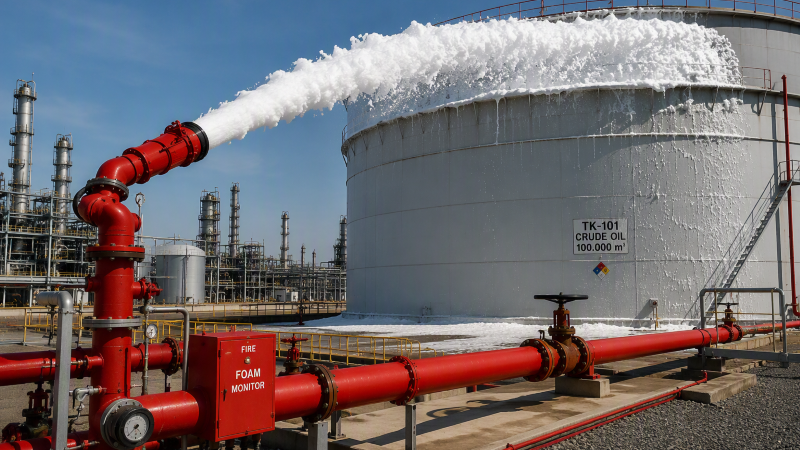
In an industrial plant, fire protection doesn’t begin when a pump, a network of fire hydrants, or a detection system is installed. It begins much earlier, at the design table.
The safety of a facility depends largely on the decisions made in the early stages of a project, when engineers analyze risks, understand the process, and coordinate each element so that it functions as an integrated system.
In sectors such as energy, the chemical industry, or Oil & Gas—where any incident can have significant consequences for people, assets, and operational continuity—having a well-designed fire protection strategy is essential.
Engineering offers a unique advantage: it is the only discipline that has a comprehensive view of the project and detailed knowledge of the process, from operating conditions to the most demanding emergency scenarios.
An effective fire protection system isn’t simply installed—it’s designed from the very beginning of the project.
The key lies in anticipation. Thanks to access to technical information such as process flow diagrams (PFDs and P&IDs), fluid characteristics, and risk analyses, engineering teams can define solutions tailored to the actual needs of each facility. This approach allows vulnerabilities to be identified from the outset and measures to be taken that improve the safety and reliability of the entire system.
Another major strength of engineering is its ability to integrate disciplines. Fire protection systems are closely related to areas such as processes, piping, electrical systems, instrumentation, and civil engineering. When all these disciplines work in a coordinated manner from the earliest stages, interference, subsequent modifications, and costs associated with on-site changes are reduced.
Fire protection cannot be approached as an isolated element. Its success depends on coordination across disciplines and on understanding how each system interacts within the facility.
In addition to improving safety, a rigorous design helps optimize the facility’s entire life cycle. The application of recognized international standards, such as NFPA, along with specialized certifications like FM or VdS, helps reduce failures, minimize unplanned interventions, and facilitate maintenance through the use of standardized equipment. It can also lead to better insurance terms and greater long-term operational resilience.
Experience shows that many of the most costly problems arise when fire protection is not properly incorporated from the design phase. This article describes the case of a facility where, during commissioning, it was discovered that certain critical pieces of equipment had not been included in the protection system. Correcting this issue required resizing key infrastructure and rethinking part of the fire suppression strategy just a few weeks before the plant was scheduled to begin operations.
Designing correctly from the start not only reduces costs; it also protects people and enhances the reliability of facilities throughout their entire service life.
Because, ultimately, fire protection is not merely a matter of regulations or technology. It is a strategic decision that begins with engineering and has an indispensable goal: to ensure the safety of people and infrastructure when they need it most.
SacyrNewsSacyr turns 40 as one of the world’s major concession companies
Share:
Sacyr turns 40 as one of the world’s major concession companies
An international benchmark in transport, social infrastructure and water concessions, the company reaffirms its commitment to sustainable development and long-term value for all its stakeholders
10/11/2026
Sacyr marks its 40th anniversary today. Founded in 1986 as Sociedad Anónima de Caminos y Regadíos, it has grown into a global concessions group delivering transport, social and water infrastructure.
Over these four decades, Sacyr has remained committed to transforming society through projects with a positive social, economic and environmental impact, delivering thousands of projects in more than 20 countries and putting more than 100 public-private partnership (P3) assets into service.
Sacyr’s competitive edge is its ability to win and operate new concessions, backed by a vertically integrated model that creates value at every stage of the chain. As a result, it is the world’s third-largest developer of transport infrastructure, with a concession asset portfolio valued at more than €4.3 billion.
Leaders in infrastructure development
Sacyr Chairman Manuel Manrique said: “These 40 years have been an extraordinary business journey, made possible by thousands of professionals who put their talent at the service of one idea: building outstanding infrastructure that drives progress and improves quality of life.”
“This milestone invites us to look back, but above all to move toward our ambition of leading the development of transport, social and water infrastructure,” Manrique added.
Four decades of infrastructure
Over its history, Sacyr has built more than 7,000 km of roads; 1,100 km of railway lines, including 340 km of high-speed track; 200 km of metro and tram lines; more than 400 km of tunnels; hospitals with more than 10,000 beds; more than one million square metres of airport terminals; 27 km of runways; and more than 100 water treatment plants.
Today, Sacyr Concessions manages more than 4,400 km of motorways worldwide. Its interchanges and airports serve nearly 54 million passengers a year, and it operates hospitals with a combined 4,500 beds.
Sacyr Water produces more than 570 million cubic metres of desalinated water and treats more than 129 million cubic metres of wastewater a year. It supplies water to more than 12 million people in five countries, helping provide access to a resource essential to development and human wellbeing.
30 years in Chile
This year also marks 30 years since Sacyr began operating in Chile, where it has 13 road concessions, five airports and five hospitals (two of them concessions) at various stages of development, plus a water reuse plant, a desalination plant and five integrated water cycle concessions.
Present in 11 of the country’s 16 regions, Sacyr generates more than 5,000 direct jobs and is committed to sustainable development and the wellbeing of communities across the country.
Sacyr’s evolution over these four decades mirrors the transformation of the infrastructure sector, where assets are now seen as essential services requiring design, financing, operation and maintenance over decades to create long-term value.
At 40, Sacyr looks ahead with the ambition of becoming a leader in greenfield transport, social and water infrastructure. It remains committed to projects that improve people’s quality of life and have a positive social, economic and environmental impact on the communities where it works.
Education: : Law Degree from Universidad Complutense de Madrid (CEU San Pablo) and PDG from IESE Business School. Qualified Insurance Mediator - Insurance Broker of the Ministry of Economy (DGSFP). She has specific training in Cybersecurity Governance for the Board of Directors, from the MIT Sloan School of Management and in cyber crisis management and cybersecurity, from the National Cryptology Center.
Experience: Elena Jiménez de Andrade has more than 30 years of experience in business management, strategic consulting and the comprehensive management of corporate, personal and wealth-related risks, with a particular focus on the insurance sector. Her career combines business management with corporate governance, innovation, digital transformation and risk oversight, particularly cyber risks and risks associated with artificial intelligence.
Her experience includes cyber risk mitigation and the design of global strategies for digital asset protection and corporate resilience.
Since 2013, she has been President of the Professional Association of Insurance Intermediaries of Madrid. She was the first woman to preside the General Council of the Spanish Insurance Intermediaries Association, and has served as a director and in senior representative roles in international organisations such as the Pan-American Confederation of Insurance Producers (COPAPROSE), the World Federation of Insurance Intermediaries (WFII) and the European Federation of Insurance Intermediaries (BIPAR).
She is an advisory member in different advisory boards of companies related to the insurance and technology industry.
Date of appointment:
First appointment: May 9, 2019 by co-option and ratified on June 13, 2019.
Last reelection as director: June 15, 2023
Appointment as lead director: December 18, 2023.
So now, what's next?
Celebrating our anniversary also means looking ahead. That’s why we want to thank the people who are at the heart of our projects and who are writing the next chapters of a story that continues to unfold.
To everyone who has made this possible: thank you for these 40 years.
This website uses its own and third-party cookies to improve the user experience and analyze their behavior in order to improve the service offered.
You can consult additional information about the cookies installed on our Cookies policy.
These cookies are exempt from compliance with article 22.2 of the LSSI in accordance with the recommendations indicated by the European authority on privacy and cookies. In accordance with the above and although configuration, acceptance or denial is not possible, the editor of this website offers information about them in an exercise of transparency with the user.
Name: LFR_Session_STATE_*, Provider: Liferay, Purpose: Manages the session as a registered user , Expiration: Session, Type: HTTP
Name: GUEST_LANGUAGE_ID, Provider: Liferay, Purpose: Determines the language with which you access , to show the same in the next session, Expiration: 1 year, Type: HTTP
Name: ANONYMOUS_USER_ID, Provider: Liferay, Purpose: Manages the session as an unregistered user , Expiration: 1 year, Type: HTTP
Name: COOKIE_SUPPORT, Provider: Liferay, Purpose: Identifies that the use of cookies for the operation of the portal, Expiration: 1 year, Type: HTTP
Name: JSessionID, Provider: Liferay, Purpose: Manages login and indicates who is using the site, Expiry: Session, Type: HTTP
Name: SACYRGDPR, Supplier: Sacyr, Purpose: Used to manage the cookie policy , Expiration: Session, Type: HTTP
ANALYTICS
These cookies allow us to count visits and sources of circulation in order to measure and improve the performance of our site. They help us know which pages are the most or least popular, and see how many people visit the site. All the information collected by these cookies is aggregated and, therefore, anonymous.
Name: _ga_<container-id>, Provider: Google, Purpose: Collects data about the number of times a user has visited the website in addition to the dates of the first and most recent visit. Used by Google Analytics, Expiration: 2 years Type: HTTP
Name: _ga, Provider: Google, Purpose: Registers a unique ID that is used to generate statistical data about how the visitor uses the website, Expiration: 2 years Type: HTTP