Las Setas de Sevilla protagonizan el cuarto capítulo de la serie con la que repasmos los proyectos emblemáticos de nuestros 40 años de historia. El recorrido aborda la construcción y la gestión de esta concesión, que ha transformado el entorno de la Plaza de la Encarnación de Sevilla (España).
Inauguradas en 2011, las Setas se han convertido en estos 15 años en un icono internacional de Sevilla. Sus 3.500 lamas de madera dan forma a la mayor estructura de madera del mundo, reconocida internacionalmente por su innovación.
Antonio Belmonte, Mariano Peláez y Leticia Franco, profesionales de Sacyr, relatan el desafío técnico y humano que supuso su construcción y el trabajo que hizo posible este proyecto.
Sus testimonios explican cómo se combinaron la ingeniería avanzada y la arquitectura de vanguardia con la integración en el entorno urbano y social de la ciudad.
El capítulo también aborda el presente y el futuro de la concesión y la gestión de Sacyr Concesiones, 15 años después de su inicio. El complejo reúne museo, mercado de abastos, mirador y centro cultural, y es un punto de encuentro para residentes y visitantes.
- Concesiones
Las Setas de Sevilla, nuestro activo más especial
En 2011 inauguramos una concesión singular, Las Setas de Sevilla, un monumento que ha atraído la mirada de millones de visitantes. En nuestro repaso por obras importantes de los 40 años de Sacyr, Setas se ha ganado un espacio por su complejidad técnica y enorme impacto en la ciudad.
Sacyr mejora su posición en los índices de sostenibilidad S&P global y MSCI ESG
- La compañía se sitúa entre las empresas más sostenibles de su sector en el mundo gracias a la integración de la sostenibilidad en su estrategia.
Sacyr se sitúa entre las empresas más sostenibles de su sector en el mundo, según las últimas evaluaciones realizadas por S&P Global y MSCI, que reconocen el buen desempeño de la compañía y la integración de la sostenibilidad en su estrategia.
La compañía ha obtenido una puntuación de 77 sobre 100 en el Corporate Sustainability Assessment (CSA) de S&P Global, un punto más que en 2025 y un 26% mejor que en su primera evaluación en 2021.
Además, Sacyr ha mejorado su calificación, de A a AA, en MSCI ESG Ratings.
Estos resultados reflejan los avances de la compañía en la integración de la sostenibilidad en su estrategia y su apuesta por generar un impacto positivo a lo largo de toda su cadena de valor.
Mejora de la puntuación
La puntuación obtenida en el CSA de S&P Global sitúa a Sacyr entre las compañías con mejor desempeño de su sector a escala internacional y reconoce la solidez de sus prácticas en ámbitos clave como la ética empresarial, la gestión ambiental, la innovación y la transparencia.
Asimismo, la mejora hasta la categoría AA en MSCI pone de manifiesto la capacidad de Sacyr para gestionar los riesgos y oportunidades más relevantes desde una perspectiva ESG, gracias a un modelo de gobernanza sólido y a políticas, procedimientos y mecanismos de control maduros y eficaces.
Estos reconocimientos avalan la capacidad de la compañía para generar valor sostenible a largo plazo, al integrar la sostenibilidad de manera transversal en su modelo de negocio y convertirla en una palanca para reforzar su resiliencia, competitividad y capacidad de respuesta ante las expectativas de sus grupos de interés.
Con estos resultados, Sacyr reafirma su compromiso con la transparencia y la mejora continua e impulsa un crecimiento sostenible que genere valor compartido para accionistas, clientes, empleados, socios y la sociedad en su conjunto.
Ruta Sacyr Sostenible 2024-2027
Estos hitos respaldan el compromiso de Sacyr en este ámbito y la solidez de su estrategia Ruta Sacyr Sostenible 2024-2027, articulada en torno a cuatro grandes ejes: planeta, personas, prosperidad y gobernanza.
Estos pilares se apoyan, a su vez, en tres palancas transversales: cultura, innovación y finanzas sostenibles. Para cada uno de estos ámbitos, la compañía ha definido objetivos y acciones concretos dirigidos a maximizar el impacto positivo de sus actividades.
Sacyr dispone, además, de un Marco de Financiación Sostenible que abarca las distintas tipologías de financiación sostenible: verde, social y vinculada a la consecución de métricas de sostenibilidad.
La compañía continúa avanzando hacia un modelo empresarial más responsable, con el desarrollo de su estrategia frente al cambio climático, la maximización de su impacto positivo en la sociedad y el objetivo de consolidarse como empleador de referencia.
Sacyr recibe el premio Excelencia en cumplimiento y diversidad en los IX Premios de Diversidad e Inclusión
- Estos galardones reconocen la labor empresarial en la gestión de la diversidad corporativa, el diseño de políticas de equidad e igualdad y las iniciativas para impulsar la inclusión sociolaboral.
- El galardón premia el sistema integral de Sacyr que convierte la diversidad en un eje estratégico de negocio, sostenibilidad y gobernanza.
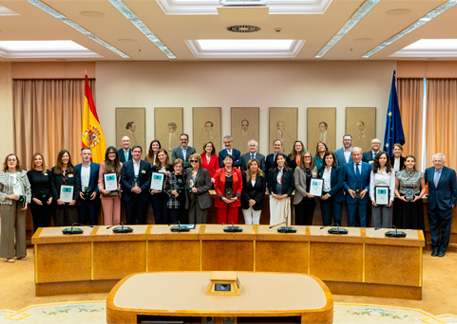
Sacyr ha recibido el Premio Excelencia en Cumplimiento y Diversidad en los IX Premios de Diversidad e Inclusión. Este galardón, promovido por la Fundación Adecco y el Club de Excelencia en Sostenibilidad, reconoce la labor de la compañía en la integración de la estrategia de diversidad en todas las áreas de negocio y en los más de 15 países en los que tiene actividad.
Teresa Manjón, directora de Relaciones Laborales y Diversidad de Sacyr, ha recogido este galardón en un evento celebrado hoy en el Congreso de los Diputados por un sistema integral de gestión de Diversidad, Equidad e Inclusión que supera las obligaciones legales para convertir la diversidad en un eje estratégico de negocio, sostenibilidad y gobernanza.
A través de él, Sacyr impulsa más de 250 indicadores de seguimiento, programas específicos de igualdad, discapacidad, talento sénior, conciliación y liderazgo inclusivo que involucran de forma transversal a toda la organización.
La Fundación Adecco y el Club de Excelencia en Sostenibilidad promueven estos galardones que reconocen a las empresas que movilizan mejor el talento de todas las personas a través del esfuerzo por integrar la diversidad y la inclusión en su estrategia corporativa, impulsando un cambio positivo tanto dentro de las organizaciones como en su entorno social.
“La diversidad nos hace una compañía mejor, más competitiva y preparada para el futuro”, destacó Teresa Manjón al recoger el premio.

Teresa Manjón, directora de Relaciones Laborales y Diversidad de Sacyr.
Enrique Sánchez, presidente de la Fundación Adecco, inauguró el acto de entrega en el que destacó: “Las empresas premiadas han demostrado con proyectos de alto impacto que fortalecen la competitividad empresarial y el desarrollo humano y social”.
También participó en la apertura Juan Alfaro, secretario general del Club de Excelencia en Sostenibilidad, que señaló: “Año tras año comprobamos cómo organizaciones de todos los tamaños avanzan en la integración de estas políticas de forma cada vez más estratégica, generando un impacto positivo tanto en las personas como en los resultados del negocio”.
Jurado
Bajo la presidencia de honor de SS. MM. los Reyes de España, se ha constituido un jurado formado por Mercedes Fernández, presidenta de la Comisión para las Políticas Integrales de la Discapacidad del Congreso de los Diputados; Íñigo Sagardoy, presidente de Sagardoy Abogados; Carmen Alsina, directora de Comunicación, Relaciones Institucionales y Sostenibilidad de la CEOE; Juan Alfaro, secretario general del Club de Excelencia en Sostenibilidad, y Pablo García, miembro del comité operativo de la Alianza #CEOPorLaDiversidad.

- Corporativo
Anuncio convocatoria Resultados 9M 2026
SACYR, S.A., anuncia la convocatoria de la presentación de resultados del Grupo correspondiente a los nueve primeros meses de 2026.

La publicación de los resultados será el martes día 3 de noviembre de 2026 tras el cierre de mercado en CNMV y en nuestra página web.
La presentación de los resultados tendrá lugar al día siguiente, miércoles 4 de noviembre de 2026 a las 12:00h (CET) y podrá ser seguida en tiempo real a través de un audio-webcast en este enlace directo.
El acceso a la redifusión de la presentación de resultados estará disponible directamente en el enlace indicado arriba.