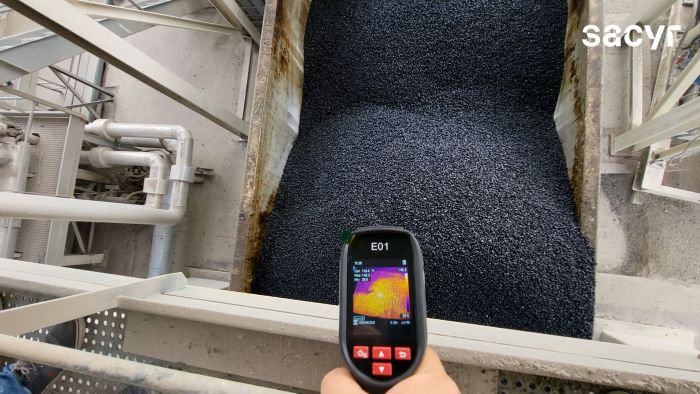
Sacyr Concesiones is putting circular pavement maintenance to the test on the Autovía del Eresma (A-601). Along a one-kilometer stretch, the concessionaire has reused milled asphalt from the existing roadway as feedstock for a new surface course.
The paving works incorporate 30% reclaimed asphalt pavement (RAP) from the highway’s aged wearing course into the new bituminous mix—double the 15% currently recommended by regulations for this type of layer.
A field test with long-term potential
The pilot section, located between kilometer markers 81 and 82 in direction to Segovia, is designed to prove that today’s recycled asphalt technology can increase RAP content in surface mixes without compromising ride quality, durability or overall pavement performance.
“On this pilot section, we are cutting the amount of virgin aggregate needed in the mix,” said Miguel Ángel Moreno, from Sacyr Concesiones’ Pavements Department. “We also reduce material sent to landfill and lower the carbon footprint associated with asphalt production,” he added.
The trial will allow the team to track the mix in service, monitor its long-term behavior and assess whether the approach can be scaled to future maintenance campaigns.
“We want to see how this mix holds up in the field and whether the solution is sustainable, technically viable and cost-effective over time,” said Ángel Delgado, manager of the Autovía del Eresma.

Technology and collaboration drive the pavement trial
The recycled asphalt mix—a BBTM 11B gap-graded surface mix with 30% RAP—was manufactured at Padecasa’s plant in Aldeavieja, Ávila.
The project brings together the Regional Government of Castile and León, Sacyr’s Pavements Department, Sacyr Concesiones’ Innovation team and Padecasa. It builds on a 2024 test section that used 15% RAP, the maximum share currently recommended for this type of wearing course.
The initiative supports circular economy targets and aligns with Castile and León’s regulatory framework, which requires at least 3% of aggregates used in pavement rehabilitation works to come from recycled materials.
With pilots like this, Sacyr continues to test lower-impact road maintenance solutions that conserve natural resources, reduce waste and support more sustainable infrastructure management.