Sacyr Water secures three wastewater treatment plant contracts in Spain for €84 million

  • These projects, located in Madrid, Huelva and La Orotava (Tenerife), serve a population of more than 1.6 million inhabitants.

Sacyr Water has been awarded three new contracts in Spain, totaling €84 million. The contracts include upgrading the Huelva Wastewater Treatment Plant (WWTP), renewing the operation of the La Gavia WWTP in Madrid, and constructing a new WWTP in the Orotava Valley, Tenerife.

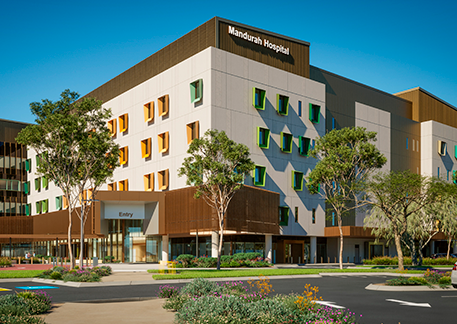
The Regional Government of Andalusia has awarded a joint venture, comprised of Sacyr Ingeniería e Infraestructuras (40%), Sacyr Water (40%), and UC10 (20%), a €36.3 million contract to upgrade and adapt the Huelva WWTP. The project is expected to take 27 months. The plant is designed to serve an estimated population of 180,000.

The contract includes expanding the pumping station, converting existing biological reactors, adding an additional sludge line, and renovating equipment and pipes, among other improvements. It also involves separating the impulsion collector, as well as upgrading the main pumping system and the pipeline that carries wastewater from the pumping station to the WWTP. 

La Gavia

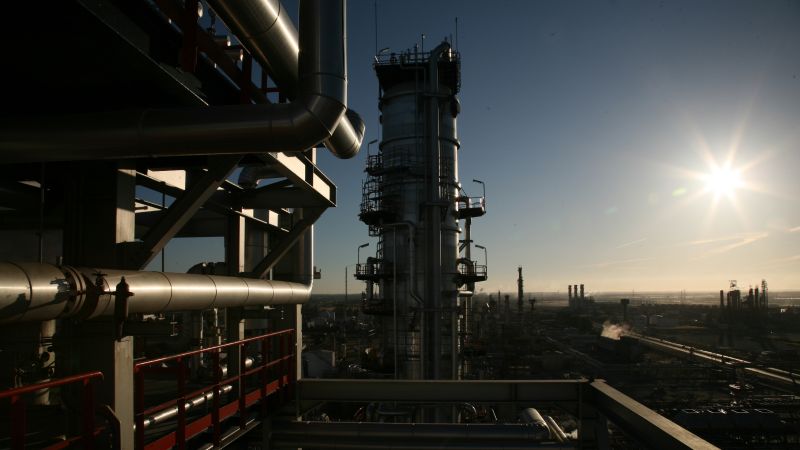
Separately, Canal de Isabel II has awarded Sacyr Water a €30.4 million contract (Lot 2) for the operation and maintenance of the La Gavia WWTP in Madrid over four years. This plant is designed to treat wastewater for a population of more than 1.35 million.

The plant has an average treatment capacity of 2 m3/sec (172,800 m3/day) and processes wastewater from the two La Gavia collectors (Gavia I and Gavia II), as well as excess water from the La China treatment plant (South Collector).

The facility utilizes tertiary treatment to convert all treated water into reclaimed water, allowing for the discharge of high-quality water into the Manzanares River. A portion of this water is reused for irrigating green spaces and street cleaning.

The infrastructure includes facilities that produce green electricity from liquid waste generated by residents. This waste is treated and converted into biogas.

Orotava Valley, Tenerife 

The Tenerife Water Council has awarded a joint venture consisting of Sacyr Ingeniería and Sacyr Water a €17.5 million contract to construct the new Regional WWTP in the Orotava Valley, with a completion timeframe of 37 months. This plant is designed to serve a population of over 100,000.

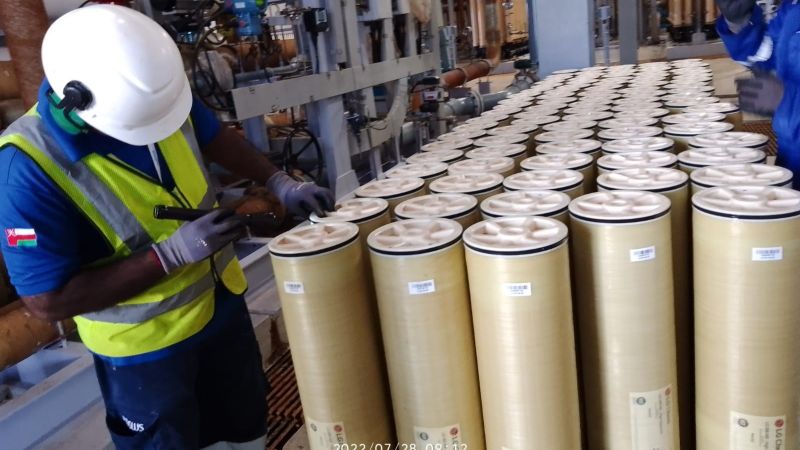
The new WWTP will have a secondary treatment capacity of 10,000 m³/day, employing membrane bioreactor (MBR) technology and sludge treatment. The project includes pre-treatment designed for a flow rate of 20,000 m³/day, ensuring compatibility with future expansions.

About Sacyr Water

Sacyr Water is a leader in desalination and integrated water cycle management. With 30 years of experience, it has become one of the world's top 10 companies in installed capacity and the leading desalination operator in Spain.

In 2025, Sacyr Water was awarded the concession and expansion of the largest wastewater reuse plant in Latin America, located in Antofagasta, Chile. This project will secure the water supply for large-scale mining in the region, eliminate 100% of discharges to the sea, and improve water sustainability in the area.

0 Folders
3 Documents
1 Folder
0 Documents

Sacyr begins construction on new urban highway access to Asunción, Paraguay

  • Paraguay’s President and Minister of Public Works inaugurated the groundbreaking ceremony, where they highlighted project benefits for the country. 
  • The project promises to significantly improve connectivity, reduce travel times, and enhance the quality of life for over a million people traveling to Asunción.


The Rutas del Este consortium (60% Sacyr Concesiones, and 40% Ocho A) has commenced construction of the new urban highway access to Asunción concession in Paraguay, a project poised to improve connectivity between the capital and inland cities. Total investment in the project is estimated at $180 million (€154 million).

Santiago Peña, President of Paraguay, and Claudia Centurión, Minister of Public Works and Communications, officially inaugurated the groundbreaking ceremony. President Peña emphasized: "This project will benefit all of Paraguay by adding two access roads that will alleviate traffic congestion on the main highway, which carries 80% of the country's commerce."

The project consists of a structuring road network, which has relevant works such as the Ypacaraí - Areguá variants and a 3.6-kilometer elevated urban highway, with two divided roads and four lanes and two new connections to route PY02, essential to improve connectivity between the capital and the interior:

  • The first connection, starting at kilometer 41 of Route PY02, will improve accessibility through Ypacaraí, Patiño, Areguá, and Luque.
  • The second connection, beginning at kilometer 43, will enhance accessibility to San Bernardino.

These corridors will be integrated to create a more efficient system for entering and exiting the metropolitan area.

The new road system will serve seven cities: Asunción, Luque, Areguá, Ypacaraí, San Bernardino, Nueva Colombia and Emboscada. 
 

Ruta PY02

Rutas del Este consortium previously undertook the Ruta PY02 widening and expansion project (151 km), a $520 million investment that became operational in 2023. This new section further expands its capacity and enhances its design.

This is one of the most significant road projects in the Eastern Region and the first to be executed as a Public-Private Partnership (PPP) in the country. The road stretches from kilometer 36 in Ypacaraí to kilometer 187 in Caaguazú.

The corridor impacts 11 municipalities across three departments of Paraguay. The concession covers the design, financing, construction, maintenance, and operation of the road for a period of 30 years.
 

Sacyr completes construction of the US-59 highway in Diboll (Texas, United States)

  • This project marks Sacyr’s 10th road infrastructure project completed in the United States, with a total executed investment of $1.2 billion (€1.03 million)

Sacyr has completed the construction of the US-59 highway in Diboll, Texas (USA), with an investment of $146 million (€125 million). This strategic infrastructure is part of the future Interstate 69 corridor.

With this project, Sacyr has now delivered 10 road projects in the United States—two in Texas and eight in Florida—thereby consolidating its presence in the US market with a total executed investment exceeding $1.2 billion (€1.03 billion).

The US-59 project involved the construction of a new 13.2-kilometer highway to improve regional connectivity and enhance traffic flow along one of the state’s main routes. The new highway bypasses the city of Diboll, eliminating local traffic, level crossings and traffic lights, resulting in improved road safety, shorter travel times and smoother traffic flow.

Construction of the new US-59 highway

The main works on this project involved the construction of 28 bridges and the installation of 12,000 meters of concrete barrier. More than 172,000 tons of asphalt pavement were laid.

This is the second project Sacyr has completed for the Texas Department of Transportation (TxDOT).


Growth in the United States

Sacyr started operating in the US market in 2018 and has won 16 projects across the country.

In 2024, Sacyr, as part of a consortium, was awarded its first major transport infrastructure P3 contract in the US: a section of the I-10 highway in Louisiana. This project will require an investment of €3 billion, of which just over €2 billion corresponds to construction.

As part of the objectives set out in its 2024–2027 Strategic Plan, the company will expand its activity in key English-speaking markets, including the United States, Canada, the United Kingdom, Ireland and Australia. 

  • P3 Projects

The Pedemontana-Veneta Toll Road: a strategic asset in Italy

We are improving connections in the Veneto region with a planned investment of 2.6 billion euros

Italy  Pedemontana Veneta

The Pedemontana-Veneta toll road is one of the most important infrastructure projects in Italy. It is also one of the biggest projects in our portfolio there, with a planned investment of 2.6 billion euros. 
The company Superstrada Pedemontana Veneta is in charge of designing, building, financing, running, and maintaining the toll road for a period of 39 years following completion of construction. 
This project involved building 162 km of road. 94 km of the main road that will link 34 municipalities and the industrial area of Vicenza and Treviso. The remaining 68 km are for secondary access roads. This road will also include two tunnels - the Malo tunnel (6 km) and the S. Urbano tunnel (1.5 km) - and eight viaducts. 
The infrastructure guarantees the high demand for mobility in the most industrialized area of the Veneto region, with close to half a million companies and 4.9 million inhabitants. 

2.6

BILLION EUROS

Total investment in the project

162

KILOMETERS

Newly built road

7.5

KILOMETERS

Tunnels 

Sustainable project

The highway’s environmental impact is minimal, given that 70% of the route runs through a trench or tunnel. It presents no visual disruption or noise, nor does it constitute a barrier since it is virtually invisible from preexisting roads, services, canals, and wildlife areas.

The project was designed and built using the latest innovations in safety, technology, and sustainability, including Sacyr’s Iohnic lighting system and sound-absorbing, antiaquaplaning, photocatalytic asphalt (which attracts contaminating particles and, in conjunction with light, oxidizes nitrates and carbonates).

In addition, the colors of the trench walls vary according to municipality, making it easier for drivers to orient themselves. Pedemontana has transparent noise barriers so as not to reduce the visibility or illumination of the platform.

Pedemontana-Veneta (Italy)

Award-winning financing

The Pedemontana-Veneta toll road is part of the European TEN-T network. It is considered a nationally significant strategic asset on account of its location between the existing A4 and A27 toll roads, crossing the Veneto Region and passing through the provinces of Vicenza and Treviso. The construction of this toll road was financed by means of the largest bond issue in Europe for a greenfield project, to the tune of 1.571 billion euros. The issue has been awarded four international prizes.

  • Transport infrastructure
  • Sacyr Concessions
  • Autopistas
  • Italy

Foto de la oficina de Turismo de Villardeciervos

Las falsas promesas que han despoblado nuestras sierras

Jesús Alcanda Vergara, ingeniero forestal en el área de Energía de Sacyr Agua, explica en este artículo cómo las decisiones de ordenación del territorio ha desplazado a la población rural española en los últimos decenios.  

Jesús Alcanda Vergara

Sacyr Energía 


Corría el año 1991 y mi amigo Luis Carlos y yo nos veíamos en el Servicio del Medio Natural de Zamora junto con José Luis Montero de Burgos (jefe del Servicio Nacional de Repoblaciones Forestales del Ministerio de Agricultura durante 20 años) en una reunión con los técnicos de este Servicio, para escuchar las directrices que querían proponer como guía del proyecto de repoblación forestal en 6.000 hectáreas asoladas por un incendio en la Sierra de la Culebra, y cuya redacción se nos había encargado. 

A cada enfoque que este Servicio proponía, Montero de Burgos, avalado por sus decenios de experiencia, advertía de la necesidad de contar con las gentes del lugar y el cuidado de sus usos y labores; y como esta advertencia se repetía y se especificaba para cada ocurrencia de los técnicos. Llegó un momento en que las argumentaciones derivaron hacia los problemas que causaban los pobladores de la Sierra, que ya estaba propuesta como Paisaje Protegido. 

Y tanto se entusiasmaron estos técnicos del Servicio que con asombrosa unanimidad y sin ningún pudor llegaron a la increíble conclusión y al convencimiento absoluto de que lo que sobraba en la Sierra de la Culebra era la gente que vivía en ella.

Estos técnicos dejaron claro que, para hacerse cargo de este espacio natural a proteger, sobraban las gentes que habitaban la Sierra de la Culebra, y que era prioritario para esos funcionarios desalojar en la medida de lo posible a sus pobladores de la Sierra.

Hoy, pasados 35 años, estos técnicos -algunos que Dios los tenga en su gloria- deben estar muy satisfechos, porque sus deseos de desalojo casi se han cumplido: la población de este Paisaje Protegido se ha reducido a la mitad.


¿GESTIÓN DEL TERRITORIO?


Las Administraciones Públicas (AAPP) se llenan la boca de sintagmas como el de la “gestión del territorio”, aporías y pretensiones de un imposible por abstracto.
 
Al implicar servicios y personal en el cumplimiento del sintagma, olvidan que el papel para el que nace una AAPP es el de administrar, servir, dosificar (en contraposición de derrochar) los medios, cuidar; y así no traicionar la etimología de la palabra “Administración” y su verbo. Los gobiernos y sus extensiones (Consejerías, Ministerios…) deben gobernar a las personas, no confundiendo esto con la mera administración de cosas. 

Al cambiar el verbo administrar por gestionar las AAPP olvidan su esencial papel de servir al gobierno de las personas, tergiversando este papel por el de gestionar las cosas al margen de aquellas. 

Si mal está sustituir la encomienda de administrar por el sucedáneo de gestionar, peor aún es aplicar la gestión a nombres abstractos de cosas tan ambiguas como el “Territorio”. Pero este desconcierto intelectual se convierte en delirio cuando, atrapados por la aporía del sintagma, se decide dotar de derechos a las cosas. 

Es decir, dotar de derechos al territorio. Dotar de derechos no a las personas sino a las cosas y hacer prevalecer el derecho de éstas sobre aquellas es un acto deshumanizado, amén de hacer que la facultad se separe de la norma. 

Por este camino delirante se llega a la necesidad de dotar de derechos los espacios naturales, semilla de un tren de problemas ecológicos, económicos, laborales, administrativos, demográficos, etc., que recorre nuestros días y que solo un ciego cerebral podría negar.

No miremos hacia otra parte: las consecuencias de esta degradación socioeconómica en media y alta montaña, sobre todo dentro de los espacios protegidos de toda índole, y su inmediata derivada de la despoblación serrana tienen un protagonista principal, que es la Administración del Medio Natural o como la queramos llamar, porque el resto de Administraciones Públicas no ha tenido vela en este entierro (nunca mejor dicho), y en el mejor de los casos la participación de éstas ha sido muy, muy marginal. 

Porque esta Administración del Medio Natural ha sido hasta hoy el Señor del Lugar, omnipresente en todo uso, disfrute y aprovechamiento que las gentes serranas hayan podido intentar. Y de esta forma, estos moradores marginados y arruinados han marchado de su tierra, han abandonado por fin sus hogares. Enhorabuena: los “gestores del territorio” pueden ya hacer y deshacer a su antojo; sus moradores ya no les molestarán más, los que quedan han rendido sus pendones y sus vidas.

A continuación, se muestran algunos casos particulares de despoblamiento en los municipios de Espacios Naturales Protegidos de la España Continental durante el periodo 1986-2022.
 
No son simplemente nombres de municipios, son pueblos reales que han sobrevivido durante siglos al paso de la Historia, gracias a los esfuerzos de sus moradores, cuya descendencia hoy ha sido progresivamente expulsada de sus pueblos. Los datos porcentuales de pérdida de población incluidos en las tablas se refieren al valor porcentual de variación de la población respecto a la población al inicio del periodo. Todos los datos demográficos proceden del Instituto Nacional de Estadística (INE).

Empecemos por la fotografía de la despoblación de los pueblos que conforman el Paisaje Protegido y ZEC de la Sª de la Culebra, donde se declararon 61.000 hectáreas protegidas:


Mientras la población española ha crecido un 37% desde 1986 hasta 2022, la población de la Sierra de la Culebra ha disminuido un 48%. No está mal, esta diferencia del 85% de variación de población. A esto se le puede llamar con todo derecho sangría demográfica.

Veamos un parque regional: Montaña de Riaño y Mampodre (León), donde se declararon protegidas 101.000 hectáreas, con medidas cautelares antes de su declaración legal.


No está nada mal esta sangría en la montaña de Riaño: Acebedo, Burón, Crémenes y Maraña han sido literalmente arrasadas…, perdiendo el parque la mitad de su población. No parece que la declaración de este parque regional haya supuesto una oportunidad socioeconómica: si lo hubiera sido, no se hubiera marchado la mitad de su población.

Veamos por último un Parque Natural en Galicia, provincia de Orense, donde la despoblación ha resultado demoledora. Hablamos del P.N. “Baixa Limia y Sª do Xures, donde se declararon hasta 30.000 hectáreas protegidas, una extensión notoria teniendo en cuenta que el tipo de propiedad dominante es la de régimen privado. La sangría demográfica alcanza el 67% de la población respecto del inicio del periodo: 


No hace falta comentar las cifras de esta tabla: hablan por sí mismas.

  • Durante ese período (el periodo 1986-2022), el Parque Natural “Montes Obarenses-San Zadornil” (Burgos) ha sufrido una despoblación del 41% en sus16 municipios. 
  • El Parque Regional “Sierra de Gredos” (Ávila) ha perdido un 51% de su población en 28 pueblos. 
  • El Parque Natural “Montaña Palentina”, con una despoblación del 46% en 10 pueblos. 
  • El Parque Natural “Arribes del Duero”, ha perdido el 52% de su población en los 24 pueblos salmantinos y 46% en los 13 pueblos zamoranos. 
  • El 43% de los 12 municipios del Parque Natural de la “Serranía de Cuenca” ha abandonado su pueblo. 
  • En el Parque Natural “Sierra de Alcudia y Sierra Madrona” (C. Real) se ha despoblado el 44% de sus 8 grandes municipios. 
  • En el Parque Natural del “Alto Tajo” (Guadalajara), 35 municipios han perdido el 51% de su población, etc. 

Lo que se ha hecho y se ha deshecho por los lares serranos de estos pueblos lleva la impronta del modus operandi de las administraciones del medio natural, respaldada por un sinfín de leyes, decretos, órdenes y normas de todo tipo, nacionales, regionales y europeas sobre protección de espacios y especies que la han erigido a esa administración en el Señor de campos y montes serranos. 

Esa normativa asfixiante para el morador en espacios protegidos ha sido milimétricamente diseñada en las AAPP del medio natural, pues ésta ha volcado sobre esas normas un catálogo interminable de prohibiciones, restricciones y prescripciones tanto al vuelo como a suelo de los predios serranos; y esta administración se ha empleado a fondo en hacer cumplir cada restricción, cada prohibición y cada prescripción vaciadoras de cualquier iniciativa de actividad socioeconómica.

Los casos que se quieran citar contrarios a este modus operandi serían la excepción que confirma esta terrible norma. Estos datos demográficos de larga perspectiva dejan muy claro que las declaraciones de esos ENP no han constituido ninguna oportunidad socioeconómica para sus moradores como prometieron sus promotores, cantinela que hoy siguen usando los nuevos adalides de los nuevos ENP. 

En las declaraciones de los ENP, se hicieron mil promesas de prosperidad y de oportunidad para sus moradores. Aquí hemos demostrado que tales promesas eran falsas, y que tales declaraciones no han supuesto oportunidad ni prosperidad para la mitad de sus pobladores. Así acaba todo cuando sistemáticamente se otorgan derechos a cosas por encima de las personas.

Let AI do the Planning!

We're leveraging cutting-edge AI to generate construction plans that improve projects and accelerate timelines.

Planning is a critical task in any infrastructure project, and improving this phase and speeding up its timelines is crucial for subsequent success.

For this reason, we've launched an initial innovation pilot using Miranda AI, an artificial intelligence tool, which will assist our Planning department in this vital task.

This tool was developed in collaboration with CrataAI, a startup that answered our call in the "DesafIA" challenge program of the Madrid City Council.


"We proposed a challenge to reduce deadlines in construction projects, and the Madrid City Council saw its potential to include it within the DesafIA program," explains Raúl Crespo, Planning Manager at Sacyr Engineering and Infrastructure.

"This project has allowed us to solve a business challenge through open innovation, participating in a Madrid City Council program, and selecting a startup, CrataAI, which convinced us with their thorough understanding of the proposed use case and the flexibility of their solution," adds our Open Innovation Manager, Mario Ibeas.

Miranda AI can provide significant time savings for repetitive tasks, reducing the time it takes to develop the initial planning we do when undertaking a project, automating many of the steps thanks to the use of artificial intelligence.


What does Miranda AI do?


1.    Automatically analyzes technical documentation
2.    Generates complete construction plans in minutes, ready to validate
3.    Identifies measurements, materials, yields, and dependencies
4.    Detects gaps, missing activities, and planning risks

The AI will help the Planning team gain reliability in deadlines and agility to make work hypotheses. "We cannot guess what will go well or badly, but if we know that the weather will be adverse, we can make plans. We would gain a clearer vision of what might happen to us in the future," explains the Planning Manager.


"This is an innovation challenge that we had tried to address in the past, but the technology was not yet mature. Now, with the Crata pilot and the opportunity to collaborate in the DesafIA program, it has become a reality," emphasizes Mario Ibeas.

"The objective is to have a base program to work on, not to replace work, but to change manual work for work of greater value, more focused on being able to do analysis or look for optimizations," explains Raúl Crespo.

For the moment, Sacyr is evaluating the tool. The ultimate goal is for it to be able to execute any type of work: civil, building and industrial. The first stage of this process could be completed in three or four months.
 

2026
Corporate
Corporate brochure 2024
Interactive version Download

This website uses its own and third-party cookies to improve the user experience and analyze their behavior in order to improve the service offered.
You can consult additional information about the cookies installed on our Cookies policy.

Cookie Settings

Cookie declaration

TECHNIQUES

These cookies are exempt from compliance with article 22.2 of the LSSI in accordance with the recommendations indicated by the European authority on privacy and cookies. In accordance with the above and although configuration, acceptance or denial is not possible, the editor of this website offers information about them in an exercise of transparency with the user.

  • Name: LFR_Session_STATE_*, Provider: Liferay, Purpose: Manages the session as a registered user , Expiration: Session, Type: HTTP

  • Name: GUEST_LANGUAGE_ID, Provider: Liferay, Purpose: Determines the language with which you access , to show the same in the next session, Expiration: 1 year, Type: HTTP

  • Name: ANONYMOUS_USER_ID, Provider: Liferay, Purpose: Manages the session as an unregistered user , Expiration: 1 year, Type: HTTP

  • Name: COOKIE_SUPPORT, Provider: Liferay, Purpose: Identifies that the use of cookies for the operation of the portal, Expiration: 1 year, Type: HTTP

  • Name: JSessionID, Provider: Liferay, Purpose: Manages login and indicates who is using the site, Expiry: Session, Type: HTTP

  • Name: SACYRGDPR, Supplier: Sacyr, Purpose: Used to manage the cookie policy , Expiration: Session, Type: HTTP