La egiptóloga Sarah Parcak señala que las herramientas de teledetección no sustituyen las excavaciones, sino que ayudan a orientar el trabajo arqueológico. Crédito:GLENN CHAPMAN / DigitalGlobe/ScapeWare3d.

La arqueóloga que encuentra ciudades perdidas desde el espacio: así trabaja Sarah Parcak

Durante años, los arqueólogos buscaron ciudades perdidas excavando sobre el terreno. Sarah Parcak decidió hacerlo desde el espacio. A través de imágenes satelitales, esta investigadora estadounidense detecta pequeñas alteraciones en el terreno capaces de revelar restos arqueológicos ocultos bajo el paisaje.

MARÍA GÓMEZ BRAVO | Tungsteno


En el delta del Nilo, muchas antiguas ciudades egipcias desaparecieron hace siglos bajo capas de sedimentos, cultivos y construcciones modernas. Desde el suelo resulta casi imposible distinguirlas. Pero vistas desde satélite, algunas dejan rastros apenas perceptibles: líneas geométricas, cambios de tonalidad o variaciones mínimas en la humedad del terreno. Sarah Parcak, egiptóloga y profesora de la Universidad de Alabama en Birmingham (Estados Unidos), ha convertido esas señales en una herramienta para localizar posibles yacimientos arqueológicos sin necesidad de excavar primero.

A comienzos de la década de 2010, participó en distintos proyectos centrados en antiguos asentamientos egipcios. En el delta del Nilo, el contraste entre las zonas agrícolas y las áreas desérticas facilita la identificación de pequeños cambios en el terreno que a simple vista pasan desapercibidos. Las imágenes de satélite del delta del Nilo mostraban líneas geométricas y cambios sutiles en la superficie que coincidían con antiguas estructuras enterradas. No eran ruinas visibles ni ciudades emergiendo bajo la arena, sino huellas físicas que el paisaje todavía conservaba siglos después.

Parcak empezó a trabajar con este tipo de imágenes durante su investigación doctoral en la Universidad de Cambridge. A diferencia de una fotografía convencional, las imágenes multiespectrales registran información que el ojo humano no percibe. Su objetivo era localizar tells —montículos formados por capas sucesivas de ocupación humana— y posibles estructuras enterradas en Oriente Próximo a partir de esas alteraciones mínimas detectadas mediante sensores infrarrojos.

“Para intentar mapear el pasado tengo que mirarlo de una forma diferente”, señala Parcak para resumir esta idea central en sus investigaciones: el territorio conserva evidencias físicas de quienes lo habitaron siglos atrás.


Sarah Parcak explica cómo la arqueología espacial utiliza imágenes satelitales para localizar vestigios de antiguas civilizaciones ocultos bajo el terreno. Crédito: TED.


Una nueva forma de interpretar el territorio


El uso de imágenes aéreas para estudiar el terreno no era completamente nuevo. Tras la Primera Guerra Mundial, las fotografías tomadas desde aviones militares empezaron a revelar formas y construcciones antiguas difíciles de identificar desde tierra. Décadas después, los satélites del programa Landsat de la NASA permitieron ampliar esa observación a grandes extensiones del planeta y analizar cómo cambiaban los paisajes con el paso del tiempo. 

Pero la clave no está solo en la fotografía convencional, sino en analizar cómo reaccionan el suelo, la vegetación o la temperatura ante la presencia de estructuras enterradas. Un muro enterrado puede modificar la humedad del suelo situado encima. Una estructura de adobe altera la compactación de la tierra y afecta al crecimiento de la vegetación. Algunas construcciones también generan diferencias de temperatura detectables en determinados momentos del día. El estudio de estas alteraciones permite señalar zonas con potencial arqueológico que después deben verificarse sobre el terreno. La propia Parcak insiste en que estas herramientas no sustituyen las excavaciones, sino que ayudan a orientar el trabajo arqueológico.


Del enclave aislado al análisis del territorio


La posibilidad de analizar territorios completos y no solo yacimientos concretos es una de las principales aportaciones de esta metodología. Uno de los ejemplos más conocidos es el trabajo realizado en Tanis, una antigua ciudad egipcia situada en el noreste del delta del Nilo. El yacimiento era conocido desde hacía décadas, pero las imágenes satelitales ayudaron a reconstruir parte de su trazado urbano enterrado: calles, estructuras y áreas de ocupación ocultas bajo sedimentos y cultivos modernos.

El interés de este tipo de investigaciones reside en comprender cómo se organizaban antiguos paisajes urbanos y agrícolas a gran escala. Parcak aplicó este mismo enfoque en el estudio de las áreas funerarias y tumbas de El-Lisht, uno de los principales enclaves del Reino Medio egipcio, y también en Petra (Jordania). Allí identificó una estructura monumental que había pasado desapercibida pese a tratarse de uno de los yacimientos más estudiados del mundo.

Ese cambio de perspectiva también se ha extendido a otros proyectos internacionales. En Guatemala, la iniciativa Pacunam LiDAR, con participación de la Universitat Politècnica de València (UPV) y la Universidad de Tulane (Estados Unidos), permitió localizar miles de estructuras mayas ocultas bajo la selva, incluidas carreteras elevadas y terrazas agrícolas.

En Camboya, la combinación de imágenes satelitales, radares y campañas masivas de LiDAR confirmó la existencia de una extensa red urbana bajo la selva que rodea Angkor Wat. En Reino Unido, el proyecto Stonehenge Hidden Landscapes utilizó georradares y sensores remotos para detectar monumentos prehistóricos enterrados alrededor del conjunto megalítico.

En todos estos casos, la arqueología dejó de centrarse únicamente en monumentos aislados para estudiar territorios completos y las relaciones entre asentamientos, infraestructuras y paisaje.


Las imágenes satelitales del yacimiento de la ciudad egipcia de Tanis permitieron identificar y reconstruir parte de su trazado urbano enterrado. Crédito: Maxar.


Monitorización y gestión del entorno


La observación satelital también ha encontrado aplicaciones para la conservación del patrimonio. Tras la Primavera Árabe de 2011, Parcak coordinó varios estudios destinados a analizar el aumento del saqueo de yacimientos egipcios mediante imágenes tomadas a lo largo del tiempo. La comparación de series satelitales permitía detectar excavaciones ilegales recientes, movimientos de tierra y daños sobre enclaves protegidos. El trabajo, publicado en la revista Antiquity, ofreció una metodología para medir el impacto del expolio arqueológico casi en tiempo real.

Las técnicas de observación remota aplicadas a la conservación del patrimonio histórico comparten hoy día principios fundamentales con la gestión de infraestructuras modernas. Estos sensores satelitales y sistemas LiDAR se emplean en ingeniería civil para generar modelos digitales del terreno, analizar la estabilidad de laderas antes de construir carreteras o monitorizar deformaciones milimétricas en estructuras como puentes y presas.

Los mismos sistemas utilizados para rastrear la huella de una civilización olvidada en el delta del Nilo se utilizan hoy para analizar deformaciones en infraestructuras, estudiar la estabilidad del terreno o monitorizar cambios en entornos urbanos.


Tungsteno es un laboratorio periodístico que explora la esencia de la innovación.

Six Volunteers Bring Sacyr's Talent and Engineering to Mauritania

A group of six Sacyr professionals traveled to Bir Moghrein (Mauritania) on the second trip organized by the Sacyr Foundation to collaborate on infrastructure development.

Six Sacyr professionals participated in an international volunteer program organized by the Sacyr Foundation in collaboration with the NGO UPlanet.

Paco Molina, Iván Roselló, Camila Quintín, Eva Abad, Lucía Cecilia, and Ana Grande spent a week in Bir Moghrein, an isolated village in northern Mauritania. The expedition also included Rubén Fernández, Ana Grande's son, along with a group of 30 healthcare professionals from HumanCoop, four members of UPlanet, and a professional from Viamed, Rodrigo Morilla, a former Sacyr colleague.


This marks the second edition of the volunteer program in Mauritania, which aims for Sacyr professionals to help repair and develop infrastructure that impacts the lives of the local population.

Among the projects they collaborated on, a highlight was the repair of deficiencies in the village's desalination plant to improve water production and quality. Additionally, the necessary technical documentation was created for the installation of a new containerized desalination plant, which is scheduled to arrive in the summer.


The electrical system of the health center was also renovated, a project to install new latrines in the primary school was developed, and progress was made on a one-hectare garden project to provide food for the population and create employment for women.

Finally, an entrepreneurship workshop was organized to boost the local economy among women.


A tough but rewarding experience

"On a personal level, it has been an incredible experience; it grounds you and gives you a lot of perspective on life. Professionally, it has been rewarding to be able to make my small contribution through this wonderful profession," explains Camila Quintín (Sacyr Engineering and Infrastructure).


Paco Molina and Iván Roselló, both from Sacyr Water, collaborated on improving the desalination plant's facilities. They adjusted water quality by implementing a mixing system with filtered water to extend the life of the membranes. They also created a bypass for the filter backwash water.

Paco Molina states that it is a trip "worth repeating." "It has been a tough yet kind, disheartening yet enriching, selfish yet selfless experience – a mix of contrasting feelings, but always with a positive balance," he adds.

"We have bridged gaps through effort and collaboration," affirms Iván Roselló.


"Our group created a balanced ecosystem in a remote and inhospitable place. A reality check that puts my concept of 'life' into perspective," says Eva Abad (Sacyr Proyecta).

Ana Grande (Sacyr Holding) emphasizes that this volunteering experience is a "challenge overcome." "I applied engineering outside of my comfort zone, engaged in teamwork, and gained real learning. It has been an experience that adds value professionally and personally, thanks to the people with whom I shared this adventure," remarks Ana.


"It has been a tough but very rewarding experience at the same time. Helping these people who have so little gives you another perspective on life and what is truly important, which is helping each other. I value the human warmth of my colleagues," explains Lucía Cecilia (Sacyr Holding).

Rubén Fernández, in charge of the electrical tasks, stated that "the lack of technical materials made work difficult at the clinic, but with effort and improvisation, we managed to get our job done." He adds, "It has been a different and tough experience, but I have learned so much about how fortunate we are to live in a country like ours and the ease we have in Europe of drinking tap water and finding whatever you need in any store."


Collaboration with UPlanet


The collaboration between the Sacyr Foundation and UPlanet is fundamental for integrating infrastructure in this underdeveloped region, isolated by a vast desert expanse. UPlanet, in turn, collaborates with HumanCoop, which organizes medical-surgical missions to the country, thereby creating synergies in organizing all logistics.

The next initiative we will collaborate on will be the installation of a new portable containerized desalination plant, which will arrive in Bir Moghrein in the summer.

"Our collaboration with UPlanet helps us reach these remote areas, where, thanks to our help, they can count on experts in infrastructure and water who collaborate to improve the facilities of these communities," explains Pedro Alonso, Director of the Sacyr Foundation.


"International volunteer programs help our professionals step outside their usual scope of work and grow as individuals," he explains.

"At UPlanet, we believe that community development hinges on improving basic infrastructure, which allows for laying the foundations of sustainable development. Thanks to the collaboration and contribution of the Sacyr Foundation, the actions carried out in agriculture, water, and sanitation have been a success. They have immeasurable value," explains Matías Fernández, Presidente of UPlanet, a former colleague from Sacyr Water, and coordinator of the field mission conducted in Bir Moghrein.


0 Folders
2 Documents

Capturing Industrial CO₂ to Enhance the Sustainability of Desalinated Water

We have launched a pioneering initiative at the Sohar desalination plant in Oman, bridging industry and water management. This involves capturing CO₂ from industrial chimneys and utilizing it for the remineralization of desalinated water.

This project demonstrates how cross-sector innovation and collaboration can reduce emissions, optimize costs, and accelerate sustainability.

While steel production and water desalination might appear to be unrelated activities, the Sohar industrial hub has demonstrated their potential for synergy.

The Sohar 4 IWP plant, managed by Sacyr Water, requires CO₂ to stabilize the pH of the treated water, prevent scaling in distribution networks, and ensure safe water suitable for human, agricultural, and industrial applications.

Traditionally, CO₂ is sourced from external suppliers, incurring high economic and energy costs. The presence of large industrial emitters within the hub itself presented an opportunity for a more efficient solution: capturing CO₂ at its source and reusing it locally.


Industrial Symbiosis: Environmental and Economic Impact


This initiative, spearheaded by Abdullah Al Sadi, Operations Service Director at the Sohar plant, transforms an industrial emission into a key resource for water treatment. This model of industrial symbiosis reduces emissions at their source, enhances the quality of the treated water, and optimizes operating costs. 

"The use of captured CO₂ allows us to improve water quality while reducing emissions directly at their source," explains Al Sadi.

The project received Sacyr's 2025 Natural Innovators Award, in the 'We Are Excellence' category.


Operational Efficiency


The Sohar 4 IWP plant produces approximately 250,000 m³ of water daily. It currently consumes around seven tons of CO₂ per day, with projections to reach 12 tons in the coming years.

Local CO₂ capture virtually eliminates logistics costs and reduces CO₂ costs by approximately 40%.


Reduced Carbon Footprint and Chemical Usage


While the process does not reduce the energy required for desalination, it significantly lowers the carbon footprint of the treated water by substituting externally sourced fossil-based CO₂ with CO₂ captured from local industry.

Furthermore, the use of captured CO₂ reduces the need for other chemicals like hydrated lime, carbonate, or sodium bicarbonate, and optimizes chlorine usage. These benefits collectively lead to a lower environmental impact, reduced operating costs, and more efficient water chemistry.

This approach also provides access to regulatory advantages, fosters greater social acceptance, and strengthens our competitive position in markets with increasing demands for sustainability.


Looking to the Future


After two years of development, the project is now entering a new stage focused on consolidating pilots, obtaining permits, and scaling up to commercial solutions that can be replicated in other industrial environments.

This is another example of how innovation and cross-sector collaboration can transform significant environmental challenges into shared opportunities.

Drones Taking the Lava's Pulse

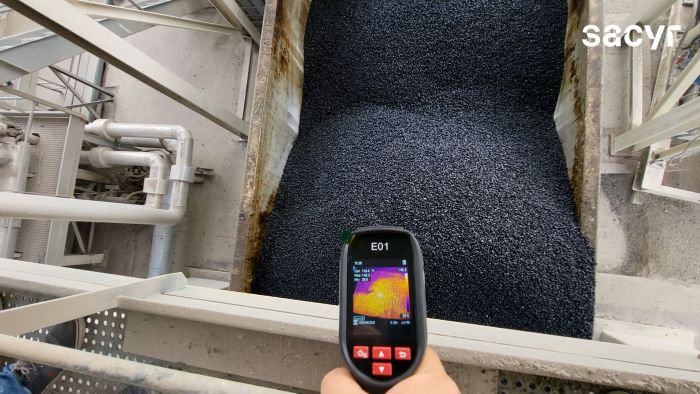
For the reconstruction of the LP-2 road in La Palma (Canary Islands), we are deploying drones equipped with infrared thermography to monitor the thermal evolution of the lava, ensuring both the safety and feasibility of the operations.

The 2021 eruption of the Tajogaite volcano in La Palma (Canary Islands) buried the LP-2 road while it was undergoing construction. We are currently rebuilding the section between kilometers 40 and 43, contending with the high temperatures that still persist within the lava field.

“Constructing this new road across the lava field necessitates a thorough assessment of the ground's thermal conditions, as volcanic lava flows can retain high temperatures for many years,” explains Juan Antonio Romero, Head of Topography at Sacyr Engineering in La Palma.

We have addressed this challenge by deploying drones equipped with infrared thermographic cameras for the capture, analysis, and thermal modeling of the affected terrain.


This technology enables us to identify areas with significant thermal activity, evaluate the technical feasibility of the proposed route, and provide recommendations to ensure safe operations for our professionals and partners.

Furthermore, this detailed analysis helps anticipate potential impacts on the road pavement structure and bituminous mixtures, as thermal variations can alter their cohesion, stiffness, and durability. This, in turn, informs the design and construction decisions for the future pavement.

This project is spearheaded by the Canary Islands Ministry of Public Works, which awarded the contract to the JV TAJUYA joint venture (comprising Sacyr Engineering and Infrastructure, Traysesa, Herquipalma, and Los Volcanes). The project is slated for completion in 2028.


Thermal Radiation Measurement


Infrared thermography is a remote sensing technique that detects thermal radiation emitted by objects based on their surface temperature. In the geotechnical field, this tool has proven to be an effective method for:


•    Identifying areas of residual volcanic activity.
•    Detecting active fractures and gas emissions.
•    Analyzing cooling processes in lava flows.
•    Evaluating the thermal stability of ground for civil engineering projects.


“Through the acquisition and processing of infrared images, we have generated georeferenced heat maps and graphs that illustrate the thermal evolution. The DJI MATRICE 350 RTK drone, equipped with a camera, can detect temperatures ranging from 0 to 550 degrees Celsius,” explains Juan Antonio Romero.

“This undertaking combines advanced technologies in remote sensing, thermal photogrammetry, and geospatial analysis. As a result, we enhance the road's quality and, crucially, improve site safety and occupational health,” he concludes.

Sacyr-backed OSP consortium begins construction on new Ontario Science Centre P3 project in Canada

  • The project, encompassing design, construction, financing, and maintenance, is valued at C$1.04 billion (€645 million).

The Sacyr-backed Ontario Science Partners (OSP) consortium has commenced construction on the new Ontario Science Centre in Canada. Ontario Premier Doug Ford presided over the groundbreaking ceremony held in Toronto.

The contract for the new Ontario Science Centre encompasses the design, construction, financing, and 30-year maintenance (DBFM), as well as the rehabilitation of the iconic Cinesphere and Pods at Ontario Place. The contract is valued at C$1.04 billion (€645 million).

The OSP consortium is comprised of John Laing Limited, Sacyr Infrastructure Canada Inc, and Amico Major Projects Inc.

A joint venture formed by Sacyr and Amico is tasked with executing the design and construction of the project, which will generate significant activity in the area and long-term employment.

The new Ontario Science Centre is a key project for the Government of Ontario to revitalize Ontario Place, a lakeside entertainment area that will be transformed into a modern cultural hub and one of Canada's primary destination attractions.

The project covers a total area of approximately 34,900 sqm, of which 28,300 sqm correspond to the construction of the new facility and approximately 6,600 sqm to the renovation of the Pods and the Cinesphere.

The Ontario Science Centre will incorporate sustainability objectives, such as LEED Silver certification, optimized energy performance, and the reduction of greenhouse gas emissions.

The design is led by the renowned Canadian firm Hariri Pontarini Architects, in association with the prestigious international studio Snøhetta.

Sacyr's first P3 project in Canada

This project, fulfills one of the objectives of the 2024-2027 Strategic Plan: to increase its concession portfolio in English-speaking countries.

0 Folders
4 Documents

This website uses its own and third-party cookies to improve the user experience and analyze their behavior in order to improve the service offered.
You can consult additional information about the cookies installed on our Cookies policy.

Cookie Settings

Cookie declaration

TECHNIQUES

These cookies are exempt from compliance with article 22.2 of the LSSI in accordance with the recommendations indicated by the European authority on privacy and cookies. In accordance with the above and although configuration, acceptance or denial is not possible, the editor of this website offers information about them in an exercise of transparency with the user.

  • Name: LFR_Session_STATE_*, Provider: Liferay, Purpose: Manages the session as a registered user , Expiration: Session, Type: HTTP

  • Name: GUEST_LANGUAGE_ID, Provider: Liferay, Purpose: Determines the language with which you access , to show the same in the next session, Expiration: 1 year, Type: HTTP

  • Name: ANONYMOUS_USER_ID, Provider: Liferay, Purpose: Manages the session as an unregistered user , Expiration: 1 year, Type: HTTP

  • Name: COOKIE_SUPPORT, Provider: Liferay, Purpose: Identifies that the use of cookies for the operation of the portal, Expiration: 1 year, Type: HTTP

  • Name: JSessionID, Provider: Liferay, Purpose: Manages login and indicates who is using the site, Expiry: Session, Type: HTTP

  • Name: SACYRGDPR, Supplier: Sacyr, Purpose: Used to manage the cookie policy , Expiration: Session, Type: HTTP