Sustainable Energy Efficiency

The building will be powered by a 300,000-W solar electricity production facility (nominal power of the inverter), which will require 756 400-Wp solar panels on the roof, designed to dissipate heat in a faster, fully compact way. This installation will connect directly to the main low-voltage panel in order for the hospital to consume the energy generated.


Esta icónica estructura de 13 plantas fue el hogar del antiguo bloque de hospitaliación.

La demolición tiene un rasgo añadido de complejidad técnica, ya que entregamos el nuevo edificio en 2024 y está muy cerca de la antigua torre. Para llevar a cabo el desmantelamiento del edificio estamos empleando una pluma de 62 metros. 

Ethics Channel

The Ethics Channel is a corporate tool intended to facilitate the secure and confidential formulation, by employees or by third parties, of any query regarding the scope and applicability of the Code of Ethics and Conduct and, in general, of the Group's Regulatory Compliance Model, as well as to report situations of infringement of this Code of Ethics and Conduct, of the Compliance Model in general or of the applicable internal or external regulations, especially potential conducts related to corruption, anticompetition or constitutive of criminal offence that can be detected.

Among other behaviors, you can communicate cases of fraud, corruption, anti-competitive practices or violations in the prevention of money laundering.

According to our Harassment Prevention and Complaints Management Protocol reflects, we are committed to prevention and correct action in the event of possible sexual, workplace and gender-based harassment at work. For this reason, we have this Ethics Channel, through which you can report possible situations of harassment or discriminatory acts in our workplaces.

The Regulatory Compliance Unit is the body responsible for the operation of the Ethics Channel, as well as for the analysis of the complaints and queries formulated through this channel, safeguarding the confidentiality and rights of those affected and ensuring the protection of the complainant.


                                                                    Ethics Channel Access here


Basic privacy information

The Sacyr S.A. Board of Directors is responsible for the processing of your personal data within the framework of the comprehensive management of the Internal Information System and the Ethics Channel that you will access.

We will process your personal data with the sole purpose of investigating the facts communicated and adopting the appropriate measures within the framework of current legislation in this regard. If you prefer, you can send us an anonymous complaint through our Ethics Channel, which will be investigated in accordance with the provisions of Law 2/2023, of February 20th, regulating the protection of persons who report breaches of Union Law.

Likewise, we inform you that we will obtain the data that you provide us through the Ethics Channel or through third parties in the event of public disclosure, and if applicable, we will process the information contained in said disclosure.

You can exercise your rights of access, rectification, deletion, opposition, purpose limitation and portability with respect to the personal data you have provided by writing an email to protecciondedatos@sacyr.com.

You can contact our Data Protection Officer at dpo@sacyr.com or obtain additional information on how we process your data in the Sacyr Ethics Channel here

General Policy of the Internal Information System - 226 Kb

Política Geral do Sistema Interno de Informaçao - 226 Kb

Protocol for prevention and action in cases of harrassment and discriminatory acts - 175 Kb

Protocolo para a prevenção e atuação em casos de assédio e atos discriminatório - 177 Kb

  • Hydraulic infrastructures

Expansion works of the Panama Canal: the largest engineering piece of work in the 21st century

The third set of locks has opened a new interoceanic transit route, doubles current ship traffic, and complies with rigorous environmental standards

The expansion works on the Panama Canal have posed an engineering challenge for a long time. At Sacyr, we are passionate about challenges, and in 2016 we successfully finished building the third set of locks, a new maritime transit route that runs parallel to the pre-existing locks.


Watch all our videos on the Stories of the Canal and the Panama Canal

4

KILOMETERS

Two two-kilometer platforms on the Atlantic and Pacific coasts 

3,380

MILLION EUROS

Of total investment

10,000

PEOPLE

Involved in the project

Construction for the future

The expansion of the Panama Canal is a colossal work from an economic standpoint as well. The Canal is a strategic route for international trade and at 6% of Panama’s GDP, is the country’s principal economic activity. With a total investment of almost 4,000 million euros, this project has yielded Panama up to 2,500 million euros per year and has generated 180 direct employment positions. 

Innovation at the service of engineering

We designed a unique kind of concrete in order to overcome the challenges that the area posed from the technical, orographic, geological, and climatic standpoints. We improved the formula to guarantee a lifecycle of at least 100 years. Chemical proof, this concrete can stand inner temperatures of up to 70ºC. We also worked on a pioneer earthquake protocol response model, designing a structure ready to respond to two kinds of seismic levels. 

An efficient and sustainable project

Right from the start, the expansion of the Canal has taken the environmental aspects into account. As the new set of locks is quicker to fill and empty, they consume 7% less water. The sluicegates have nine deposits that allow reusing water and save up to 60% of this precious resource. 

As for its atmospheric impact, we estimate that the third set of locks will help reduce more than 160 million tons of CO2 from the shipping sector in the next ten years. 

We also care about preserving the biodiversity of Gatun Lake, which the Canal traverses. Before beginning construction works, environmental specialists rescued and relocated all local fauna (such as turtles, caimans, sloths, and boa constrictors) to the adjacent San Lorenzo park. Furthermore, we reforested a surface area of 2,800 ha, planted close to 6 million trees, and carried out training, informative, and follow-up programs about the project with the local communities.

Rescue and relocation of local flora and fauna species

Right from the first clearing and dredging jobs, we established strict protocols to care for wild flora and fauna:
  • 4,500 rescued and relocated specimens 
  • 200 protected species 
  • 2800 ha of reforested surface
  • 5,8 million trees planted

Brief history of the Panama Canal

The Spanish were the first to promote the creation of a maritime route in Panama. In the 15th century, they opened the Camino de Cruces, connecting the Atlantic and Pacific coasts for the first time. In the 19th century, several expeditions took place in the isthmus, and the transoceanic railway was inaugurated, which was pivotal to the later construction of the Canal. In the early 20th century, the United States started looking into the Panama transoceanic route with a keen eye. A few days after the country obtained its independence, they won the concession for constructing the Canal from the French company Compagnie Universelle du Canal interocéanique de Panama. Construction works started in 1904 and ended in August 1914, going down in the history of engineering. 

  • Sacyr Infrastructures
  • Canal de Panamá
  • Tercer Juego de Esclusas
  • Panamá
  • Transport infrastructures

Calcasieu River Bridge, a huge P3 project in the U.S.

We are members of Calcasieu Bridge Partners (CBP), the consortium entrusted with building the new Calcasieu Bridge on the I-10 in the State of Louisiana, which will replace the current bridge, dating back to the 1950s. This is our first infrastructure P3 project in the U.S.

Calcasieu River Bridge_I10

We improve local and interstate connectivity in Louisiana with a new bridge over Calcasieu River at the Interstate 10, which will replace the current bridge, built in the 1950s.

This Louisiana Department of Transportation and Development (LA DOTD) project comprises the design, construction, finance, operation, and maintenance of this 5.5-mile (9 km) infrastructure for a 50-year term.

Contract calls for a $2.1 billion expected investment (€ 1.9 billion).

We’ll develop this project as Calcasieu Bridge Partners (CBP), comprising Sacyr, Acciona and Plenary Americas.

This is a highly anticipated project for road users that will meet the highest standards.

This project is the largest to date in the history of the State of Louisiana, and one of the was one of the largest infrastructure contracts commissioned in North America in 2023.

This is our first transportation infrastructure P3 contract in the US, and a huge boost to the company’s growth strategy in the U.S.

€1. 9 bn

INVESTMENT

9

Kilometers

90,000

VEHICLES / DAY

The project

Calcasieu River bridge is our second P3 in this country, and one of our major projects by investment volume and business portfolio.

The Interstate 10 (I-10) P3 in Louisiana is a major road project that will substantially improve the connectivity between the cities of Lake Charles and West Lake, located in the southwest of the State, in the vicinity of the Texan border. This route is also a central connection between the coasts of Florida and California.

A 50% Sacyr-Acciona joint venture will be in charge of constructing the bridge.

Construction works are expected to begin in 2026 and the operation in 2031.

The widening of the I-10 comprises the construction of a six-lane corridor and the implementation of a free flow toll, as well as various structures, ramps and approaches to the bridge.


This solution will incentivize the local economy and become a growth driver for future generations, as it will reduce travel times and enhance road safety for more than 90,000 vehicles per day.


  • USA
  • P3 Projects

Rota de Santa María, our first P3 project in Brazil

Sacyr Concesiones operates and maintains the expansion of the RSC-287, a strategic route that connects the south of Brazil

 Rota de Santa María (Brasil)

Sacyr Concesiones, through the company Rota de Santa María, oversees the operation and improvement of a 204 km section of the RSC-287 highway since 2021. This roadway connects the southern regions of Tabaí and Santa María.

These tasks are intended to ensure the comfort, traffic fluidity and safety levels for the road users. The influence area of this infrastructure comprises 13 municipalities. Approximately 1.1 million people in the region will be positively impacted by the road.

The RSC-287 connects the center of the state of Rio Grande do Sul with the metropolitan region of its capital, Porto Alegre, which makes it one of the most relevant and used roadways.

1.1

MILLION PEOPLE BENEFITED

204

KM

€ 430

MILLION INVESTMENT

Rota de Santa María,  our first P3 project in Brazil

The RSC-287 highway is Sacyr’s first P3 road project in Brazil, a country where we have already developed major infrastructure projects like the Sao Paulo and Fortaleza metros.

The concession term for Rota de Santa María is 30 years, and the revenue backlog for that period exceeds € 2.4 Bn.

New Smart Transport System

We delivered the innovative Smart Transport System, with over 600 24-hour CCTV surveillance cameras, variable message signs, speed radars and road weather stations.

This comprehensive traffic surveillance system improves road safety rates and is an excellent example of our continual improvement approach and our commitment to our users

  • Sacyr Concessions
  • Highway
  • Brazil
  • Transport infrastructures

Sao Paulo Metro: improving mobility in one of the most populated cities in the world

We build eight new stops and improve a service that will benefit 377,000 passengers per day
Metro San Paulo

Metro San Paulo

Our commitment to urban mobility in Brazil involves building one of the most transited subway systems in the world. Sacyr Engineering and Infrastructures is currently in charge of the extension works of Line 2 of the Sao Paulo Metro, consisting of an 8.3-kilometer and eight stops expansion. This service directly connects to lines 3-Red, 11-Coral (CPTM), and 15-Silver.

This line, also known as the green line (Linha 2-Verde), goes from Vila Prudente to Dutra, and is 7.3 kilometers long. We built it as an assignment for the Companhia do Metropolitano de São Paulo (Sao Paulo Metro Company) within a 69-month time frame for 443 million euros.

8.3

KILOMETERS

Lenght of the sections under construction

8

Under construction

METRO STOPS

377,000

PASSENGERS

Per day once the extension works are completed

Tunnels, air shafts, and stops

This contract includes building a 7.8-kilometer-long and 11.7-meter diameter two-way tunnel with an EPB tunnel boring machine. It also involves constructing 1.8-kilometer-long train sidings using the Austrian tunneling method. 

The framework of this project contemplates the construction of the Vila Formosa metro stop and bus terminal, as well as the Rapadura complex, with a railyard and train sheds, five air shafts with a 12-to-15-meter diameter, and a slab track superstructure.


The largest TBM in Latin America

Para el desarrollo de este proyecto se ha transportado la tuneladora conocida como Cora Coralina, la más grande de América Latina, que excavará 8,4km entre las estaciones de Vila Pruedente y Penha.

Sus impresionantes cifras la convierten en la tuneladora más grande de Latinoamérica: una rueda de corte de más de 11 metros de diámetro y 100 metros de extensión total. 500 toneladas de peso y una potencia de 144.000 kn.


First meters excavated

The first section to Vila Formosa included the installation of 436 concrete rings in the tunnel, with an average daily progress of 11.6 meters. Just a few months later, Cora Coralina is at the future Analia Franco station.

After the latest progress update, the TBM has dug a 1.6 km distance from Complejo Rapadura, and has excavated 141,000 m3 of dirt.


  • Railway infrastructures
  • Brazil
  • Integrated Water Cycle

NAIS: a plan to strengthen Australian agriculture

We built the first stage of the North Adelaide Irrigation Scheme.

North Adelaide Irrigation Scheme

This infrastructure consists of a large-scale water transfer network formed by  29 km of underwater piping. It also has a new treatment plant that produces reclaimed water, a main network, pumping stations, underwater and tank storage, and, finally, a distribution network used for horticultural production.

More than 150 people were involved in the development of this infrastructure. NAIS also contributes to the development of up to 300 hectares of land dedicated to export agriculture.

578

MILLION AUD

Brought to the economy every year

3,700

JOBS

Created, both direct and indirect

29

KILOMETERS

of underground pipes 

We are promoting the region’s economy 

With this infrastructure, we are strengthening the farming industry in the region. Thanks to NAIS, water can be used for horticulture, flower farming, fruit and walnut trees, table and wine grape growing, various valuable crops, poultry farming, and other intensive livestock and fish farming activities. 

With this project, we bring AUD 578 million into the economy each year and create 3,700 direct and direct jobs. 

  • Sacyr Concessions
  • Australia
  • P3 Projects

University of Idaho Utility System P3

We will manage and improve the power and water utility system at the University of Idaho for a 50-year term.
The university is a cultural and economic driver for the State of Idaho.

The university is a cultural and economic driver for the State of Idaho. 

Sacyr Concesiones, in consortium with infrastructure manager Plenary, will undertake the operation, maintenance, and improvement of the power, water, and steam generation and distribution utility systems on the University of Idaho campus, which spans 640 hectares and is located in the city of Moscow.

With this contract, Sacyr achieves a new milestone in its 2015-2020 Strategic Plan: to secure its first P3 contract in the United States. 

Founded in 1889, the University of Idaho offers more than 150 degrees to its nearly 12,000 students. The 640-hectare Moscow campus includes 253 buildings and 32 hectares of green spaces. 


A small city

The service infrastructure of the university campus resembles that of a small city. It has, for example, a cold-water distribution system that extends 12.8 kilometers and an electrical distribution grid that runs 6 kilometers in length. The drinking water network totals 31.7 kilometers and is equipped with compressed air and steam distribution pipes.

One of the improvements we will introduce is the reduction of the university’s carbon footprint. To do so, we will advocate the use of renewable energy sources and boost system efficiency. We will also exercise sustainable use of the Grande Ronde and Wanapum aquifers and improve wastewater management. 

Take a virtual tour of the campus.


50

YEAR

concession term

640

HECTARES

of campus

51

KILOMETERS 

of utility networks

  • Climate change
  • Energy efficiency
  • USA

Modern Slavery Statement

We are committed to implementing all the measures within our ability to combat slavery and human trafficking. We are proud of the steps we have already taken, and we continue to pursue this endeavor. Moreover, we ensure compliance with the International Labor Organization's (ILO) stipulations, particularly those related to child labor.

More

Highlight

Meet the desalination plant team!

0 Folders
1 Document

Mejora del sistema de dosificación de CO2

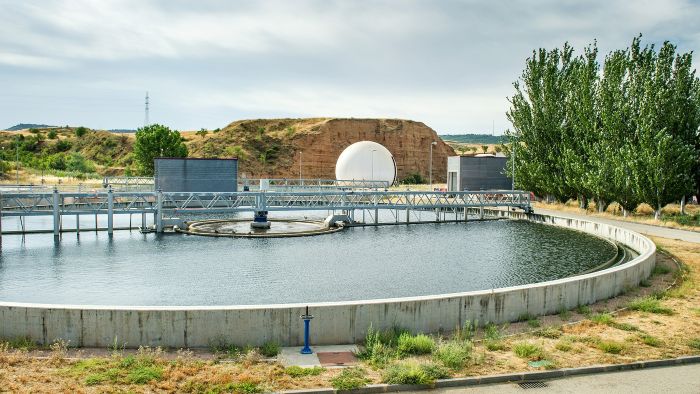
El proyecto incluye una modificación del sistema de remineralización, introduciendo un proceso de presurización de agua permeada previo a la dosificación de CO2 para mejorar la calidad del agua final.

This website uses its own and third-party cookies to improve the user experience and analyze their behavior in order to improve the service offered.
You can consult additional information about the cookies installed on our Cookies policy.

Cookie Settings

Cookie declaration

TECHNIQUES

These cookies are exempt from compliance with article 22.2 of the LSSI in accordance with the recommendations indicated by the European authority on privacy and cookies. In accordance with the above and although configuration, acceptance or denial is not possible, the editor of this website offers information about them in an exercise of transparency with the user.

  • Name: LFR_Session_STATE_*, Provider: Liferay, Purpose: Manages the session as a registered user , Expiration: Session, Type: HTTP

  • Name: GUEST_LANGUAGE_ID, Provider: Liferay, Purpose: Determines the language with which you access , to show the same in the next session, Expiration: 1 year, Type: HTTP

  • Name: ANONYMOUS_USER_ID, Provider: Liferay, Purpose: Manages the session as an unregistered user , Expiration: 1 year, Type: HTTP

  • Name: COOKIE_SUPPORT, Provider: Liferay, Purpose: Identifies that the use of cookies for the operation of the portal, Expiration: 1 year, Type: HTTP

  • Name: JSessionID, Provider: Liferay, Purpose: Manages login and indicates who is using the site, Expiry: Session, Type: HTTP

  • Name: SACYRGDPR, Supplier: Sacyr, Purpose: Used to manage the cookie policy , Expiration: Session, Type: HTTP