SacyrNewsWe participated in the UN Global Compact conference
Share:
CSR
We participated in the UN Global Compact conference
Our colleague from Sacyr Agua, Domingo Zarzo, has emphasized the importance of sustainability in all our projects during three sessions held in New York.
28/09/2026
Domingo Zarzo, Director of Strategic Projects and Institutional Relations at Sacyr Agua, participated in three presentations at the UN Global Compact meeting held in New York.
One of the sessions focused on sustainability in Brazil, titled “SDGs in Brazil,” where he had the opportunity to explain how infrastructure should be designed from the outset with sustainability criteria in mind and to generate a positive impact on the environment and society. “Not only during construction but also in the initial design phases and throughout the years of concession operation,” explained Zarzo.
In addition, he participated in the panel on “Sustainable Supply Chains,” which took place as part of the Global Compact Leaders Summit during a gathering of Spanish companies at the Commercial Office of the Spanish Embassy in New York/ICEX. The panel also included representatives from suppliers (SMEs), buyers, and financial institutions.
There, Domingo Zarzo outlined the sustainability commitments our company shares with our value chain and our participation in initiatives such as the Global Compact’s Sustainable Supplier Training Program in Spain.
Success Story
“Sacyr does not settle for merely complying with regulations (in this case, European ones); rather, it goes far beyond this commitment with proven results such as our positive water footprint, which is unique in the sector, given the company’s size, geographic reach, and the diversity of its contracts,” states Zarzo.
SacyrNewsWe participate in the United Nations Forum in Geneva
Share:
CSR
We participate in the United Nations Forum in Geneva
We attended this event to discuss sustainability issues, best practices and European regulations on human rights, among other topics.
27/11/2025
Our colleague Esther Moral participated in the 14th UN Forum on Business and Human Rights, which was held from November 24 to 26 in Geneva. This international event brings together more than 4,000 participants from governments, companies, civil society, investors and international organizations.
Sacyr has shared experiences with other Spanish companies and other entities specialized in human rights(SERES, Conese, Chamber of Commerce of Peru, ICEX, BHR, etc). Our presence in this forum allows us to showcase our leadership in sustainability, share best practices, anticipate new European regulations such as the CSDDD, and connect with key players in the global human rights ecosystem.
In addition, this event offers a platform to influence the international agenda, manage reputational and operational risks, and reinforce the company's visibility as a benchmark in corporate responsibility.
Active participation in this type of event strengthens our company's reputation with ESG rating agencies and demonstrates our commitment to the UN Guiding Principles.
Share:
Featured projects
SacyrNewsDriving more sustainable pavement solutions
Share:
Driving more sustainable pavement solutions
On the Eresma Expressway (A-601) in Segovia, we used recycled material from the road surface that we removed to renew the wearing course. The project incorporates 30% milled material.
23/09/2026
Sacyr Concesiones is putting circular pavement maintenance to the test on the Autovía del Eresma (A-601). Along a one-kilometer stretch, the concessionaire has reused milled asphalt from the existing roadway as feedstock for a new surface course.
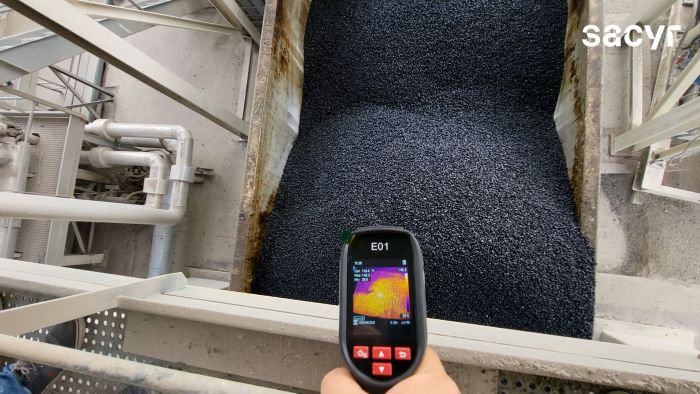
The paving works incorporate 30% reclaimed asphalt pavement (RAP) from the highway’s aged wearing course into the new bituminous mix—double the 15% currently recommended by regulations for this type of layer.
A field test with long-term potential
The pilot section, located between kilometer markers 81 and 82 in direction to Segovia, is designed to prove that today’s recycled asphalt technology can increase RAP content in surface mixes without compromising ride quality, durability or overall pavement performance.
“On this pilot section, we are cutting the amount of virgin aggregate needed in the mix,” said Miguel Ángel Moreno, from Sacyr Concesiones’ Pavements Department. “We also reduce material sent to landfill and lower the carbon footprint associated with asphalt production,” he added.
The trial will allow the team to track the mix in service, monitor its long-term behavior and assess whether the approach can be scaled to future maintenance campaigns.
“We want to see how this mix holds up in the field and whether the solution is sustainable, technically viable and cost-effective over time,” said Ángel Delgado, manager of the Autovía del Eresma.
Technology and collaboration drive the pavement trial
The recycled asphalt mix—a BBTM 11B gap-graded surface mix with 30% RAP—was manufactured at Padecasa’s plant in Aldeavieja, Ávila.
The project brings together the Regional Government of Castile and León, Sacyr’s Pavements Department, Sacyr Concesiones’ Innovation team and Padecasa. It builds on a 2024 test section that used 15% RAP, the maximum share currently recommended for this type of wearing course.
The initiative supports circular economy targets and aligns with Castile and León’s regulatory framework, which requires at least 3% of aggregates used in pavement rehabilitation works to come from recycled materials.
With pilots like this, Sacyr continues to test lower-impact road maintenance solutions that conserve natural resources, reduce waste and support more sustainable infrastructure management.
SacyrNewsWe use AI to automate carbon footprint calculations
Share:
We use AI to automate carbon footprint calculations
We have developed a solution that automates and optimizes the tracking of energy consumption in our projects.
25/09/2026
Our Quality and Environment Department, together with the IT Department, has developed an artificial intelligence solution that automates and optimizes the recording of energy consumption in our projects.
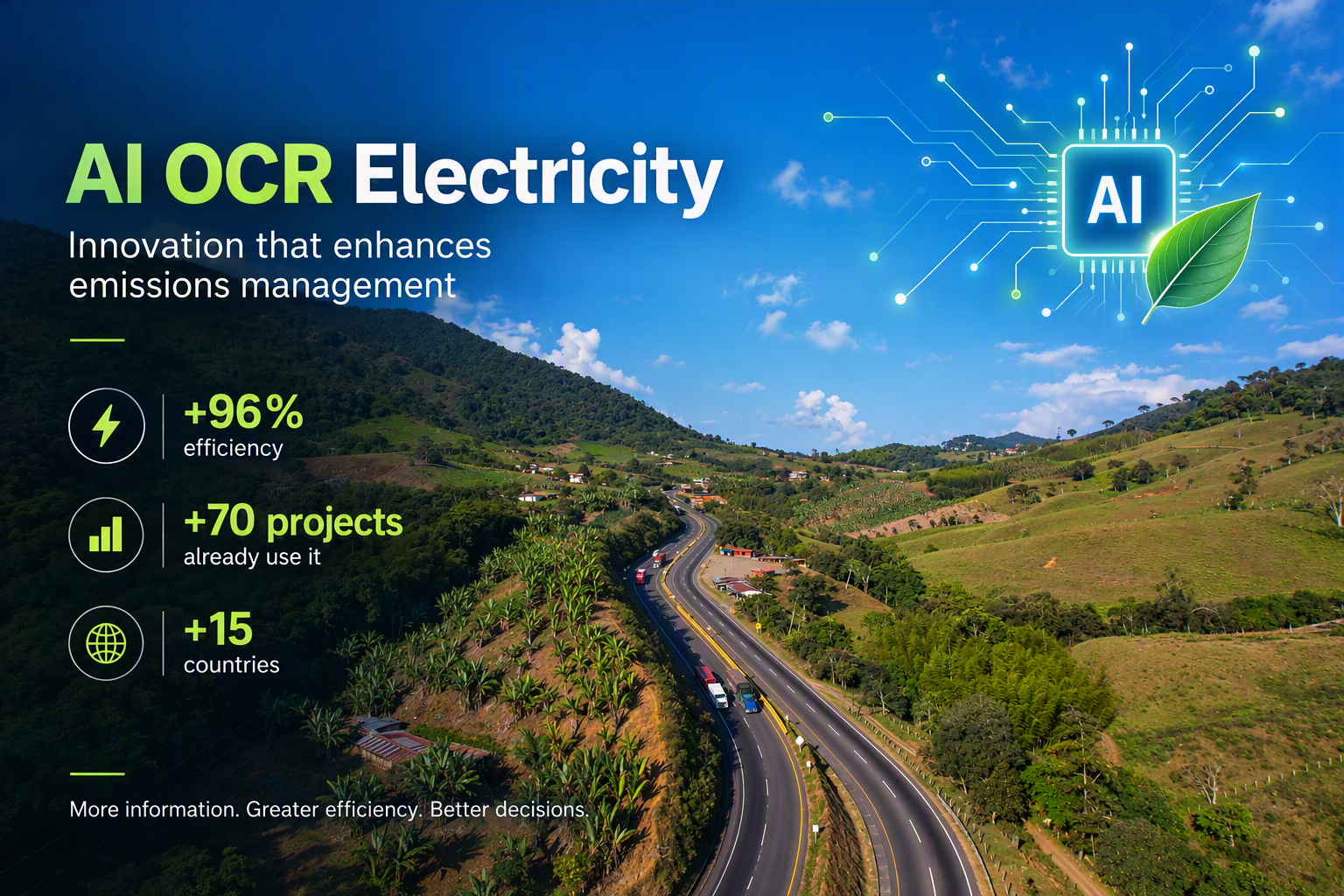
AI OCR Electricity automates the reading and processing of electricity bills, automatically capturing the data needed to calculate our carbon footprint.
Integrated into our CYMAE application, the tool is now available for use across all projects and countries, improving efficiency, traceability, and data quality. Since the launch of AI OCR Electricity, we have been monitoring the entire process, achieving 96% accuracy in data extraction and recording.
Its launch addresses one of the challenges identified in our 2024–2027 Strategic Plan: having reliable and traceable information on energy consumption and associated greenhouse gas (GHG) emissions, facilitating more efficient, data-driven management.
Key Benefits of “AI OCR Electricity”
The in-house development of AI OCR Electricity generates direct benefits for Sacyr, improving operational efficiency, data quality, and our scalability. Among its main advantages, we highlight:
1. Financial Return and Operational Efficiency
• Rapid return on investment, with an estimated payback period of less than two years.
• Reduced costs and processing times thanks to the automation of invoice processing.
• Greater technological autonomy, reducing dependence on external solutions.
• Fostering internal talent, strengthening our capabilities in artificial intelligence and digitalization.
2. Data Quality and Internationalization
• Greater accuracy and traceability of information, facilitating reporting and audit processes.
• International scalability, allowing for agile deployment in any project or country without additional costs.
• Generating cross-functional knowledge, with insights already being applied to new features and use cases within the organization.
With this launch, we are optimizing daily processes and demonstrating how internal innovation and digitalization are key drivers for moving toward a more efficient and environmentally friendly business model.
RevelaVerde, our employee photography competition, invited us to see the natural richness of the places where our projects take shape — and the importance of protecting it by reducing our impact wherever we can.
24/08/2026
We launched RevelaVerde to mark World Environment Day, inviting employees to take part in an environmental photography competition.
The idea was simple: to capture images that show how our teams live and work alongside nature, helping to protect and transform the places where we operate.
More than 100 photographs from 30 projects across eight countries were submitted.
Together, they reveal the biodiversity that surrounds our worksites, creative ways of giving resources a second life, landscapes shaped by water and small details that often go unnoticed but speak volumes about why environmental care matters.
The winning and finalist entries, featured here, capture that commitment from different perspectives.
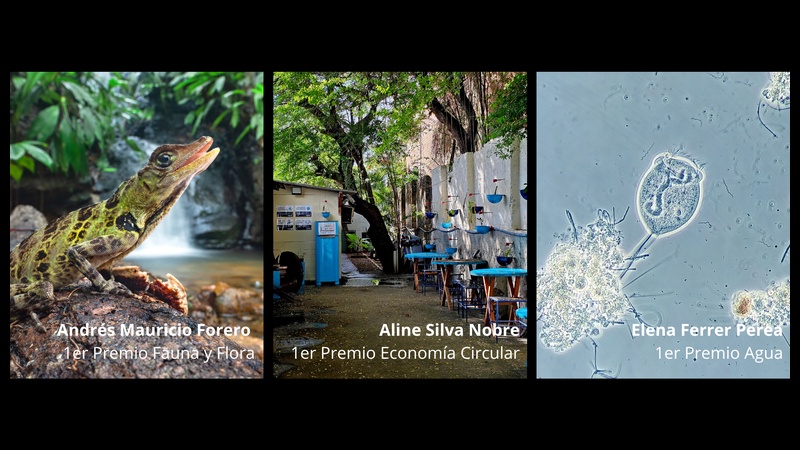
From a small lizard hidden in the vegetation in Colombia to water-purifying microorganisms in Spain and material reuse initiatives in Brazil, these images invite us to look more closely at the world around us.
More than a competition, RevelaVerde is a reminder of the value of stopping to observe: to recognize the environmental richness around us and celebrate the people working every day to deliver projects that are more respectful of natural spaces.
SacyrNewsWe are a European leader in investor relations
Share:
Corporate
We are a European leader in investor relations
We took the lead at the 2026 Extel Awards as the “Most Honored Company” in the Building & Construction sector. Our Chief Financial Officer, Carlos Mijangos, was recognized as “Best CFO,” and our Director of Investor Relations was named “Best IR Professional.”
17/09/2026
We are leaders in investor relations. This has been recognized by the Extel 2026 Awards, the most prestigious international awards in the field of capital markets.
The awards recognized Carlos Mijangos as the best chief financial officer (CFO) across all categories analyzed. Alberto Gárgoles was named “Best IR Professional.”
In addition, we took first place as the “Most Honored Company” and led categories such as “Best IR Program” and “Best IR Team”—a recognition that highlights the effort, professionalism, and commitment of the team consisting of Alberto Gárgoles, Carlos Huerta, Ester Hernández, and María Ruiz-Casaux.
Alberto Gárgoles, Director of Investor Relations, and Carlos Huerta, a member of the IR team, accepted the awards at a gala held in London.
Seven Years Among the Best
With these results, we have maintained excellent rankings for the seventh consecutive year among the European companies most highly valued by institutional investors and financial analysts.
In 2026, we also moved up from second to first place in the “Best IR Program” category and retained our leadership in “Best CFO,” “Best IR Professional,” “Best IR Team,” and “Best Investor/Analyst Event.”
Transparency, Trust, and Dialogue
These accolades reflect the strength of our financial communication, the accessibility of our management team, and the trust generated by our strategy, transparency, and ability to engage with the market.
Our leadership among the top European companies highlights the professionalism of our entire team and reinforces our position as a leading company in investor relations.
Share:
Featured projects
SacyrNewsInnovation beneath the surface at Binningup
Share:
Innovation beneath the surface at Binningup
An innovative repair was carried out on the transition chamber at our desalination plant in Perth, Australia, which not only maintained the integrity of the seawater intake system but also ensured that the marine environment was protected at all times.
One key component of the seawater intake system is the Stage 1 Transition Box, a buried concrete structure that connects two 1.6 m HDPE intake pipelines to the plant’s intake tunnel. Operating beneath the seabed in a challenging marine environment, this structure plays an important role in maintaining the integrity and reliability of the plant’s seawater intake system.
Following the identification of progressive structural degradation and sand ingress, Sacyr Agua worked closely with Water Corporation and specialist delivery partners to develop a low-impact remediation solution. The objective was clear: restore functionality and extend asset life without requiring full replacement of the structure.
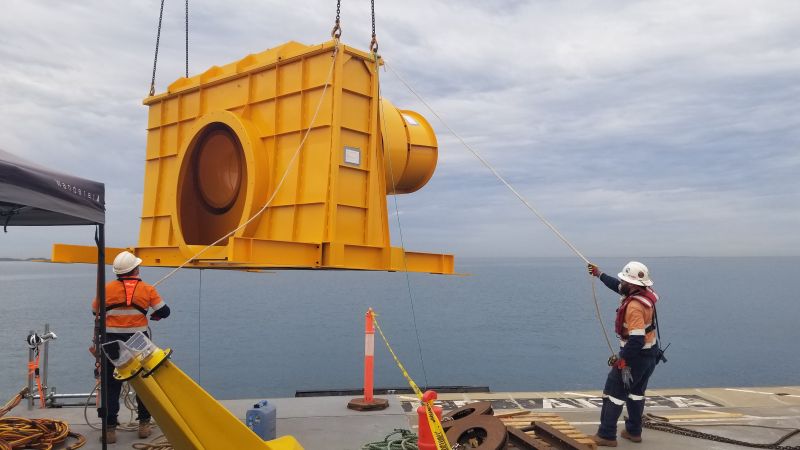
Developed in collaboration with SEA Global, SF Design and Fremantle Commercial Diving, the solution involved the installation of a precision-machined modular HDPE lining system. Reinforced in key locations and grouted in place, it created a sealed, load-bearing internal flow path. Computational Fluid Dynamics (CFD) modelling, structural verification and full-scale dry and wet testing were used to validate the design ahead of offshore installation.
The project was delivered under demanding offshore conditions, including subsea construction, restricted access, limited weather windows and stringent environmental controls. Specialist diving teams installed more than 75 custom-machined HDPE components within the existing structure, restoring intake integrity while minimising disturbance to the surrounding marine environment.
“This was more than a repair – it was a coordinated effort across design, fabrication and marine execution,” said Paul Oosthuizen, Maintenance Manager at the Southern Seawater Alliance.
By rehabilitating the existing structure rather than replacing it, the project reduced seabed disturbance, minimised operational impacts and extended the service life of a critical element within the plant’s intake infrastructure.
Australian Water Award
In 2025, the Transition Box Remediation project received industry recognition through an Australian water sector award for innovation in marine infrastructure delivery.
SACYR, S.A., announces the schedule for the presentation of the Group's results for the first half of 2026.
21/07/2026
The results will be released on Wednesday, July 29, 2026, after the market closes, on the CNMV website and on our website.
The earnings presentation will take place on Thursday, July 30, 2026, at 12:00 p.m. (CEST) and can be followed in real time via an audio webcast at this direct link.
Access to the replay of the earnings presentation will be available directly via the link provided above.
Share:
Featured projects
SacyrNewsKing Felipe VI holds an audience with Sacyr's senior management to mark the company's 40th anniversary
Share:
Corporate
King Felipe VI holds an audience with Sacyr's senior management to mark the company's 40th anniversary
His Majesty met with the board of directors and the executive committee and inquired about the major projects the company is currently undertaking around the world.
His Majesty King Felipe VI received Sacyr’sboard of directors andexecutive committee in an audience at the Zarzuela Palace to mark the company’s 40th anniversary.
During the audience, His Majesty inquired about the company’s international track record, the development of sustainable infrastructure, and the main challenges related to innovation and concessions on a global scale.
Sacyr’s Chairman, Manuel Manrique,expressed his gratitude for the hard work, talent, and adaptability of all the professionals who have contributed to the company over these four decades, as well as for the trust placed in the company by clients, government agencies, investors, and partners.
As a memento of this meeting, Manuel Manrique presented Her Majesty with a commemorative book chronicling the major milestones that have shaped Sacyr’s history since its founding in 1986.
“We are celebrating our 40th anniversary with the same enthusiasm and capacity for transformation that have guided us since our inception. Our commitment is to continue building progress and improving people’s quality of life through sustainable and innovative infrastructure,” explains Manuel Manrique.
40 Years of History
Sacyr, which was founded in 1986 as Sociedad Anónima de Caminos y Regadíos, has undergone a profound transformation that has made it one of the world’s leading infrastructure concession companies.
Today, it is listed on the Ibex 35 and employs more than 14,000 professionals in some twenty countries. Its business model focuses on the development and management of infrastructure, social, and water concession assets.
Share:
Featured projects
0 Folders
3 Documents
0 Subfolders
3 Articles
SacyrNewsDiscover the species found around our projects
Share:
Discover the species found around our projects
Our activities are carried out in natural environments where biodiversity plays a crucial role. Therefore, we are committed to protecting and preserving the ecosystems and communities with which we coexist.
11/09/2026
We work in natural environments where biodiversity plays a vital role. That is why we are committed to protecting and preserving the ecosystems and communities around them.
Caring for nature is not only about taking protective measures; it also means observing it, understanding it and appreciating its richness.
Colombia offers a good example. There, our colleagues Andrés Mauricio Forero Cano, a biologist in the Environmental Area of the Buenaventura-Loboguerrero-Buga project, and Manuel Alejandro Posso Gaviria, Environmental Birds' Route Project Coordinator at Unión Vial Camino del Pacífico who captured a series of images showcasing the fauna and flora found in the area. The photos were part of our RevelaVerde competition.
Andres Mauricio's photographs were taken in the Venado Verde Nature Reserve, in the area surrounding this road project.
“With these photographs, I want to show the immense biodiversity found in our region, particularly among amphibians and reptiles, a group that is still little known and often undervalued,” says our colleague.
“The photographs were taken using macro photography techniques. I used a Nikon D7200 camera with a 60 mm Laowa macro lens, external flashes and diffusers,” explains Andrés Mauricio.
Captured while work was underway, these five photographs bring us closer to a fascinating world of colors, shapes and behaviors that often goes unnoticed, yet plays an essential role in the balance of ecosystems.
The five photographs show:
1. Pacific lemur frog (Agalychnis psilopygion). “It is a species of incredible beauty and fragility that lives only in well-preserved forests.”
2. Cane toad (Rhinella horribilis). “This species has long been overlooked because of its appearance, but it plays a fundamental role in our ecosystems by controlling insect populations. Through macro photography, I wanted to capture its splendor and show that the world should look beyond appearances and recognize what lies beneath.”
3. Dwarf spiny iguana (Enyalioides heterolepis). “This lizard lives in the leaf litter of pristine forests and has a variety of scales that give it a striking appearance, which I wanted to highlight through macro photography.” The image won first prize in the Flora and Fauna category.
4. Glass frog tadpoles (Teratohyla spinosa). “These small glass frogs live in the vegetation that grows along streams. They lay their eggs in gelatinous clusters on leaves. When the eggs hatch, the tadpoles develop inside this gelatinous mass until they are large enough to drop into the streams and complete their development.”
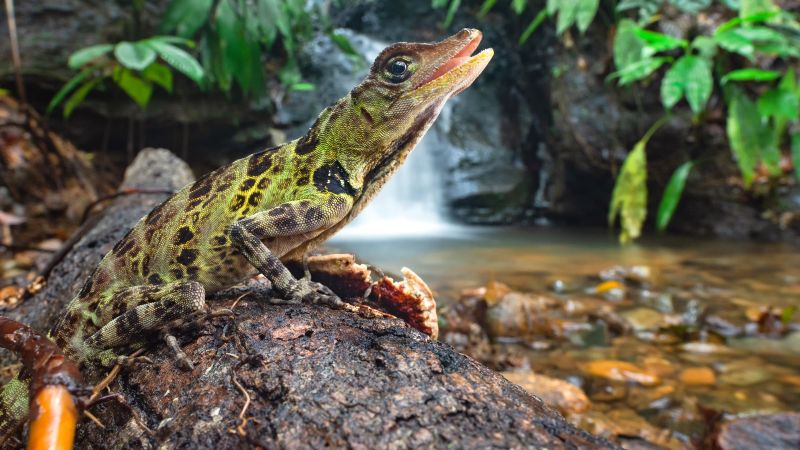
5. Broad-headed anole (Anolis latifrons). “This photograph was taken with a wide-angle macro lens, combining the detail of macro photography with part of the animal’s surroundings. This lizard species lives in vegetation near streams. In the photograph, I wanted to capture both its remarkable details and the habitat where it is usually found.” (top photo)
These images remind us how important it is to coexist responsibly with local wildlife and to make nature protection part of how we deliver our projects. Learning about the species that live in the areas where we work is the first step toward helping conserve them.
Another colleague who participated in RevelaVerde with his photographs is Manuel Alejandro Posso Gaviria, Environmental Birds' Route Project Coordinator at Unión Vial Camino del Pacífico.
Photo 1. Divine Poison
Poison dart frog (Oophaga anchicayensis). Located near the tunnels, along the Pepitas River. This frog is endemic to the region.
Photo 2. Blessed Fortune
Tree frog (Ecnomiohyla phantasmagoria). Located in San Cipriano. Virtually nothing is known about its ecology and behaviour, as this species lives high in the forest canopy, between 20 and 40 metres above the ground. It was discovered after a rainy night on a fallen branch. This species is literally a ghost, with only a handful of recorded sightings.
Photo 3. Wonders of Nature
Bridal Veil Fungus (Phallus indusiatus). Observed at Venado Verde during a birdwatching survey conducted for the Birds' Route project.
Photo 4. The Nap After a Meal
Boa constrictor (Boa imperator). Recorded more than six metres above the ground in San Cipriano, resting on a tree branch. It can be recognised by the yellowish coloration on its tail.
Photo 5. Give and Take
Mating ritual of two Squirrel Cuckoos (Piaya cayana). The male brings food to the female, and the female rewards him with mating. Photograph taken in Río Bravo.
We rescued a turtle at our Skikda desalination plant
Our commitment to biodiversity is reflected in practical action, showing the responsibility and care our teams bring to the ecosystems around us.
A recent example took place at the Skikda Desalination Plant O&M Joint Venture in Algeria, where the plant team stepped in to rescue a sea turtle that had become trapped on the premises. Thanks to the team’s swift response, the animal was safely released and returned to the sea in good condition.
Zenina Hadjer, a laboratory technician and the author of the images submitted to the RevelaVerde competition, explains: “During operations at the plant, a sea turtle was found trapped in the facility’s intake basin. Aware of our responsibility to the ecosystem, our team acted immediately. We carefully rescued the animal and took it to Srigina Island, where it was safely released back into its natural habitat.”
“These images show how our industrial operations can coexist with the preservation of local biodiversity,” says our colleague.
Actions like this show that sustainability is also shaped by everyday decisions and efforts.
Thanks to our teams’ commitment and dedication, we help protect biodiversity and preserve the natural value of the environments where we operate.
This website uses its own and third-party cookies to improve the user experience and analyze their behavior in order to improve the service offered.
You can consult additional information about the cookies installed on our Cookies policy.
These cookies are exempt from compliance with article 22.2 of the LSSI in accordance with the recommendations indicated by the European authority on privacy and cookies. In accordance with the above and although configuration, acceptance or denial is not possible, the editor of this website offers information about them in an exercise of transparency with the user.
Name: LFR_Session_STATE_*, Provider: Liferay, Purpose: Manages the session as a registered user , Expiration: Session, Type: HTTP
Name: GUEST_LANGUAGE_ID, Provider: Liferay, Purpose: Determines the language with which you access , to show the same in the next session, Expiration: 1 year, Type: HTTP
Name: ANONYMOUS_USER_ID, Provider: Liferay, Purpose: Manages the session as an unregistered user , Expiration: 1 year, Type: HTTP
Name: COOKIE_SUPPORT, Provider: Liferay, Purpose: Identifies that the use of cookies for the operation of the portal, Expiration: 1 year, Type: HTTP
Name: JSessionID, Provider: Liferay, Purpose: Manages login and indicates who is using the site, Expiry: Session, Type: HTTP
Name: SACYRGDPR, Supplier: Sacyr, Purpose: Used to manage the cookie policy , Expiration: Session, Type: HTTP
ANALYTICS
These cookies allow us to count visits and sources of circulation in order to measure and improve the performance of our site. They help us know which pages are the most or least popular, and see how many people visit the site. All the information collected by these cookies is aggregated and, therefore, anonymous.
Name: _ga_<container-id>, Provider: Google, Purpose: Collects data about the number of times a user has visited the website in addition to the dates of the first and most recent visit. Used by Google Analytics, Expiration: 2 years Type: HTTP
Name: _ga, Provider: Google, Purpose: Registers a unique ID that is used to generate statistical data about how the visitor uses the website, Expiration: 2 years Type: HTTP