SIS, a consortium comprising Fininc and Sacyr, will build and manage this project for 25 years, which will require an investment of €517 million. More info
Lousiana I-10 highway awarding.
USA Strategic Market
A world-class consortium comprised of Sacyr, Acciona and Plenary Americas have signed a P3 project to design, build, finance, operate and maintain for 50 years the construction and improvement of a 10-km-long stretch including a new bridge. More info
Northern Chile Airport Network
Chile
The contract covers the operation and expansion of the Antofagasta and Atacama airports. This P3 calls for an investment of €266 million and has a concession term of 26 years. More info.
Peripherical Ring Road
Peru
We are developing a major 34.8 km urban motorway that will improve Lima's connectivity. The concession includes the design, financing, construction, management and maintenance of the road. More info.
Info:The document preview may not show all pages. Download it to see the full document.
In the tenth installment of our series on Sacyr’s 40th anniversary, we travel to Barranquilla (Colombia), where Natalia Ramos and David Ordín help us look back on the construction of the Pumarejo Bridge, one of the most iconic infrastructure projects in our history.
20/10/2026
Measuring 3.2 kilometers long and 38 meters wide, the Pumarejo Bridge is the widest cable-stayed bridge in Latin America. Its construction posed a significant technical challenge and required the use of innovative solutions, such as a large-scale self-climbing formwork system, which enabled the structure to be built while maintaining high standards of safety, quality, and efficiency.
Spanning the Magdalena River, this structure has become a symbol of Barranquilla and the Colombian Caribbean, improving mobility and connectivity while contributing to the region’s economic development.
The Pumarejo Bridge is a testament to engineering, but also to the talent, innovation, and commitment of our professionals. It is a project that reflects our ability to tackle major challenges and build infrastructure that connects regions, creates opportunities, and leaves a lasting legacy.
Four decades after our founding, we continue to celebrate the projects and, above all, the people who have made these 40 years of Sacyr possible.
3.2
kilometers
long
38
meters
wide
Share:
Featured projects
3.2
kilometers
long
38
meters
wide
0 Subfolders
2 Articles
0 Folders
2 Documents
SacyrNewsWhen Engineering Is the First Line of Defense Against Fire
Share:
When Engineering Is the First Line of Defense Against Fire
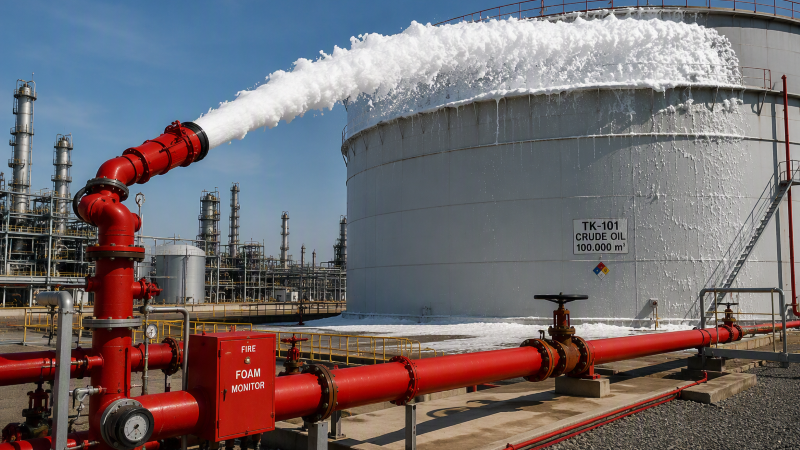
In this article, our colleague Nicolás Araúzo explains that in an industrial plant, fire protection does not begin when a pump, a network of fire hydrants, or a detection system is installed; rather, it is designed from the very beginning of the project.
15/10/2026
Nicolás Araúzo Alemany
Senior HSE Engineer and Fire Protection Systems Specialist
In an industrial plant, fire protection doesn’t begin when a pump, a network of fire hydrants, or a detection system is installed. It begins much earlier, at the design table.
The safety of a facility depends largely on the decisions made in the early stages of a project, when engineers analyze risks, understand the process, and coordinate each element so that it functions as an integrated system.
In sectors such as energy, the chemical industry, or Oil & Gas—where any incident can have significant consequences for people, assets, and operational continuity—having a well-designed fire protection strategy is essential.
Engineering offers a unique advantage: it is the only discipline that has a comprehensive view of the project and detailed knowledge of the process, from operating conditions to the most demanding emergency scenarios.
An effective fire protection system isn’t simply installed—it’s designed from the very beginning of the project.
The key lies in anticipation. Thanks to access to technical information such as process flow diagrams (PFDs and P&IDs), fluid characteristics, and risk analyses, engineering teams can define solutions tailored to the actual needs of each facility. This approach allows vulnerabilities to be identified from the outset and measures to be taken that improve the safety and reliability of the entire system.
Another major strength of engineering is its ability to integrate disciplines. Fire protection systems are closely related to areas such as processes, piping, electrical systems, instrumentation, and civil engineering. When all these disciplines work in a coordinated manner from the earliest stages, interference, subsequent modifications, and costs associated with on-site changes are reduced.
Fire protection cannot be approached as an isolated element. Its success depends on coordination across disciplines and on understanding how each system interacts within the facility.
In addition to improving safety, a rigorous design helps optimize the facility’s entire life cycle. The application of recognized international standards, such as NFPA, along with specialized certifications like FM or VdS, helps reduce failures, minimize unplanned interventions, and facilitate maintenance through the use of standardized equipment. It can also lead to better insurance terms and greater long-term operational resilience.
Experience shows that many of the most costly problems arise when fire protection is not properly incorporated from the design phase. This article describes the case of a facility where, during commissioning, it was discovered that certain critical pieces of equipment had not been included in the protection system. Correcting this issue required resizing key infrastructure and rethinking part of the fire suppression strategy just a few weeks before the plant was scheduled to begin operations.
Designing correctly from the start not only reduces costs; it also protects people and enhances the reliability of facilities throughout their entire service life.
Because, ultimately, fire protection is not merely a matter of regulations or technology. It is a strategic decision that begins with engineering and has an indispensable goal: to ensure the safety of people and infrastructure when they need it most.
Members of the Corporate Governance, Appointments and Remuneration Committee
Name
Role
Elena Jiménez de Andrade Astorqui
Chairwoman
Demetrio Carceller Arce
Director
José Manuel Loureda Mantiñán
Director
Susana del Castillo Bello
Director
María Elena Monreal Alfageme
Director
Ana María Sala Andrés
Secretary
Alfonso Aguirre Díaz-Guardamino
Vicesecretary
Members of the Audit and Sustainability Committee
Name
Position
José Joaquín Güell Ampuero
Chairman
María Jesús de Jaen Beltrá
Director
Luis Javier Cortés Domínguez
Director
Elena Gómez del Pozuelo
Director
Elena Jiménez de Andrade Astorqui
Vocal
Ana María Sala Andrés
Secretary
Alfonso Aguirre Díaz- Guardamino
Vice secretary
SacyrNewsDiscover the species found around our projects
Share:
Discover the species found around our projects
Our activities are carried out in natural environments where biodiversity plays a crucial role. Therefore, we are committed to protecting and preserving the ecosystems and communities with which we coexist.
11/09/2026
We work in natural environments where biodiversity plays a vital role. That is why we are committed to protecting and preserving the ecosystems and communities around them.
Caring for nature is not only about taking protective measures; it also means observing it, understanding it and appreciating its richness.
Colombia offers a good example. There, our colleagues Andrés Mauricio Forero Cano, a biologist in the Environmental Area of the Buenaventura-Loboguerrero-Buga project, and Manuel Alejandro Posso Gaviria, Environmental Birds' Route Project Coordinator at Unión Vial Camino del Pacífico who captured a series of images showcasing the fauna and flora found in the area. The photos were part of our RevelaVerde competition.
Andres Mauricio's photographs were taken in the Venado Verde Nature Reserve, in the area surrounding this road project.
“With these photographs, I want to show the immense biodiversity found in our region, particularly among amphibians and reptiles, a group that is still little known and often undervalued,” says our colleague.
“The photographs were taken using macro photography techniques. I used a Nikon D7200 camera with a 60 mm Laowa macro lens, external flashes and diffusers,” explains Andrés Mauricio.
Captured while work was underway, these five photographs bring us closer to a fascinating world of colors, shapes and behaviors that often goes unnoticed, yet plays an essential role in the balance of ecosystems.
The five photographs show:
1. Pacific lemur frog (Agalychnis psilopygion). “It is a species of incredible beauty and fragility that lives only in well-preserved forests.”
2. Cane toad (Rhinella horribilis). “This species has long been overlooked because of its appearance, but it plays a fundamental role in our ecosystems by controlling insect populations. Through macro photography, I wanted to capture its splendor and show that the world should look beyond appearances and recognize what lies beneath.”
3. Dwarf spiny iguana (Enyalioides heterolepis). “This lizard lives in the leaf litter of pristine forests and has a variety of scales that give it a striking appearance, which I wanted to highlight through macro photography.” The image won first prize in the Flora and Fauna category.
4. Glass frog tadpoles (Teratohyla spinosa). “These small glass frogs live in the vegetation that grows along streams. They lay their eggs in gelatinous clusters on leaves. When the eggs hatch, the tadpoles develop inside this gelatinous mass until they are large enough to drop into the streams and complete their development.”
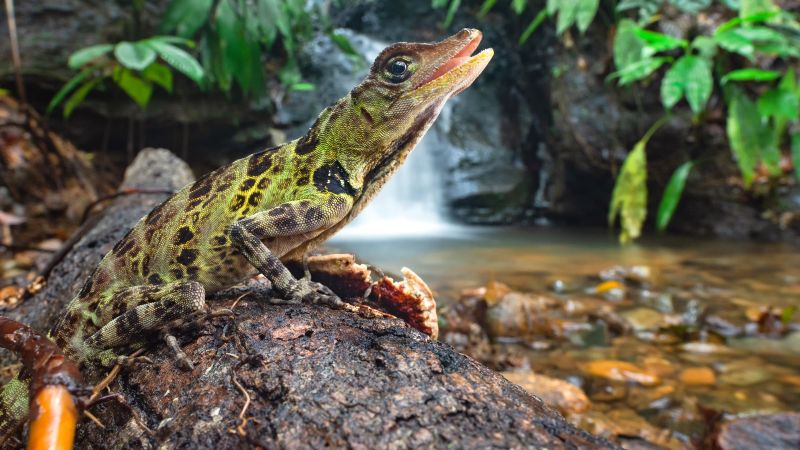
5. Broad-headed anole (Anolis latifrons). “This photograph was taken with a wide-angle macro lens, combining the detail of macro photography with part of the animal’s surroundings. This lizard species lives in vegetation near streams. In the photograph, I wanted to capture both its remarkable details and the habitat where it is usually found.” (top photo)
These images remind us how important it is to coexist responsibly with local wildlife and to make nature protection part of how we deliver our projects. Learning about the species that live in the areas where we work is the first step toward helping conserve them.
Another colleague who participated in RevelaVerde with his photographs is Manuel Alejandro Posso Gaviria, Environmental Birds' Route Project Coordinator at Unión Vial Camino del Pacífico.
Photo 1. Divine Poison
Poison dart frog (Oophaga anchicayensis). Located near the tunnels, along the Pepitas River. This frog is endemic to the region.
Photo 2. Blessed Fortune
Tree frog (Ecnomiohyla phantasmagoria). Located in San Cipriano. Virtually nothing is known about its ecology and behaviour, as this species lives high in the forest canopy, between 20 and 40 metres above the ground. It was discovered after a rainy night on a fallen branch. This species is literally a ghost, with only a handful of recorded sightings.
Photo 3. Wonders of Nature
Bridal Veil Fungus (Phallus indusiatus). Observed at Venado Verde during a birdwatching survey conducted for the Birds' Route project.
Photo 4. The Nap After a Meal
Boa constrictor (Boa imperator). Recorded more than six metres above the ground in San Cipriano, resting on a tree branch. It can be recognised by the yellowish coloration on its tail.
Photo 5. Give and Take
Mating ritual of two Squirrel Cuckoos (Piaya cayana). The male brings food to the female, and the female rewards him with mating. Photograph taken in Río Bravo.
We rescued a turtle at our Skikda desalination plant
Our commitment to biodiversity is reflected in practical action, showing the responsibility and care our teams bring to the ecosystems around us.
A recent example took place at the Skikda Desalination Plant O&M Joint Venture in Algeria, where the plant team stepped in to rescue a sea turtle that had become trapped on the premises. Thanks to the team’s swift response, the animal was safely released and returned to the sea in good condition.
Zenina Hadjer, a laboratory technician and the author of the images submitted to the RevelaVerde competition, explains: “During operations at the plant, a sea turtle was found trapped in the facility’s intake basin. Aware of our responsibility to the ecosystem, our team acted immediately. We carefully rescued the animal and took it to Srigina Island, where it was safely released back into its natural habitat.”
“These images show how our industrial operations can coexist with the preservation of local biodiversity,” says our colleague.
Actions like this show that sustainability is also shaped by everyday decisions and efforts.
Thanks to our teams’ commitment and dedication, we help protect biodiversity and preserve the natural value of the environments where we operate.
This website uses its own and third-party cookies to improve the user experience and analyze their behavior in order to improve the service offered.
You can consult additional information about the cookies installed on our Cookies policy.
These cookies are exempt from compliance with article 22.2 of the LSSI in accordance with the recommendations indicated by the European authority on privacy and cookies. In accordance with the above and although configuration, acceptance or denial is not possible, the editor of this website offers information about them in an exercise of transparency with the user.
Name: LFR_Session_STATE_*, Provider: Liferay, Purpose: Manages the session as a registered user , Expiration: Session, Type: HTTP
Name: GUEST_LANGUAGE_ID, Provider: Liferay, Purpose: Determines the language with which you access , to show the same in the next session, Expiration: 1 year, Type: HTTP
Name: ANONYMOUS_USER_ID, Provider: Liferay, Purpose: Manages the session as an unregistered user , Expiration: 1 year, Type: HTTP
Name: COOKIE_SUPPORT, Provider: Liferay, Purpose: Identifies that the use of cookies for the operation of the portal, Expiration: 1 year, Type: HTTP
Name: JSessionID, Provider: Liferay, Purpose: Manages login and indicates who is using the site, Expiry: Session, Type: HTTP
Name: SACYRGDPR, Supplier: Sacyr, Purpose: Used to manage the cookie policy , Expiration: Session, Type: HTTP
ANALYTICS
These cookies allow us to count visits and sources of circulation in order to measure and improve the performance of our site. They help us know which pages are the most or least popular, and see how many people visit the site. All the information collected by these cookies is aggregated and, therefore, anonymous.
Name: _ga_<container-id>, Provider: Google, Purpose: Collects data about the number of times a user has visited the website in addition to the dates of the first and most recent visit. Used by Google Analytics, Expiration: 2 years Type: HTTP
Name: _ga, Provider: Google, Purpose: Registers a unique ID that is used to generate statistical data about how the visitor uses the website, Expiration: 2 years Type: HTTP