SacyrNewsBlogInnovation to remove nitrogen in wastewater
Share:
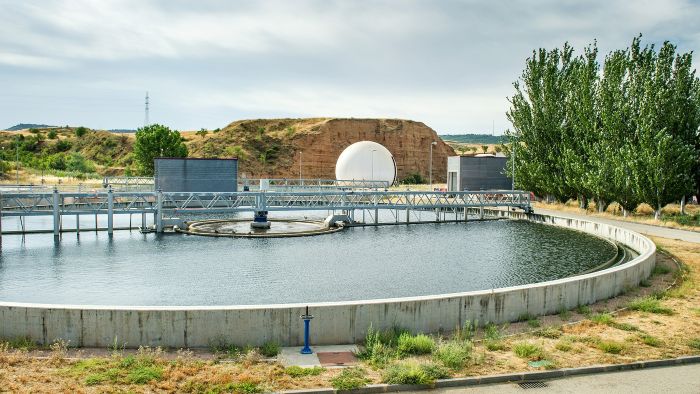
EDAR Guadalajara donde se ha realizado la prueba piloto.
Innovation to remove nitrogen in wastewater
Our Denitox project develops a technology that consumes less energy and less organic matter during nitrogen removal in high-load streams in wastewater.
12/05/2026
Nitrogen pollution in wastewater is an increasingly prevalent environmental challenge due to industrial, urban, and agricultural activities. Conventional nitrogen removal processes require intensive energy and a sufficient amount of organic matter that is not always available.
To improve this process and make it more efficient, we are innovating with the Denitox project, which we are developing together with the University of Granada.
"With Denitox, we managed to reduce nitrogen by up to 80% and save energy by up to 50%," explains Elena Campos, head of Technical Support for Sacyr Agua's Treatment Area.
The nitrogen present in surface water bodies can promote uncontrolled algae growth, which can lead to high fish mortality, as has happened in the Mar Menor.
More restrictive European directive
The new European Wastewater Treatment Directive (TARU) drastically reduces the limits of nitrogen in discharge, which in many cases implies a real technological challenge.
The runoff stream in plants with anaerobic sludge digestion can reach up to 20% of the total nitrogen load that reaches the plant and needs to be retreated after removal. Hence the importance of treating these return streams that have a high nitrogen content, but a low organic matter content.
With our Denitox technology we can achieve lower nitrogen emissions in the discharge, with high polluting potential, economic savings and the reduction of greenhouse gas emissions.
Pilot test
"We have carried out a pilot test in the Guadalajara treatment plant, which was applied to the return stream of the sludge line, which has a lot of nitrogen. If wastewater normally has between 60 and 80 mg per liter, that stream has 500-1,000 mg per liter. In this study, which was carried out with real water and variable conditions, an 80% reduction was achieved in a stable way," explains Elena.
"Now, the main challenge is to maintain these high efficiencies at room temperature and shorter hydraulic retention times. If we manage to bring it to an industrial scale, Denitox would be a competitive solution for wastewater treatment applicable in many treatment plants to meet nitrogen removal targets," concludes Elena Campos.
Before this test, a stopover was made in the laboratory at the University of Granada, with which we have developed this technology.
"We have optimized the operating conditions, but we need to scale up to a larger size and see how to control the conditions well.
International award in Saudi Arabia
Recently, the Denitox project has won the Global Prize for Innovation in Water (GPIW), organized by the Saudi Water Agency, in the Sustainable Water Production and Environmental Conservation category.
This category values the balance in water supply with the protection of the ecosystem and the reduction of emissions.
SacyrNewsBlogArtificial Intelligence to Transform Sanitation Management
Share:
Artificial Intelligence to Transform Sanitation Management
VIDIA project consists of a model trained to detect, classify, and geolocate incidents within sewerage networks.
09/04/2026
At Sacyr Water, we have a new system trained with artificial intelligence to detect damage in its collector networks.
"We believe that AI can achieve very low error rate functionality by training a model that learns from common defects detected by the human eye, such as cracks, fissures, and blockages in the sewerage network.
This Machine Learning model helps us reduce the error rate in detecting these common defects. Additionally, Artificial Intelligence has been implemented to interpret text and generate final reports", explains Miguel Cebrián, head of digital transformation at Sacyr Water.
VIDIA is an asset intelligence platform developed by Sacyr for critical sanitation infrastructure management.
This system transforms the traditional network inspection process into an automated, data-driven workflow. It doesn't just identify damage; it classifies it according to standardized typologies.
VIDIA utilizes generative artificial intelligence, advanced analytics, and integrated visualization, converting raw data into strategic information for decision-making. It is a tool that unifies everything: people, processes, and technology, providing a 360º view of the service.
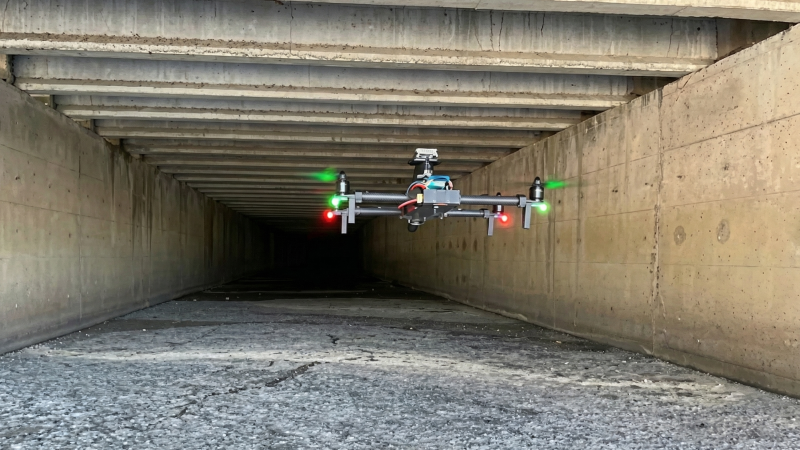
"First, camera footage is captured, which can be done via a drone or a robot within the sewage network. Then, this video is fed into our VIDIA system which, thanks to ML technologies, identifies images, and with Generative AI, analyzes texts and automatically generates reports," states Miguel Cebrián.
Furthermore, VIDIA is integrated with the GIS system. This means all alerts are georeferenced on a city map, allowing for the prioritization of actions in strategic or sensitive areas.
This machine learning model, trained with generative AI, has been jointly developed by Sacyr Water's technical department and the company's IT department.
VIDIA differs from all similar systems in the water sector because it automates the entire workflow. It not only identifies damage but also contextualizes it: classifying it according to standardized typologies and precisely geolocating it within the collector.
VIDIA is positioned as a key tool to anticipate incidents, reduce operational costs, and ensure service continuity.
"Digital transformation in sewage network management is no longer an option, but a necessity. This tool transforms a traditionally slow and costly process into an automated, intelligent, and results-oriented workflow", concludes Cebrián.
SacyrNewsBlogHow to build a house that clings to a cliff
Share:
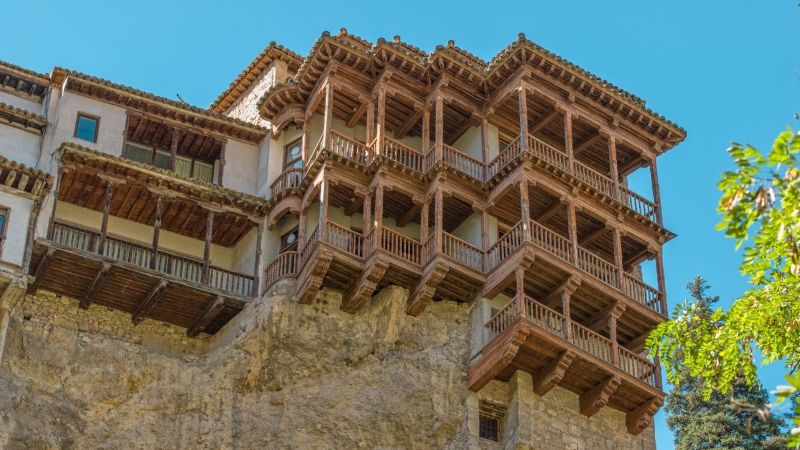
The Hanging Houses of Cuenca use cantilevered beams supported by internal walls to counterbalance the weight of their projecting balconies. Credit: Eve Livesey/Getty Images
How to build a house that clings to a cliff
Some structures begin where the ground ends. Houses that don’t rest on the earth, temples that seem suspended in mid-air, and buildings that cling to the rock as if they were part of it. In these places, architecture stops expanding and learns to support itself over empty space.
Clinging to a granite wall requires understanding the language of the rock. Since the Middle Ages, architecture has sought solutions that would allow people to inhabit the most extreme terrains, defying gravity as if floating above the void. The Hanging Houses of Cuenca, built in the 15th century, the monasteries of Meteora in Greece, suspended on near-vertical rock pillars, or contemporary designs such as Australia’s Cliff House, are structures that share the same idea: to build right on the boundary between solid ground and empty space.
Cuenca: Conquering Airspace
During the 15th century, the town of Cuenca established itself within the Kingdom of Castile as a strategic stronghold and the region’s economic hub. This growth created the need to accommodate an expanding population beyond the medieval walled fortress overlooking the gorges of the Júcar and Huécar rivers. The scarcity of available land led to the design of the Hanging Houses, a conquest of the void yet independent of it.
The construction relied on complex structural systems using cantilevered beams (known as almojayas) supported by the interior walls. These systems counterbalanced the weight of the overhanging balconies with the floor structure of the building’s lower level. The complex, which can be admired from across the river, was recognised as part of the historic walled town of Cuenca, which was declared a UNESCO World Heritage Site in 1996.
Meteora: Balance as Reinforcement
The Orthodox monasteries of Meteora (Greece) faced a different challenge: maintaining balance atop porous rock pinnacles, rising almost vertically above the plains near Kalambaka in Thessalian. As in Cuenca, the solutions employed reflected an adaptation to the environment.
The Orthodox-Byzantine monasteries of Meteora are built so that their weight distribution prevents the sandstone pinnacles on which they are perched from collapsing. Credit: Walter Weinberg / 500px/Getty Images
These towering pillars of sandstone and conglomerate, some of which reach up to 600 metres, were chosen by the Orthodox-Byzantine monks in the 14th century as sites for monasteries, offering refuge from Ottoman attacks. The unique setting, which translates from the Greek Μετέωρα as “suspended in the air”, was ideal for solitary spiritual practice and could only be accessed by long ladders or rope nets hoisted by pulleys.
In this feat of medieval engineering, the monks exploited natural cracks in the rock to wedge in wooden pegs and erect temporary scaffolding. The rock itself was used to build the walls and carve cisterns for collecting rainwater.
The weight distribution of the monasteries is typically concentrated at the centre of the pinnacle, which prevents the stone column from collapsing. The structure itself acts as a compression plug, sealing fissures in the porous sandstone and preventing them from expanding due to water infiltration.
The Evolution of the Cantilever: From Wood to Steel
These rock-based construction techniques have evolved into other extreme projects that seek minimal impact on the landscape. One such example is the houses in the Wangxian Valley in China, an example of rural regeneration where architecture revives the traditional aesthetics of the Xian ethnic group through cutting-edge engineering.
The dwellings are suspended from granite walls using cantilever principles, but rather than wooden beams, they employ concealed steel structures and high-strength bolts anchored into the rock. The same technical approach is employed in the as-yet-unbuilt Modscape Cliff House in Australia, a conceptual project designed to hang over a precipice on the Victorian coast.
The dwellings in China's Wangxian Valley are anchored to the rock using steel structures and high-strength bolts. Credit: Jaclyne Ortiz/Istockphoto
The proposed design consists of five modular units anchored to the rock with high-strength steel fixings, mimicking the way barnacles attach themselves to a ship’s hull. The stability of the structure is determined by the controlling of loads and the torsion of the structural elements, a technical challenge with a centuries-long history that can now be addressed through digital simulations and high-strength materials.
The desire to float above the landscape is not new. In the late 1960s, the modernist architect Harry Weese already defied gravity with the Shadowcliff, a glass and steel structure over Lake Michigan in Ellison Bay, Wisconsin. This demonstrated that steel could make it possible to inhabit the abyss without the need for massive foundations.
What once arose from defensive or spiritual needs in medieval times has evolved into extreme architectural solutions that test our ability to inhabit places where we were never meant to be.
Tungsteno es un laboratorio periodístico que explora la esencia de la innovación.
SacyrNewsBlogLas Setas de Sevilla become a superblock
Share:
Las Setas de Sevilla become a superblock
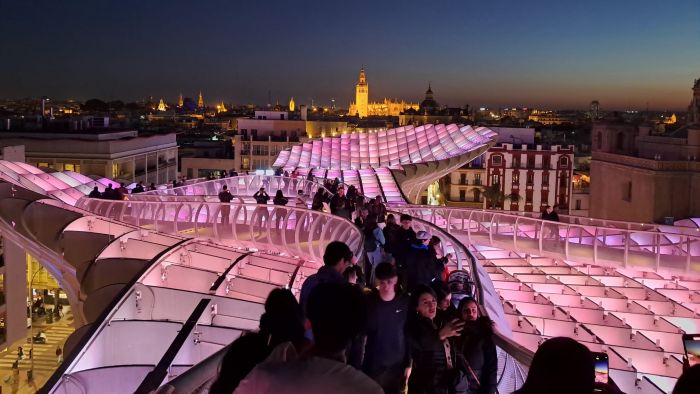
We are participating in a technological project so that Las Setas, the third most visited monument in the Andalusian capital, contributes to a more sustainable and friendly urban layout for Sevillians and visitors.
24/03/2026
Superblocks are making their way into our urban layouts. They go beyond the traditional concept of blocks to configure larger spaces in which traffic decreases and improves the integration of leisure, green areas, and residential buildings.
"Urban superblocks reorganize the urban fabric to prioritize pedestrians," says Gema Ortiz, Innovation project manager at Sacyr and head of Sustain, a superblock project in the center of Seville (Spain).
Our site, Las Setas de Sevilla, participates in Sustain together with a consortium of companies and entities. In a city as touristy as the Andalusian capital, this project aims to improve the experience of visitors and citizens of Seville.
"We seek a positive social impact and we rely on cutting-edge technologies, such as digital twins and artificial intelligence," explains Leticia Franco, coordinator of Las Setas de Sevilla.
Sustain is funded with €1.8 million by the "Science and Innovation Missions 2024" Call, promoted by the Center for Technological Development and Innovation, with Next Generation funds from the European Union, within the Recovery, Transformation and Resilience Plan.
It is led by Inycom, and together with Las Setas de Sevilla, Cemosa, Buchanan and Simetría Innovación are participating.
Sustain addresses digitalization, sustainability, resilience and social impact in urban environments. "We promote a significant reduction in the carbon footprint, an improvement in energy efficiency and environmental quality and an optimization of urban mobility. In short, the creation of healthier and more sustainable environments," explains Gema Ortiz.
To achieve these objectives, an integrated management platform is being developed that, through the use of digital twins and artificial intelligence algorithms, allows the design and optimization of superblocks in all their constituent elements: building, mobility and redevelopment.
The platform simulates behaviors and makes decisions based on data from different sources, in order to reduce risks, improve participation, and continuously adapt the design to maximize social, environmental, and economic benefits.
Thanks to this technology, Las Setas de Sevilla will be able to improve infrastructure management, security, user experience and maintenance.
"Together with the ITA Technology Center, we have developed a digital twin that will allow us to identify behavioral patterns in Las Setas visitors through the use of various sources, cameras and mobile data, among others. In addition, we will predict behavior in future scenarios and, based on this, we will be able to deploy our management strategy", summarizes Leticia Franco.
SacyrNewsBlogSix Volunteers Bring Sacyr's Talent and Engineering to Mauritania
Share:
Six Volunteers Bring Sacyr's Talent and Engineering to Mauritania
A group of six Sacyr professionals traveled to Bir Moghrein (Mauritania) on the second trip organized by the Sacyr Foundation to collaborate on infrastructure development.
23/04/2026
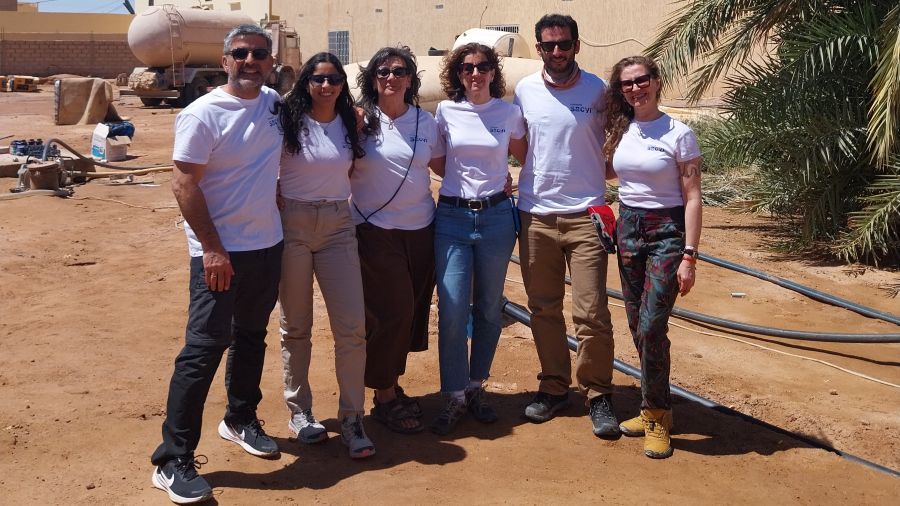
Six Sacyr professionals participated in an international volunteer program organized by the Sacyr Foundation in collaboration with the NGO UPlanet.
Paco Molina, Iván Roselló, Camila Quintín, Eva Abad, Lucía Cecilia, and Ana Grande spent a week in Bir Moghrein, an isolated village in northern Mauritania. The expedition also included Rubén Fernández, Ana Grande's son, along with a group of 30 healthcare professionals from HumanCoop, four members of UPlanet, and a professional from Viamed, Rodrigo Morilla, a former Sacyr colleague.
This marks the second edition of the volunteer program in Mauritania, which aims for Sacyr professionals to help repair and develop infrastructure that impacts the lives of the local population.
Among the projects they collaborated on, a highlight was the repair of deficiencies in the village's desalination plant to improve water production and quality. Additionally, the necessary technical documentation was created for the installation of a new containerized desalination plant, which is scheduled to arrive in the summer.
The electrical system of the health center was also renovated, a project to install new latrines in the primary school was developed, and progress was made on a one-hectare garden project to provide food for the population and create employment for women.
Finally, an entrepreneurship workshop was organized to boost the local economy among women.
A tough but rewarding experience
"On a personal level, it has been an incredible experience; it grounds you and gives you a lot of perspective on life. Professionally, it has been rewarding to be able to make my small contribution through this wonderful profession," explains Camila Quintín (Sacyr Engineering and Infrastructure).
Paco Molina and Iván Roselló, both from Sacyr Water, collaborated on improving the desalination plant's facilities. They adjusted water quality by implementing a mixing system with filtered water to extend the life of the membranes. They also created a bypass for the filter backwash water.
Paco Molina states that it is a trip "worth repeating." "It has been a tough yet kind, disheartening yet enriching, selfish yet selfless experience – a mix of contrasting feelings, but always with a positive balance," he adds.
"We have bridged gaps through effort and collaboration," affirms Iván Roselló.
"Our group created a balanced ecosystem in a remote and inhospitable place. A reality check that puts my concept of 'life' into perspective," says Eva Abad (Sacyr Proyecta).
Ana Grande (Sacyr Holding) emphasizes that this volunteering experience is a "challenge overcome." "I applied engineering outside of my comfort zone, engaged in teamwork, and gained real learning. It has been an experience that adds value professionally and personally, thanks to the people with whom I shared this adventure," remarks Ana.
"It has been a tough but very rewarding experience at the same time. Helping these people who have so little gives you another perspective on life and what is truly important, which is helping each other. I value the human warmth of my colleagues," explains Lucía Cecilia (Sacyr Holding).
Rubén Fernández, in charge of the electrical tasks, stated that "the lack of technical materials made work difficult at the clinic, but with effort and improvisation, we managed to get our job done." He adds, "It has been a different and tough experience, but I have learned so much about how fortunate we are to live in a country like ours and the ease we have in Europe of drinking tap water and finding whatever you need in any store."
Collaboration with UPlanet
The collaboration between the Sacyr Foundation and UPlanet is fundamental for integrating infrastructure in this underdeveloped region, isolated by a vast desert expanse. UPlanet, in turn, collaborates with HumanCoop, which organizes medical-surgical missions to the country, thereby creating synergies in organizing all logistics.
The next initiative we will collaborate on will be the installation of a new portable containerized desalination plant, which will arrive in Bir Moghrein in the summer.
"Our collaboration with UPlanet helps us reach these remote areas, where, thanks to our help, they can count on experts in infrastructure and water who collaborate to improve the facilities of these communities," explains Pedro Alonso, Director of the Sacyr Foundation.
"International volunteer programs help our professionals step outside their usual scope of work and grow as individuals," he explains.
"At UPlanet, we believe that community development hinges on improving basic infrastructure, which allows for laying the foundations of sustainable development. Thanks to the collaboration and contribution of the Sacyr Foundation, the actions carried out in agriculture, water, and sanitation have been a success. They have immeasurable value," explains Matías Fernández, Presidente of UPlanet, a former colleague from Sacyr Water, and coordinator of the field mission conducted in Bir Moghrein.
SacyrNewsBlogFinal stretch for the TBM at the Barcelona Metro
Share:
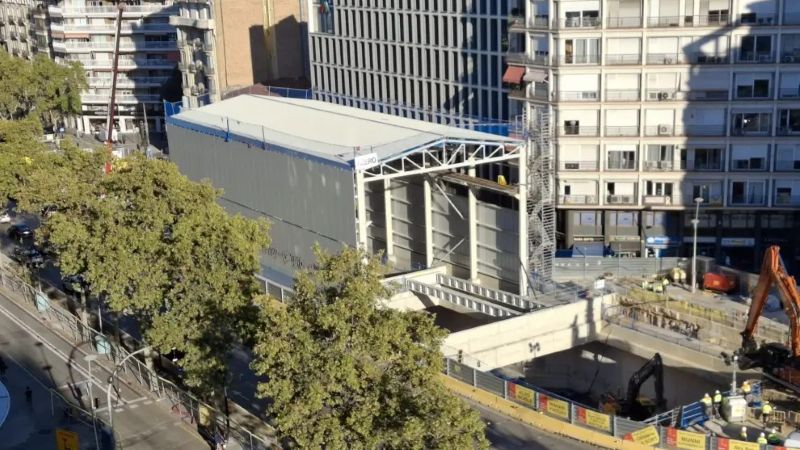
Gran Vía TBM launching shaft.
Final stretch for the TBM at the Barcelona Metro
The tunnel boring machine (TBM) destined to excavate the new section of Barcelona Metro's Line 8 is currently undergoing its final rigorous testing. It's now being prepared to begin its journey through the city's subsoil this summer, ultimately carving out nearly four kilometers of new tunnel to revolutionize mobility in the Catalan capital.
10/03/2026
This ambitious Barcelona Metro Line 8 extension will introduce four kilometers of new track, three new stations (Gràcia, Clínic, and Francesc Macià), and include a significant upgrade to the existing Espanya station. The Joint Venture (JV) awarded the project comprises Sacyr (27.5%), Ferrovial (27.5%), Copcisa (22.5%), and Copisa (22.5%).
The TBM, a critical component for this expansion, is presently in Sant Boi, where it's undergoing its conclusive tests.
“We are conducting thorough inspections, testing all components, software, automation, and mechanical functions to guarantee flawless operation before relocating it to the Gran Vía launching shaft,” explains Toni Julià, the JV's Construction Manager.
Later this month, the TBM's various components will commence their transfer to the launching shaft, marking the precise location where excavation will begin. This powerful machine is expected to remove over 300,000 cubic meters of earth.
The excavated material will be transported from Joan Miró Park via an auxiliary micro-tunnel constructed beneath Llançà Street. From there, a dedicated conveyor belt system will transfer the spoil to waiting trucks for disposal at a landfill.
“The launching shaft is progressing very well: the front section is being prepared with the base slab for TBM assembly, while the rear is being configured for its connection with the micro-tunnel. We are also erecting an acoustic enclosure to mitigate noise during the boring operations,” Juliá adds.
Even as the TBM assembly advances, other critical construction activities are in full swing.
At the Hospital Clínic and Francesc Macià station sites, hydrofraise trench cutters are actively constructing diaphragm walls that will reach an impressive depth of 82 meters. These are set to be the deepest ever built in Spain.
These robust diaphragm walls are essential; they will enable the safe excavation of the shafts through which the TBM will pass and, subsequently, facilitate the construction of the underground caverns designed to house the station platforms.
Key Highlights of this Major Infrastructure Project
“With an anticipated 19 million annual users, this project represents one of the most socially and economically beneficial undertakings within the Generalitat's Infrastructure Master Plan,” Toni Julià emphasizes.
The L8 extension will seamlessly connect Barcelona's two primary railway networks—Baix Llobregat and Vallès—managed by FGC. This integration is poised to significantly enhance intermodality and overall city-wide mobility. The project carries a budget of €322 million and is scheduled for completion within 61 months.
For the reconstruction of the LP-2 road in La Palma (Canary Islands), we are deploying drones equipped with infrared thermography to monitor the thermal evolution of the lava, ensuring both the safety and feasibility of the operations.
20/04/2026
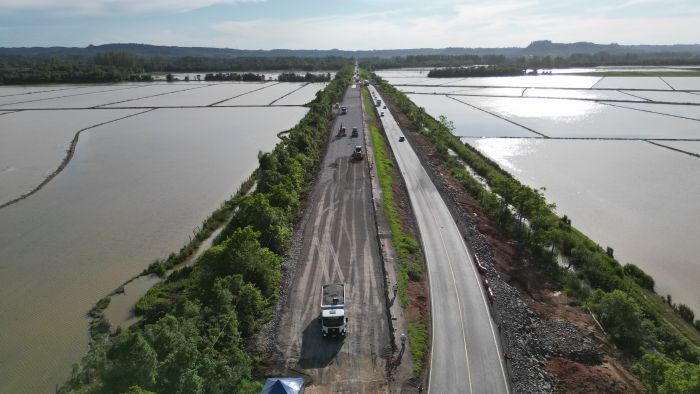
The 2021 eruption of the Tajogaite volcano in La Palma (Canary Islands) buried the LP-2 road while it was undergoing construction. We are currently rebuilding the section between kilometers 40 and 43, contending with the high temperatures that still persist within the lava field.
“Constructing this new road across the lava field necessitates a thorough assessment of the ground's thermal conditions, as volcanic lava flows can retain high temperatures for many years,” explains Juan Antonio Romero, Head of Topography at Sacyr Engineering in La Palma.
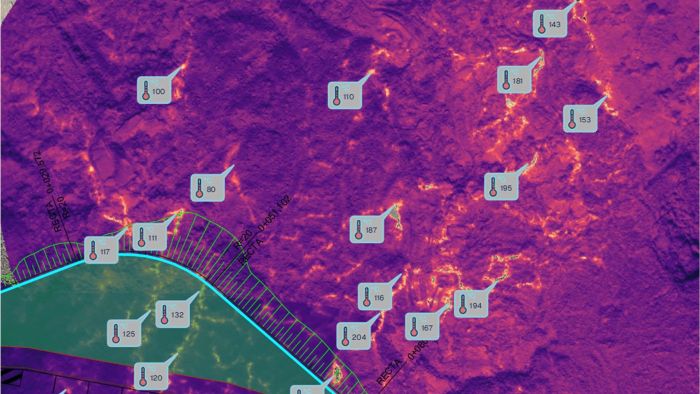
We have addressed this challenge by deploying drones equipped with infrared thermographic cameras for the capture, analysis, and thermal modeling of the affected terrain.
This technology enables us to identify areas with significant thermal activity, evaluate the technical feasibility of the proposed route, and provide recommendations to ensure safe operations for our professionals and partners.
Furthermore, this detailed analysis helps anticipate potential impacts on the road pavement structure and bituminous mixtures, as thermal variations can alter their cohesion, stiffness, and durability. This, in turn, informs the design and construction decisions for the future pavement.
This project is spearheaded by the Canary Islands Ministry of Public Works, which awarded the contract to the JV TAJUYA joint venture (comprising Sacyr Engineering and Infrastructure, Traysesa, Herquipalma, and Los Volcanes). The project is slated for completion in 2028.
Thermal Radiation Measurement
Infrared thermography is a remote sensing technique that detects thermal radiation emitted by objects based on their surface temperature. In the geotechnical field, this tool has proven to be an effective method for:
• Identifying areas of residual volcanic activity.
• Detecting active fractures and gas emissions.
• Analyzing cooling processes in lava flows.
• Evaluating the thermal stability of ground for civil engineering projects.
“Through the acquisition and processing of infrared images, we have generated georeferenced heat maps and graphs that illustrate the thermal evolution. The DJI MATRICE 350 RTK drone, equipped with a camera, can detect temperatures ranging from 0 to 550 degrees Celsius,” explains Juan Antonio Romero.
“This undertaking combines advanced technologies in remote sensing, thermal photogrammetry, and geospatial analysis. As a result, we enhance the road's quality and, crucially, improve site safety and occupational health,” he concludes.
SacyrNewsBlogSemi-Submersible Drones: Bringing Aquatic Environments to Light
Share:
Semi-Submersible Drones: Bringing Aquatic Environments to Light
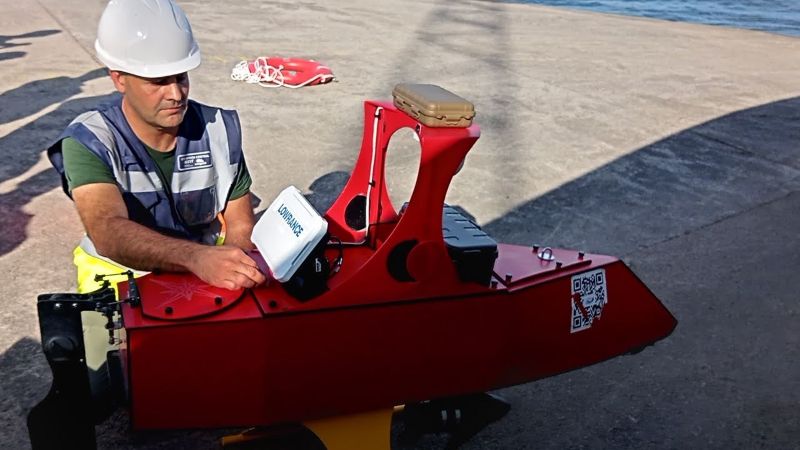
We operate a semi-submersible Uncrewed Surface Vehicle (USV) capable of collecting seabed data even in the most adverse conditions.
06/03/2026
Understanding the seabed is key before initiating any marine construction project. Bathymetry, or detailed seabed mapping, consistently faces numerous challenges, including the inherent conditions of the sea itself.
These challenges have arisen during the Central Pier Extension, Phase 2, project at the Port of Bilbao. There, we conducted verification tests to enable operations with easily transportable semi-submersible uncrewed vehicles.
"We have innovated by installing a multibeam echosounder and a side-scan sonar on these units. Using acoustic waves, we acquire seabed elevation data," explains Alfredo Pérez, Head of Marine Works at Sacyr Engineering and Infrastructure’s Technical Services Department. Pérez was recently honored with the Natural Innovators 2025 award, a Sacyr internal program for the promotion and advancement of innovation.
"Thanks to this drone, we reduce CO2 emissions and enhance operational capability in the most unfavorable weather conditions," he explains.
"Tests have been conducted both in the open sea and within the port basin. This allows for a more thorough evaluation of the characteristics of this semi-submersible unit and enables a comparison with conventional methods," Alfredo Pérez adds.
Acoustic probes are the only ones that propagate effectively in turbid aquatic environments. This high-frequency echosounder generates a conical beam, providing a data point cloud with far more comprehensive seabed information than traditional single-beam echosounders. This point cloud is then used for data processing, interpolation, and noise reduction, ultimately rendered as contour maps for detailed seabed interpretation.
Bathymetric surveys performed with this method are compared with those obtained by conventional means, and an analysis is conducted to determine if the tolerances between both datasets are within acceptable values.
The echosounder used in Bilbao offers a scan that allows for real-time visualization of the seabed. It provides insights into the terrain's hardness and roughness and performs side scans for object detection. Its measurements can be taken in environments up to four times more challenging than those supported by conventional methods.
"In the future, our goal is to expand the inner data cone to 160 degrees. We also plan to install an antenna on the echosounder to use an airborne bathymetric lidar, which would provide both terrestrial and marine data in a single operation. This way, we will have complete terrain profiles, overlapping both the marine and terrestrial sections," says Alfredo.
Several cities are transforming wastewater into clean, drinkable water. Credit: Unsplash
Giving water a second life
From Namibia to Singapore, recycled water has become a vital resource. Places such as Windhoek, Orange County, and Singapore show how technology and innovation make it possible to transform wastewater into safe drinking water.
In 1968, Windhoek, Namibia, became the first city in the world to use recycled drinking water. Today, its example inspires other places: the Orange County Water District in California supplies more than a million people with safe recycled water, and Singapore, through its NEWater plant, produces recycled water for both industrial and household use. We explore the projects and processes that give every drop of water a “second life.”
How Namibia turns wastewater into drinking water
Namibia is one of the most arid countries in sub-Saharan Africa, and Windhoek sits on a plateau where evaporation is extreme: 83% of the rain that falls disappears into the air. The city lacks nearby perennial rivers and depends on water sources that fluctuate dramatically with the climate. Faced with chronic shortages and severe rationing in the late 1950s, the city had to look for innovative solutions.
In 1968, the Goreangab Water Reclamation Plant was established, using direct potable reuse. In other words, treated wastewater is fed directly back into the supply network without passing through a natural “buffer” such as a river or lake. Windhoek’s system is like an obstacle course for water: it must pass through multiple filters and treatment stages until it becomes completely safe to drink.
To keep pace with rapid population growth and rising demand, a new treatment plant was built in 2002. Today, the Windhoek system is a global benchmark and an example of sustainable water management, visited by experts from around the world. The plant produces up to 21 million litres of potable water per day. On average, the city’s drinking water contains between 20% and 25% recycled water. During periods of extreme drought, this source can provide nearly a third of the total supply.
Namibia has a pioneering project to convert wastewater into drinking water. Credit: DW News
A Giant in Drinking Water Recycling in California
There are other notable examples of water recycling. Orange County operates the Groundwater Replenishment System (GWRS) in California, recognised as one of the world’s largest water purification systems for drinking water reuse. Unlike Windhoek, which uses direct potable water reuse (to the tap), Orange County uses indirect potable reuse. This means that once the wastewater is purified, it is not sent directly to homes. Instead, it is injected or percolated into the county’s groundwater basins, where it mixes with the natural water supply before being extracted again for human consumption.
The system can produce up to 130 million gallons per day (about 492,000 cubic metres), enough to meet the needs of nearly one million residents, according to the Orange County Water District. This system supplies approximately 35% of the region’s total water demand and reduces dependence on imported water from the Colorado River or the Sacramento–San Joaquin Delta in Northern California.
This is one of the world’s largest indirect potable water reuse plants. Credit: Orange County Water District
The Water Revolution in Singapore
Singapore is also a global leader in water management. As an island nation with limited freshwater resources and little space for reservoirs, it faces one of the highest levels of water stress in the world.The NEWater process converts wastewater into ultra-pure potable water in three key stages: first, microfiltration and ultrafiltration remove microscopic particles and bacteria; next, reverse osmosis captures viruses, heavy metals, and chemical contaminants; and finally, ultraviolet disinfection eliminates any remaining microorganisms.
Singapore strives to manage its water safely. Credit: DW Planet A
At the heart of the system lies the Changi Water Reclamation Plant, which can treat up to 900 million litres of water per day. Because of the island’s limited space, much of the system operates up to 25 storeys underground, through a complex network of tunnels and tanks. The system relies on indirect potable reuse. Although the water is technically potable after treatment, most of it is used for industrial purposes—especially in the manufacture of microchips, which require extremely pure water—and for cooling systems. Only a small amount is pumped into reservoirs, where it mixes with raw water and undergoes further treatment in conventional plants before reaching homes.
Tungsten is a journalistic laboratory that explores the essence of innovation.
SacyrNewsBlogThe Historian Safeguarding the Secrets of the Vatican
Share:
Unsplash / Governatorato SCV
The Historian Safeguarding the Secrets of the Vatican
Barbara Jatta, an Italian art historian, is the first woman to lead the Vatican Museums in more than five centuries. Her appointment by Pope Francis at the end of 2016 marked a historic milestone for the institution.
Barbara Jatta, the first-ever female director of the Vatican Museums in over five centuries, is responsible for safeguarding and restoring some of the Vatican’s most inaccessible spaces: sealed chambers, hidden storage rooms, and restricted areas where manuscripts, frescoes, and objects too fragile to be displayed are conserved. Under her supervision, specialised teams labour quietly, employing techniques ranging from traditional craftsmanship to the use of lasers, 3D scanning, and advanced conservation systems. Jatta safeguards a heritage that few ever see, yet one that underpins the world's most significant artistic and religious history.
Today, she oversees a treasure trove of more than 200,000 works of art, spread across 11 kilometres of galleries, and oversees seven restoration laboratories. Under her leadership, the museums are not only preserved but increasingly digitised: virtual tours and online catalogues allow the Vatican's artistic heritage to reach audiences worldwide. With every decision about what to exhibit or what to keep secret, Jatta breathes life into a legacy that is both cultural and spiritual.
Jatta looks back on her journey at the helm of a collection of more than 200,000 works of art. Credit: EWTN
What Remains Unseen in the Vatican Museums
The proportion of works on display compared with those kept in storage varies depending on the type of art. “If we look at the percentage of what is on display and what is in [storage], it is amazing. Certain collections have only 1% on display,” she explained in an interview. In the case of painting and contemporary art collections, she estimates that the ratio is “25% on display and 75% in storage.” The institution seeks to “rotate some collections to show them better,” especially those that are easier to move, such as contemporary art and paintings.
Although Jatta is responsible for safeguarding monumental masterpieces such as the Sistine Chapel, her favourite work is a small painting of the Virgin and Child by Fra Angelico, located in Room IV of the Pinacoteca, which often goes unnoticed by many visitors. One of her preferred locations within the entire complex is the Belvedere Terrace. Designed by Bramante in the 16th century, this area is closed to the public and offers a view over Vatican City.
The Virgin and Child between Saint Dominic and Saint Catherine of Alexandria. Credit: Fra Angelico / Vatican Museums Pinacoteca
Within the complex, Jatta has experienced many unique moments. She recalls walking through the empty galleries during the pandemic lockdown, accompanied only by a small number of guards. She describes the experience as “terrifying” and “magical” at the same time, like being in a ghost town. During that period, the institution faced a profound financial crisis, as the Vatican Museums—unlike other large museums—rely exclusively on ticket sales. After a year of intermittent closures, Jatta acknowledges that anxiety spread: “People around us were talking about selling our objects to survive.” She describes the institution's recovery as a “miracle” that allowed activities to resume without the need to part with its artistic heritage.
From the Vatican to the World
Today, Jatta is a member of prestigious international organisations, such as the Scientific Council of the Louvre Museum and the International Advisory Committee of the Hermitage Museum. Over the course of her career, she has received numerous distinctions, including the Order of the Star of Italy (2019), Commander of the Royal Order of the Polar Star of Sweden (2020), and the rank of Officer of the Order of Arts and Letters of France (2021).
This international recognition reflects her view of art as a spiritual bridge that unites cultures and nations. For this reason, the museums under her direction organise exchanges with countries such as China, Mexico, and Chile. Jatta describes the collections as an “invaluable heritage of creativity, civilisation, art, history, and tradition.” This richness is valued not solely for the objects themselves, but also for the devotion that ensured their preservation across the centuries.
Tungsten is a journalistic laboratory that explores the essence of innovation.
SacyrNewsBlogFalse promises that have depopulated our mountains
Share:
Foto de la oficina de Turismo de Villardeciervos
False promises that have depopulated our mountains
Jesús Alcanda Vergara, Forestry engineer in the Energy division of Sacyr Water, explains in this article how land-use planning decisions have displaced Spain’s rural population over recent decades.
09/02/2026
Jesús Alcanda Vergara
Energy division of Sacyr Water
It was 1991 when my friend Luis Carlos and I met at the Natural Environment Service of Zamora with José Luis Montero de Burgos (who had served for 20 years as Head of the National Reforestation Service of the Ministry of Agriculture). We were attending a meeting with the Service’s technical staff to hear the guidelines they intended to propose for a reforestation project covering 6,000 hectares devastated by fire in the Sierra de la Culebra—a project whose drafting had been entrusted to us.
Each time the Service presented an approach, Montero de Burgos, supported by decades of experience, insisted on the need to involve local people and respect their traditional practices and livelihoods. He repeated this warning again and again, responding to every new proposal put forward by the technicians.
Eventually, the discussion shifted toward what they considered to be “the problem” posed by the residents of the Sierra, which had already been proposed as a Protected Landscape.
So enthusiastic were these technicians that, with astonishing unanimity and without the slightest embarrassment, they reached an extraordinary conclusion: that what truly did not belong in the Sierra de la Culebra was the people who lived there.
They made it clear that, in order to manage this protected natural space, the local population was “excessive,” and that it should be a priority to remove as many residents as possible.
Today, 35 years later, these technicians—some of whom have since passed away—must feel satisfied. Their wishes have almost been fulfilled: the population of this Protected Landscape has been reduced by half.
Public Administrations are quick to invoke phrases such as “land management,” abstract formulas that promise what is impossible precisely because of their abstraction.
By mobilizing staff and departments around such slogans, they forget their original purpose: to administer, to serve, to allocate resources responsibly, to care for the common good. In doing so, they betray the very etymology of the word administration. Governments and their agencies—ministries, departments, councils—are meant to govern people, not merely manage things.
By replacing the verb to administer with to manage, public institutions forget their essential role: serving society. Instead, they reduce their mission to the technical control of objects and territories, detached from the people who inhabit them.
If it is already misguided to substitute administration with “management,” it is even worse to apply this logic to something as vague and complex as “territory.” This intellectual confusion becomes outright delirium when authorities decide to grant rights not to people, but to things.
To grant rights to land, rather than to human beings, and to place those rights above human needs, is a profoundly dehumanizing act. It separates power from responsibility and regulation from justice.
Following this path leads to the idea that natural spaces themselves must possess rights—an idea that has generated a chain of ecological, economic, labor, administrative, and demographic problems that shape our present. Only willful blindness could deny this.
Let us not look away. The socio-economic decline of medium- and high-mountain regions—especially within protected areas—and their resulting depopulation have a clear main cause: the Natural Environment Administration, whatever name we choose to give it. Other public bodies have played little or no role; in most cases, their involvement has been marginal at best.
For decades, this administration has acted as the absolute “Lord of the Land,” regulating every possible use, activity, and initiative that local residents might attempt. As a result, marginalized and impoverished inhabitants have been forced to abandon their land and their homes.
Congratulations: the “land managers” can now do as they please. The people are no longer in the way. Those who remain have surrendered.
Below are several examples of population decline in municipalities located within Protected Natural Areas in mainland Spain between 1986 and 2022.
These are not just place names. They are real towns that survived for centuries thanks to the efforts of their inhabitants. Today, their descendants are being steadily pushed out. The population figures show percentage changes compared to the population at the beginning of the period. All data come from Spain’s National Statistics Institute (INE).
Let us begin with the Sierra de la Culebra Protected Landscape and Special Conservation Area, where 61,000 hectares were declared protected.
While Spain’s total population grew by 37% between 1986 and 2022, the population of the Sierra de la Culebra fell by 48%. This 85-point gap can rightly be called a demographic hemorrhage.
Next, consider the Montaña de Riaño and Mampodre Regional Park (León), where 101,000 hectares were protected.
The results are equally bleak. Acebedo, Burón, Crémenes, and Maraña have been virtually wiped out. The park has lost half of its population. If this designation had created real economic opportunities, such an exodus would not have occurred.
Finally, let us look at the Baixa Limia–Serra do Xurés Natural Park in Ourense (Galicia), where up to 30,000 hectares were protected, mostly on privately owned land.
Here, population loss reaches 67%.
The figures speak for themselves.
From 1986 to 2022, the Montes Obarenses–San Zadornil Natural Park (Burgos) experienced a population decline of 41% across its 16 municipalities.
The Sierra de Gredos Regional Park (Ávila) lost 51% of its population in 28 villages during the same period.
In the Montaña Palentina Natural Park, population fell by 46% in 10 villages.
The Arribes del Duero Natural Park saw a decline of 52% in its 24 villages in Salamanca and 46% in its 13 villages in Zamora.
In the Serranía de Cuenca Natural Park, 43% of the population left its 12 municipalities.
The Sierra de Alcudia and Sierra Madrona Natural Park (Ciudad Real) lost 44% of its population across eight major municipalities.
Finally, in the Alto Tajo Natural Park (Guadalajara), 35 municipalities experienced a population decline of 51%.
What has happened in these mountain regions bears the unmistakable imprint of environmental administrations, supported by an endless web of national, regional, and European laws, decrees, and regulations. Together, they have turned these agencies into unquestionable rulers of rural land.
This suffocating regulatory framework has been meticulously designed. It imposes countless prohibitions, restrictions, and obligations on both land and activities. Authorities then enforce every rule with rigor, leaving no room for local initiative or economic development.
Any positive counterexample is merely an exception that confirms the rule.
These long-term demographic trends make one thing clear: the creation of Protected Natural Areas has not delivered the promised social and economic benefits. Yet this promise continues to be repeated by new advocates of new protected areas.
When these spaces were declared, residents were promised prosperity and opportunity. We have shown that these promises were false. For half of the population, protection has meant decline, not progress.
This is what happens when rights are systematically granted to things instead of to people.
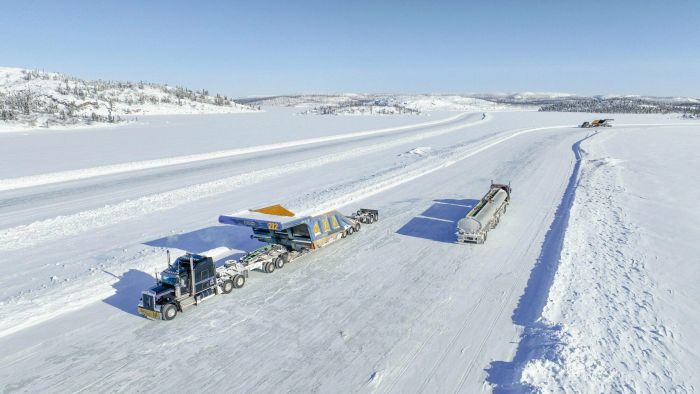
The Tibbitt to Contwoyto Winter Road in Canada is one of the world’s longest heavy transport ice roads. Credit: TCWR
The world's most extreme roads
From dizzying precipices in the Andes to icy routes across frozen lakes in the Arctic. This is a journey along the planet’s most dangerous roadways, where every kilometre is a constant battle between risk and survival.
The world's most extreme roads are routes where engineering and risk go hand in hand. The Yungas Road in Bolivia, with its narrow stretches skirting sheer drop-offs, is among the best known for its extreme danger. China’s Tianmen Mountain Road climbs a mountainside via 99 hairpin bends carved directly into the rock. In the Indian Himalayas, high-altitude passes such as Khardung La, at over 5,300 metres, force drivers to contend with ice, fog, and landslides. In Canada, ice roads exist only in winter, crossing frozen lakes and endless tundra. In this article, we investigate which roads truly deserve the title of the world's most extreme.
“The Road of Death”
The North Yungas Road, known as the Road of Death, links La Paz in Bolivia with the subtropical Yungas valleys and the Amazon region. At just 64 km long and with a descent of 3,500 metres, the road has gained global notoriety due to its extreme danger. The highway is narrow, with sections barely three metres wide, and features tight bends, blind turns, and almost no guardrails. Drivers must contend with sheer drop-offs ranging from 400 to 1,000 metres, as well as dense fog, mud, and waterfalls that render the surface treacherously slippery. Some media outlets estimate that this road used to claim between 200 and 300 lives per year. Despite the risks, the road attracts some 25,000 visitors each year, including cyclists and motorcyclists, who willingly brave the potholes, traffic, and constant threat posed by the surrounding cliffs.
The North Yungas Road challenges drivers and cyclists with its narrow stretches. Credit: World Travel Guide
An “Avenue to the Heavens”
Tianmen Shan Big Gate Road, also known as the Avenue to the Heavens or the Road of 99 Curves, is located in Tianmen Mountain National Park in Hunan, China. This 11-kilometre route climbs from the foot of the mountain to Cave Square, reaching an altitude of around 1,100 metres. Due to its extremely tight hairpin turns, narrow sections running alongside precipices, and frequent fog, it is considered one of the most dangerous roads in the world. Given its proximity to the abyss and minimal margin for error, the route is only suitable for experienced drivers.
In recent years, however, it has also become a popular tourist destination and venue for cycling competitions and mountain races. Its dramatic landscape inspired James Cameron when designing the floating mountains in the Avatar films.
Tianmen Shan Big Gate in Zhangjiajie, China, is known as the Avenue to the Heavens. Credit: Travel and Home
One of the world’s most dangerous mountain passes
Khardung La, located in the Ladakh region of India, is one of the world’s most famous and challenging mountain passes. Rising to 5,359 metres (17,582 feet) above sea level, its extreme altitude exposes travellers to Acute Mountain Sickness (AMS). The road itself is narrow and slippery in places, with several sections in poor condition. Heavy traffic and military convoys can cause delays and increase the risk of accidents on the single lane sections. The pass is also subject to bad weather and geological hazards, such as avalanches, rockfalls, and heavy snowfall, and remains closed for several months each year. The remoteness of the area and poor logistics make the journey even more challenging.
There is no medical assistance available along the entire route, and facilities at the summit are extremely limited. In addition, its proximity to the borders with Pakistan and China results in a heavy military presence, and some travellers require a special permit to cross the pass.
There is usually a military presence at Khardung La. Credit: Vyacheslav Argenberg / Creative Commons.
A road built on ice
The Tibbitt to Contwoyto Winter Road, located in Canada’s Northwest Territories and Nunavut, is the longest heavy-haul ice road in the world. Spanning between 400 and 600 kilometres, it links Tibbitt Lake, near Yellowknife, with diamond mines such as Ekati, Diavik, and Gahcho Kué. It is a seasonal route, rebuilt every year starting in December, and is typically open from February to late March. Around 85% of the road runs over frozen lakes, while the remaining 15% crosses short stretches of permafrost peatland.
Despite being one of the best-managed and safest roads in North America due to strict monitoring and controls, it is still considered dangerous for several reasons. The ice must reach a minimum thickness of 74 centimetres for the road to open and 100 centimetres to support fully loaded trucks. Speed limits for loaded vehicles are restricted to 25 kilometres per hour. Drivers may encounter snowstorms, strong winds and near-zero visibility, and the journey itself can take between 14 and 18 hours in complete isolation. One of the greatest threats to this ice road is climate change, which can shorten the operating season or weaken the ice.
The Tibbitt to Contwoyto Winter Road depends entirely on the thickness of the ice. Credit: Steven TenHave
Tungsteno es un laboratorio periodístico que explora la esencia de la innovación.
Air quality is critical in underground construction. That’s why we have strengthened our monitoring systems and continuously measure respirable crystalline silica levels, placing the health and safety of our workforce at the forefront.
29/01/2026
Mining and underground works involve the presence of crystalline silica, a naturally occurring mineral known to be carcinogenic. To address this risk, we have implemented a continuous, real-time monitoring system designed to protect the professionals working on our projects.
Royal Decree 1154/2020 classified Respirable Crystalline Silica (RCS) as a carcinogenic agent, significantly reinforcing employers’ obligations in the field of occupational health and safety. In addition, the General Regulations on Basic Mining Safety Standards require an accredited Administration Collaborating Entity (ECA) to take dust samples every four months at workstations where there is a risk of exposure.
Our Health and Safety Department has gone beyond regulatory requirements by deploying a mobile system for continuous, real-time silica monitoring: the AIR S Silica Monitor.
“Having access to real-time data raises awareness of RCS exposure for both workers and management,” explains David Barreda, Prevention Manager at Sacyr Engineering and Infrastructure in Northern Spain.
Crystalline silica is a very common mineral found in rocks, sand, and soil. It is present in construction materials such as concrete and brick, as well as in activities like mining, quarrying, and construction. When its fine dust particles are inhaled, respirable crystalline silica becomes a serious health hazard, increasing the risk of lung cancer, silicosis, and chronic obstructive pulmonary disease (COPD).
The AIR S Silica Monitor was used during excavation works in the tunnels of the Access to the Outer Port of Langosteira project and will later be deployed during ballast spreading for track installation.
RCS levels can vary significantly depending on the stage of construction, with different exposure levels during blasting, debris removal, and drilling operations.
“This new system allows us to make informed decisions and continue reducing our employees’ exposure to RCS,” says David Barreda.
“The company is committed to protecting both our employees and our subcontractors. They value our concern for their health and the continuous control we maintain over the working environment,” he adds.
How the Monitor Works
The system analyzes multiple parameters in real time to detect RCS, including particle size, symmetry, and a range of unique optical markers characteristic of respirable crystalline silica particles.
At the same time, it uses optical refraction technology combined with light-scattering photometry, analyzing each sampled particle and classifying it according to its identifiable optical properties.
This approach allows the system to detect all forms of RCS — including alpha and beta quartz, cristobalite, and tridymite — across all relevant particle sizes within the respirable fraction.
The resulting data is combined with particle mass analysis to provide measurements in both mg/m³ and particles per liter.
Thanks to this comprehensive information, site management can make timely, well-informed decisions to ensure the safety of everyone working on the project.
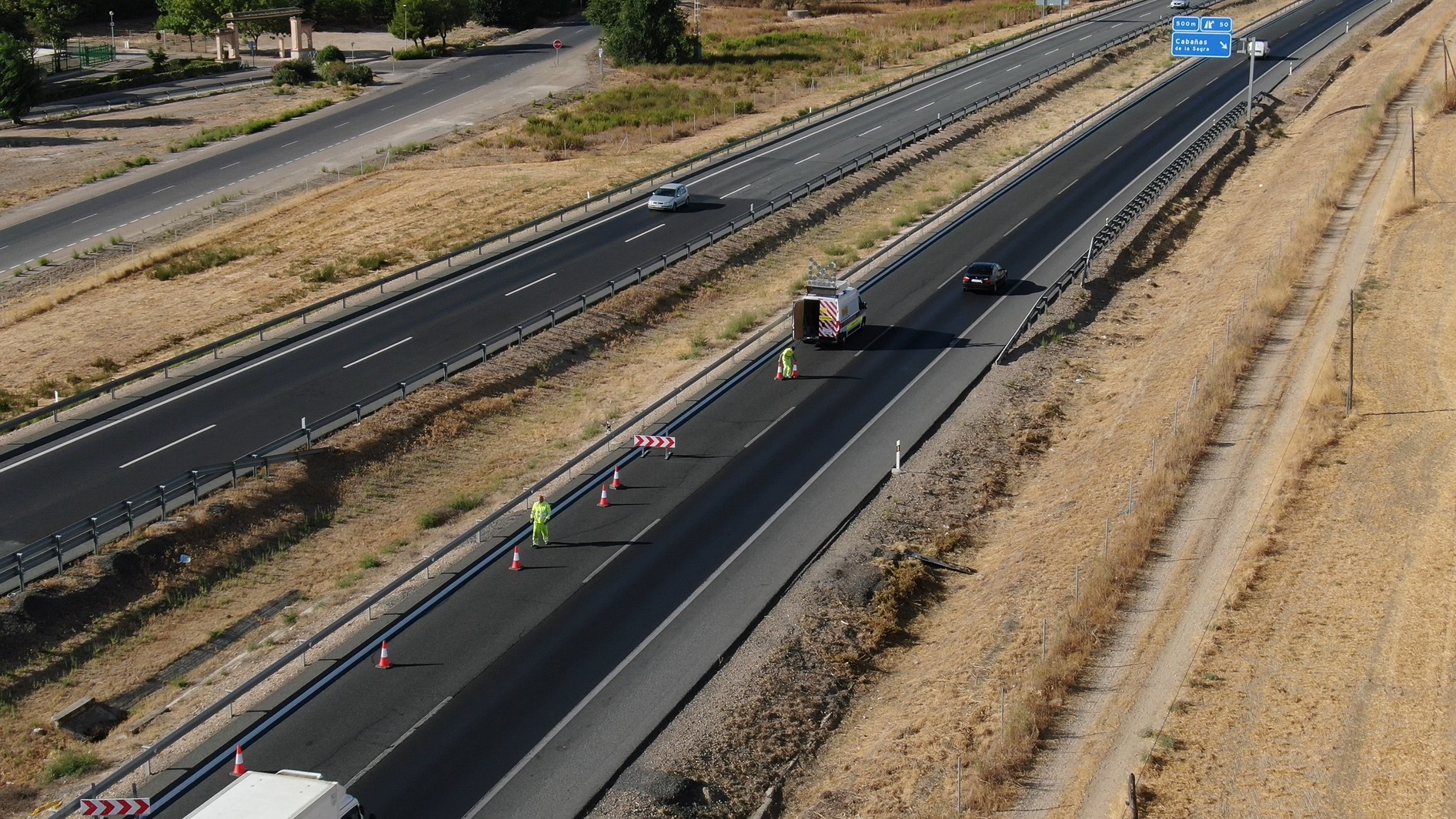
We make drone and 360º camera recordings of various operations of assembly and disassembly of lane cutting in highway or freeway, in real situation, in order to analyze from the aerial view the process of execution of such operations and increase their safety.
27/01/2026
Simón B. Maestra Navarro
Southern Zone Delegate, Sacyr Conservación
Marco A. García Fraga
HSE Business Partner, Sacyr Conservación
At Sacyr, accident prevention is not a separate business function, but an integral element considered in all tasks that may involve risk. Occupational Health and Safety (OHS) is integrated into technical and operational processes, planning, and working conditions from the start.
Sacyr Conservación guarantees a comprehensive service, adhering to the strictest Health, Safety, and Environmental (HSE) standards, including Road Safety and Quality, to which Sacyr Maintenance has dedicated significant resources in recent years.
While lane closures may not cause the most incidents, they are among the riskiest road maintenance operations. This is due to both the need for vehicles to stop on the shoulder and the exposure of operators crossing the road to place signage and beacons.
Sacyr Conservación anticipated the guidelines of Service Note 02/2021, "Recommendations for Improving Safety in Maintenance and Other Work Affecting State Roads and Highways." We pioneered aspects outlined in the note, such as in-person road safety training, the acquisition of double-gate vans, and innovative training proposals like "Lane Closures: An Immersive View."
There is no doubt that the advancement in the use of light signaling in maintenance vehicles has greatly improved the protection of equipment, maximizing visibility and minimizing risks. The goal is to visualize the behavior of road maintenance personnel during lane closure setup and takedown and to understand how they are affected by traffic. The goal is not strictly limited to improving the material signalling equipment and compliance with the elements set out in current regulations.
This focuses on visualizing the actions of road maintenance personnel during lane closure setup and takedown and how these actions are impacted by the traffic conditions of the worksite.
New Technologies in Road Management
In an increasingly demanding, digital, and complex environment, where specialization and technology are key factors for the large-scale transformation of service standards, Sacyr Maintenance is committed to innovation, developing a large number of certified projects and lines of research.
The use of drone and 360° camera recording significantly improves the training of our technicians and operators during lane closure setup and takedown on highways. The "immersive vision" approach facilitates interactive training, enabling personnel to minimize on-road risks.
First and foremost, safety
The "Lane Closures: An Immersive View" project involves recording various lane closure setup and takedown operations on highways using drones and 360° cameras in real-world conditions. The aim is to analyze the execution process from an aerial perspective.
The purpose is to analyze the movements of our operators and user reactions to establish procedural guidelines that minimize risks for both workers and road users.
Using these audiovisual media, it is intended to:
Identify the critical points of the process in which maintenance teams and road users interact.
Reduce risks and improve road safety for both operators and users.
Achieve a new approach to improving road safety through the use of new audiovisual technologies.
Improve procedures and establish instructions for assembling and disassembling lane closures to reduce risk.
Design training actions based on specific actions for the type of risk to which workers are exposed. Analyze the operation with the workers, from a drone view, to define situations of greater risk.
Improve the preventive culture in the field of Occupational Road Safety.
Seek new methodologies to improve the influence on user behavior, as well as to raise awareness, through possible media campaigns, of the need for their collaboration to reduce risks on the road.
In short, the drone's perspective during lane closure setup and takedown allows for an in-depth analysis of the associated risks. Interactive sessions with technicians and operators have identified the safest procedures for moving around the work zone with the necessary vehicles, signage, and beacons.
Analyzing the time taken also allows us to assess the available equipment (types of signals, transport supports, etc.), identifying opportunities for improvement and optimization. The aerial perspective also helps us assess the characteristics of the road and identify infrastructure improvements (specific problem areas, narrow shoulders, etc.).
We're leveraging cutting-edge AI to generate construction plans that improve projects and accelerate timelines.
19/01/2026
Planning is a critical task in any infrastructure project, and improving this phase and speeding up its timelines is crucial for subsequent success.
For this reason, we've launched an initial innovation pilot using Miranda AI, an artificial intelligence tool, which will assist our Planning department in this vital task.
"We proposed a challenge to reduce deadlines in construction projects, and the Madrid City Council saw its potential to include it within the DesafIA program," explains Raúl Crespo, Planning Manager at Sacyr Engineering and Infrastructure.
"This project has allowed us to solve a business challenge through open innovation, participating in a Madrid City Council program, and selecting a startup, CrataAI, which convinced us with their thorough understanding of the proposed use case and the flexibility of their solution," adds our Open Innovation Manager, Mario Ibeas.
Miranda AI can provide significant time savings for repetitive tasks, reducing the time it takes to develop the initial planning we do when undertaking a project, automating many of the steps thanks to the use of artificial intelligence.
What does Miranda AI do?
1. Automatically analyzes technical documentation
2. Generates complete construction plans in minutes, ready to validate
3. Identifies measurements, materials, yields, and dependencies
4. Detects gaps, missing activities, and planning risks
The AI will help the Planning team gain reliability in deadlines and agility to make work hypotheses. "We cannot guess what will go well or badly, but if we know that the weather will be adverse, we can make plans. We would gain a clearer vision of what might happen to us in the future," explains the Planning Manager.
"This is an innovation challenge that we had tried to address in the past, but the technology was not yet mature. Now, with the Crata pilot and the opportunity to collaborate in the DesafIA program, it has become a reality," emphasizes Mario Ibeas.
"The objective is to have a base program to work on, not to replace work, but to change manual work for work of greater value, more focused on being able to do analysis or look for optimizations," explains Raúl Crespo.
For the moment, Sacyr is evaluating the tool. The ultimate goal is for it to be able to execute any type of work: civil, building and industrial. The first stage of this process could be completed in three or four months.
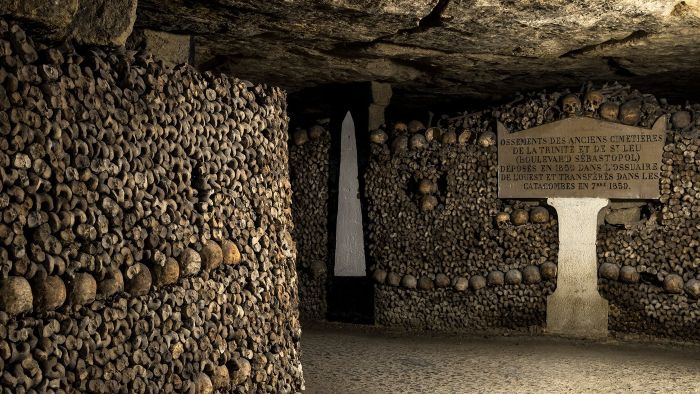
The history of the Catacombs of Paris dates back to the late 18th century. Credit: Paris Musées
Four modern cities with secret tunnels
From war bunkers and espionage tunnels to monumental ossuaries, major metropolises have fascinating underground worlds. We explore the tunnels hidden beneath Berlin, London, Paris, and New York.
Many modern cities conceal beneath their streets a vast network of secret tunnels that serve various purposes, ranging from former shelters and military command centres to historic ossuaries. Cities like Berlin, London, Paris, and New York reveal that urban life and history extend beyond the surface. Their depths hold a captivating heritage of wartime bunkers, espionage routes, and abandoned infrastructure.
Berlin
Berlin's tunnels have historically served as strategic refuges and military command centres, preserving stories from the Second World War through the Cold War. Several associations are dedicated to exploring and documenting these underground spaces, offering guided access to iconic air-raid shelters and bunkers. Their aim is to show how the city prepared for conflict and how these structures protected its inhabitants during times of crisis.
Beyond shelters, escape tunnels tell stories of ingenuity and resistance. More than 70 tunnels were built beneath the Berlin Wall, enabling some 300 people to flee from East to West. The city’s subterranean past also hides other disused infrastructure, such as abandoned railway tunnels and even former brewery warehouses.
During the Cold War, some tunnels were used as escape routes. Credit: DW Euromaxx
London
The Kingsway Exchange tunnels complex, which stretches across 8,000 square metres beneath High Holborn, was built during the Second World War to protect Londoners during the Blitz. Although it was never used for that purpose, the site hosted the Special Operations Executive (SOE), Winston Churchill's wartime espionage organisation. James Bond author Ian Fleming worked regularly with the SOE in this labyrinth of tunnels, which may have inspired Q Branch in his famous novels.
The tunnels remained strategically important after the war. During the Cold War, they functioned as a strategic communications hub. Following the Cuban missile crisis in 1962, the complex served as a relay point for the famous “red telephone” hotline between the Pentagon and the Kremlin. A government bunker was also built for use in the event of a nuclear attack. Today, there are plans to open the site to the public as a tourist attraction, featuring a military intelligence museum, an exhibition on espionage, and a bar marketed as “the deepest bar in the world in a city.”
The passages that protected London during the Second World War.
Paris
Much of the Parisian subsoil consists of nearly 200 miles (about 320 kilometres) of limestone quarries, originally excavated to build the city. Part of this network forms the Paris Catacombs, one of the largest ossuaries in the world. They contain the remains of some six million Parisians and have been dubbed "the empire of death." These abandoned quarries are sometimes visited illegally by "urban explorers," who have been known to organise secret underground nightclubs and cinemas.
Paris also boasts a complex sewer system spanning 1,662 miles (around 2,675 kilometres), modernised in the 19th century and historically used as escape routes for criminals. The metro network also includes four “ghost” stations closed since the Second World War. Other underground points of interest include a secret military bunker near the Eiffel Tower and the basement of the Opéra Garnier, which houses a real underground lake.
The catacombs of Paris lie 20 metres underground, with 243 steps and 2,000 metres of tunnels. Credit: Paris Musées
New York
In 2024, an illegal tunnel was discovered in Brooklyn, New York, beneath the Chabad-Lubavitch headquarters in Crown Heights, a busy Jewish site that welcomes thousands of visitors a year. The 60-foot (18-metre) tunnel was dug clandestinely and without structural reinforcements, causing destabilisation under the synagogue sanctuary. Due to safety concerns, New York City issued an emergency order to stabilise the building.
Illegal tunnel discovered beneath an historic synagogue in Brooklyn, New York. Credit: Eyewitness News ABC7NY
The evidence suggests the tunnel was constructed by a group of students known as the Tzfatim, who sought to expand the synagogue in accordance with the vision of their deceased leader, Rabbi Menachem Mendel Schneerson. When police arrived to inspect the tunnel, clashes broke out with members of the community. The altercation resulted in nine arrests on charges including criminal damage, reckless endangerment, and obstruction of government administration.
Tungsten is a journalistic laboratory that explores the essence of innovation.
SacyrNewsBlogArtificial Intelligence for Predicting Road Condition
Share:
Artificial Intelligence for Predicting Road Condition
The Apromac project allows us to estimate key road surface indicators. By integrating these indicators with external factors such as weather conditions, we obtain an accurate view of the actual condition of the roads, both in the short and long term.
16/12/2025
At Sacyr we build and maintain thousands of kilometers of road infrastructure around the world. Knowing its condition and anticipating its evolution is vital to guarantee its functionality and safety.
The Report on Investment Needs in Conservation 2025 of the Spanish Road Associationestimates that the required amount to fine-tune the national road network is €13.5 Bn. This all-time record figure represents a 43% increase compared to 2022.
Recognizing this need, Sacyr is developing Apromac, a tool that predicts the state of road surfaces. To do this, we apply technologies such as Big Data and artificial intelligence to predict the evolution of the main parameters of the condition of road infrastructure.
"Not only do we use data from the infrastructure itself, but in the analysis we also incorporate standardized information from other Sacyr Concesiones roads and studies on the influence of factors like temperature and rainfall," explains Sergio Campos, project manager.
This tool allows us to improve planning through predictive models for deterioration indicators such as macrotexture, ruts (depressions in the wheel path), and the transverse friction coefficient (TFC), an indicator of skid resistance. In addition, various types of models have been trained and validated to identify which one offers greater accuracy in predictions.
The first project milestone was reached at the end of 2023 and the second is planned for the end of 2025.
Apromac was developed using data from several roads managed by Sacyr: Ruta del Desierto and Limarí (Chile); Turia, Pamasa, Eresma and Aunor (Spain); Pamplona-Cúcuta (Colombia); and Pirámides-Tulancingo-Pachuca (Mexico).
This project has a €500,000 budget and will run until December 31, 2025. Once completed, Sacyr Concesiones will have an advanced tool for long-term prediction of road behavior.
Apromac is co-financed by the European Union, with funding from European Funds, the Spanish Ministry of Finance, and CDTI through the Ministry of Science, Innovation and Universities.
In the future, this tool will have two major impacts: it will allow for better-informed reinvestment strategies in road tenders, considering factors such as project year and financial impact; and it will facilitate monitoring in the operation phase, enabling more efficient planning and execution of necessary road maintenance based on predicted degradation.
SacyrNewsBlog10 keys to driving circular transformation in infrastructure development
Share:
Plaza Europa 34 Office building in Hospitalet de Llobregat, Barcelona. We have applied circular economy measures in this project.
10 keys to driving circular transformation in infrastructure development
Encarna Mateos, Quality, Environment and Energy Director explains how we can transition to a circular economy model that differentiates us from other countries. She also adds some insight on what actions Sacyr is taking in this direction.
09/12/2025
Encarna Mateos
Quality, Environment and Energy Director
The construction and infrastructure development sector plays a crucial role in transitioning to a more circular economic model, given its significant impact on resource consumption and waste generation. However, considerable challenges persist: construction and demolition waste (CDW) accounts for a third of the total waste produced in the European Union, and circularity rates in countries such as Spain lag behind other European nations.
In light of this, the circular economy offers a transformative strategy for redesigning processes, minimizing environmental impacts, and boosting efficiency. Achieving this requires coordinated action from all stakeholders across the value chain, integrating circular principles from the initial design phase through to operation. In my view, the following ten areas are key to advancing towards a circular model:
1. Changing the mindset
Moving away from the traditional linear model (design-build-use-demolish) and embracing a circular approach (design-reuse-use-recycle-maintain-regenerate). This involves integrating circularity criteria right from the design stage and fostering collaboration among all participants throughout the infrastructure lifecycle.
2. Boosting the Market for Secondary Raw Materials
Implementing regulatory and economic measures to stimulate demand for recycled and reused materials. This includes establishing quality certifications, technical standards, and traceability mechanisms that build confidence in the market.
Promoting the use of tools like Building Information Modeling (BIM), digital twins, and collaborative platforms to manage information related to materials, maintenance, and reuse.
5. Harmonized regulatory framework
Establishing consistent and stable regulations at the European, national, and regional levels to facilitate the application of circular criteria, the approval of recycled materials, and investment in sustainable solutions.
6. Green public procurement
Incorporating environmental criteria into public procurement specifications, favoring proposals that integrate circular economy principles, and establishing monitoring mechanisms to ensure compliance.
7. Public-private partnerships
Encouraging collaboration between government bodies, businesses, technology centers, and universities to develop standards, methodologies, and pilot projects that advance circularity in the sector.
8. Transparency in the supply chain
Establish traceability systems that allow information to be shared on the origin, composition and destination of materials, facilitating their reuse and recycling.
9. Training and sector awareness
Promoting education and training for all actors in the value chain – architects, engineers, companies, manufacturers, and clients – on the principles, tools, and benefits of the circular economy.
10. Repurposing Waste as a Resource
Encouraging the acceptance of recycled materials as a viable alternative, promoting their use in new construction processes, and reducing reliance on virgin raw materials.
Several years ago, Sacyr made a decisive move towards circular transformation, moving beyond the traditional linear model and embracing a regenerative approach in all our projects. Our Zero Waste Plan has become the cornerstone of our efforts to achieve our circular economy goals, implementing specific actions across all areas of the company.
This plan has three key objectives: to reuse, recycle, or recover 80% of our waste each year; to progressively reduce hazardous waste by 1% annually; and to ensure that 80% of non-hazardous construction and demolition waste is also recovered.
The results are already evident in our projects: over 93% of construction and demolition waste has been recovered, more than 92% of total waste has been recycled or reused, and over 20% of the materials we use now come from sustainable sources. The Zero Waste Plan allows us to embed a circular model throughout the organization, aligning our efforts, creating synergies, and strengthening our commitment to a more responsible future.
SacyrNewsBlogWeighing on the Move: Advancing Smart Mobility in Brazil
Share:
Weighing on the Move: Advancing Smart Mobility in Brazil
At our Rota de Santa Maria concession, we monitor the weight of freight vehicles through an overhead sensor system, without requiring them to brake. This streamlines highway operations, enhances road safety, and reduces fuel consumption and emissions.
03/12/2025
Rota de Santa Maria (Sacyr Concesiones) is implementing an innovative high-speed load-control system for trucks on the RSC-287 highway in the State of Rio Grande do Sul (Brazil).
“This is a decisive step toward a smarter, safer, and future-ready roadway,” says the Concessionaire’s CEO, Leandro Conterato.
The new system, known as HS-WIM (High-Speed Weigh-In-Motion), relies on quartz (piezo-quartz) sensor technology—one of the most advanced solutions available today.
Its purpose is to monitor vehicle weight limits automatically. The process does not affect travel speed: weight sensors embedded in the pavement work together with cameras and laser detectors installed on overhead gantries to classify and identify each vehicle.
As vehicles pass under the overhead gates, they are scanned and weighed automatically, providing an instant data readout.
“This technology makes it possible to inspect 100% of freight vehicles, 24 hours a day, with greater efficiency and without disrupting traffic. Beyond helping reduce harmful emissions, it delivers significant gains in sustainability, safety, and logistics competitiveness” the CEO highlights.
HS-WIM represents a major leap compared to traditional weighing stations, which require trucks to slow down or come to a complete stop.
Along with more effective load monitoring, the system brings clear environmental and operational benefits: shorter travel times, fewer accidents, and lower fuel consumption—all of which contribute to reducing atmospheric emissions.
Rota de Santa Maria is developing a calculation tool to estimate the volume of greenhouse gas (GHG) emissions avoided through the implementation of the HS-WIM system.
Construction works for this system are well advanced, and testing is expected to begin in the first quarter of 2026.
About Rota de Santa Maria
Sacyr Concesiones, through the Rota de Santa Maria concessionaire, has been responsible since 2021 for operating 204 km of the RSC-287 highway. Major widening and improvement works are underway, including the duplication of 200 km of road.
This corridor connects the key cities of the central region of Rio Grande do Sul with the state capital, Porto Alegre.
SacyrNewsBlogThe architect behind the modern kitchen
Share:
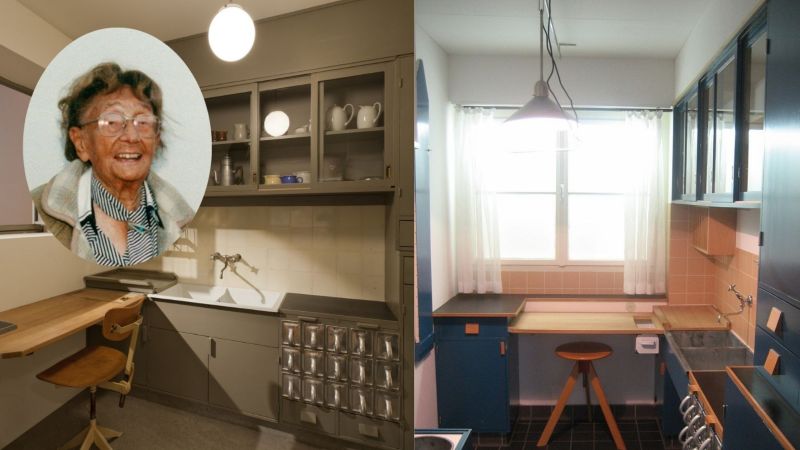
Margarete Schütte-Lihotzky, designer of the iconic Frankfurt Kitchen. Credit: Wikimedia Commons.
The architect behind the modern kitchen
Margarete “Grete” Schütte-Lihotzky was far more than the creator of the Frankfurt Kitchen. A pioneering architect, anti-fascist activist, and advocate for social housing and early childhood education, her legacy transformed not only the home but also the society in which she lived.
Margarete Schütte-Lihotzky didn’t just design the modern kitchen—she envisioned a more efficient home and a future where women would have more time to themselves. With her iconic 1927 Frankfurt Kitchen, she sought to optimise every movement within the home. Her design introduced features we now take for granted, such as continuous countertops, well-organised drawers, and a meticulously planned workflow. Yet what began as a symbol of female emancipation, intended to free women from endless domestic labour, was eventually criticised as a space that isolated and confined them instead.
"You can kill a person with an apartment."
Schütte-Lihotzky was one of the first women in Austria to graduate in architecture. Although her family held progressive views for the time, they initially disapproved of her career choice, believing that no one would hire a woman to design a house in 1916. Her interest in social housing arose after observing the harsh living conditions of Vienna’s working class. She witnessed nine people sharing a single room and tenants subletting beds for a few hours a day. "You can kill a person with an apartment just as well as with an axe," wrote the German artist Heinrich Zille, a quote that the architect would later include in her own memoirs.
Following the First World War, Germany faced a severe housing shortage, leading to large-scale social housing projects for working-class families. At that time, workers' homes typically had only two main rooms: one served as the space for cooking, bathing, eating and sleeping, and the other functioned as a living area. This layout resulted in poor hygiene and a lack of functional differentiation between the work area and the relaxation area. Schütte-Lihotzky designed the Frankfurt Kitchen as part of an affordable public housing programme. Her goal was to streamline domestic work and reduce the time women spent on kitchen tasks.
The iconic Frankfurt Kitchen. Credit: The Design Museum
The prototype of the modern kitchen
The Frankfurt Kitchen came to be recognised as the prototype of the modern fitted kitchen and as one of the greatest revolutions in 20th-century social housing design. It introduced features that are now standard, such as continuous worktops, tiled splashbacks, built-in drawers, and storage-optimised cabinets. The design featured a sliding door to separate the kitchen from the living room. To maximise efficiency, Schütte-Lihotzky based her layout on studies and interviews with housewives, aiming to minimise unnecessary movement within the space. The kitchen was designed so efficiently that a woman could move from the sink to the stove without taking a single step.
Around 10,000 units of the Frankfurt Kitchen were built for the social housing projects designed by architect Ernst May. Today, original examples can be seen in museums around the world, including the MoMA in New York. For Schütte-Lihotzky, the real goal of this kitchen design was to promote social reform and contribute to the emancipation of women by reducing the burden of unpaid domestic labour. Her intention was to give women more time for education, work, and leisure.
The Frankfurt Kitchen at the MoMA museum. Credit: The Museum of Modern Art
However, over time, that vision came under criticism. Beginning in the 1970s, some feminist movements argued that that, far from liberating women, the kitchen had in fact become a space of confinement, designed exclusively for women's work. Its compact size and tight proportions, intended to reduce costs and optimise movement, meant that it was impossible for more than one person to use the space comfortably. This inadvertently reinforced the notion of the kitchen as a private and solitary realm reserved solely for women.
An overshadowed legacy
Schütte-Lihotzky took her social commitment beyond architecture, becoming actively involved in politics and the anti-fascist resistance. She joined the Austrian Communist Party in 1938 and was arrested by the Gestapo in 1941. Her ideals brought her professional hardships in Cold War-era Austria, and in 1988 she rejected the Austrian Medal for Science and Art in protest against what she saw as the sitting president's complicity in Nazi war crimes.
Her other projects—often overshadowed by the Frankfurt Kitchen—included the design of flats for single working women and groundbreaking innovation in educational spaces. She designed kindergartens using a modular construction system that included cots, changing tables, chairs, desks, and other objects that made the space more flexible. Schütte-Lihotzky died in 2000 at the age of 102. Although the Frankfurt Kitchen remained her most famous work, she ultimately regretted that it had come to define her legacy. At the age of 101, she exclaimed, "If I had known that everyone would keep talking about nothing else, I would never have built that damned kitchen!"
Tungsten is a journalistic laboratory that explores the essence of innovation.
This website uses its own and third-party cookies to improve the user experience and analyze their behavior in order to improve the service offered.
You can consult additional information about the cookies installed on our Cookies policy.
These cookies are exempt from compliance with article 22.2 of the LSSI in accordance with the recommendations indicated by the European authority on privacy and cookies. In accordance with the above and although configuration, acceptance or denial is not possible, the editor of this website offers information about them in an exercise of transparency with the user.
Name: LFR_Session_STATE_*, Provider: Liferay, Purpose: Manages the session as a registered user , Expiration: Session, Type: HTTP
Name: GUEST_LANGUAGE_ID, Provider: Liferay, Purpose: Determines the language with which you access , to show the same in the next session, Expiration: 1 year, Type: HTTP
Name: ANONYMOUS_USER_ID, Provider: Liferay, Purpose: Manages the session as an unregistered user , Expiration: 1 year, Type: HTTP
Name: COOKIE_SUPPORT, Provider: Liferay, Purpose: Identifies that the use of cookies for the operation of the portal, Expiration: 1 year, Type: HTTP
Name: JSessionID, Provider: Liferay, Purpose: Manages login and indicates who is using the site, Expiry: Session, Type: HTTP
Name: SACYRGDPR, Supplier: Sacyr, Purpose: Used to manage the cookie policy , Expiration: Session, Type: HTTP
ANALYTICS
These cookies allow us to count visits and sources of circulation in order to measure and improve the performance of our site. They help us know which pages are the most or least popular, and see how many people visit the site. All the information collected by these cookies is aggregated and, therefore, anonymous.
Name: _ga_<container-id>, Provider: Google, Purpose: Collects data about the number of times a user has visited the website in addition to the dates of the first and most recent visit. Used by Google Analytics, Expiration: 2 years Type: HTTP
Name: _ga, Provider: Google, Purpose: Registers a unique ID that is used to generate statistical data about how the visitor uses the website, Expiration: 2 years Type: HTTP