SacyrNewsBlogWhen Engineering Is the First Line of Defense Against Fire
Share:
When Engineering Is the First Line of Defense Against Fire
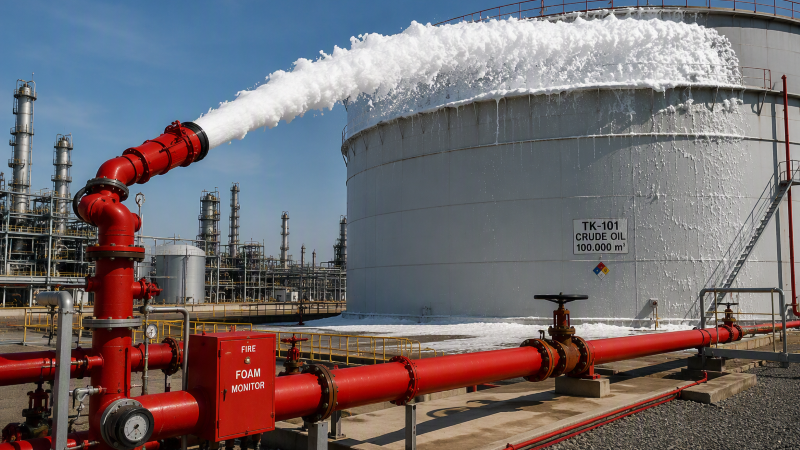
In this article, our colleague Nicolás Araúzo explains that in an industrial plant, fire protection does not begin when a pump, a network of fire hydrants, or a detection system is installed; rather, it is designed from the very beginning of the project.
15/10/2026
Nicolás Araúzo Alemany
Senior HSE Engineer and Fire Protection Systems Specialist
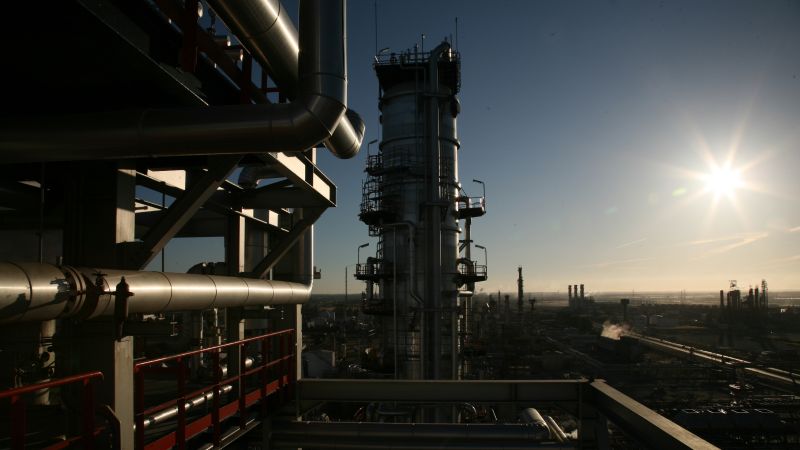
In an industrial plant, fire protection doesn’t begin when a pump, a network of fire hydrants, or a detection system is installed. It begins much earlier, at the design table.
The safety of a facility depends largely on the decisions made in the early stages of a project, when engineers analyze risks, understand the process, and coordinate each element so that it functions as an integrated system.
In sectors such as energy, the chemical industry, or Oil & Gas—where any incident can have significant consequences for people, assets, and operational continuity—having a well-designed fire protection strategy is essential.
Engineering offers a unique advantage: it is the only discipline that has a comprehensive view of the project and detailed knowledge of the process, from operating conditions to the most demanding emergency scenarios.
An effective fire protection system isn’t simply installed—it’s designed from the very beginning of the project.
The key lies in anticipation. Thanks to access to technical information such as process flow diagrams (PFDs and P&IDs), fluid characteristics, and risk analyses, engineering teams can define solutions tailored to the actual needs of each facility. This approach allows vulnerabilities to be identified from the outset and measures to be taken that improve the safety and reliability of the entire system.
Another major strength of engineering is its ability to integrate disciplines. Fire protection systems are closely related to areas such as processes, piping, electrical systems, instrumentation, and civil engineering. When all these disciplines work in a coordinated manner from the earliest stages, interference, subsequent modifications, and costs associated with on-site changes are reduced.
Fire protection cannot be approached as an isolated element. Its success depends on coordination across disciplines and on understanding how each system interacts within the facility.
In addition to improving safety, a rigorous design helps optimize the facility’s entire life cycle. The application of recognized international standards, such as NFPA, along with specialized certifications like FM or VdS, helps reduce failures, minimize unplanned interventions, and facilitate maintenance through the use of standardized equipment. It can also lead to better insurance terms and greater long-term operational resilience.
Experience shows that many of the most costly problems arise when fire protection is not properly incorporated from the design phase. This article describes the case of a facility where, during commissioning, it was discovered that certain critical pieces of equipment had not been included in the protection system. Correcting this issue required resizing key infrastructure and rethinking part of the fire suppression strategy just a few weeks before the plant was scheduled to begin operations.
Designing correctly from the start not only reduces costs; it also protects people and enhances the reliability of facilities throughout their entire service life.
Because, ultimately, fire protection is not merely a matter of regulations or technology. It is a strategic decision that begins with engineering and has an indispensable goal: to ensure the safety of people and infrastructure when they need it most.
SacyrNewsBlogDiscover the species found around our projects
Share:
Discover the species found around our projects
Our activities are carried out in natural environments where biodiversity plays a crucial role. Therefore, we are committed to protecting and preserving the ecosystems and communities with which we coexist.
11/09/2026
We work in natural environments where biodiversity plays a vital role. That is why we are committed to protecting and preserving the ecosystems and communities around them.
Caring for nature is not only about taking protective measures; it also means observing it, understanding it and appreciating its richness.
Colombia offers a good example. There, our colleagues Andrés Mauricio Forero Cano, a biologist in the Environmental Area of the Buenaventura-Loboguerrero-Buga project, and Manuel Alejandro Posso Gaviria, Environmental Birds' Route Project Coordinator at Unión Vial Camino del Pacífico who captured a series of images showcasing the fauna and flora found in the area. The photos were part of our RevelaVerde competition.
Andres Mauricio's photographs were taken in the Venado Verde Nature Reserve, in the area surrounding this road project.
“With these photographs, I want to show the immense biodiversity found in our region, particularly among amphibians and reptiles, a group that is still little known and often undervalued,” says our colleague.
“The photographs were taken using macro photography techniques. I used a Nikon D7200 camera with a 60 mm Laowa macro lens, external flashes and diffusers,” explains Andrés Mauricio.
Captured while work was underway, these five photographs bring us closer to a fascinating world of colors, shapes and behaviors that often goes unnoticed, yet plays an essential role in the balance of ecosystems.
The five photographs show:
1. Pacific lemur frog (Agalychnis psilopygion). “It is a species of incredible beauty and fragility that lives only in well-preserved forests.”
2. Cane toad (Rhinella horribilis). “This species has long been overlooked because of its appearance, but it plays a fundamental role in our ecosystems by controlling insect populations. Through macro photography, I wanted to capture its splendor and show that the world should look beyond appearances and recognize what lies beneath.”
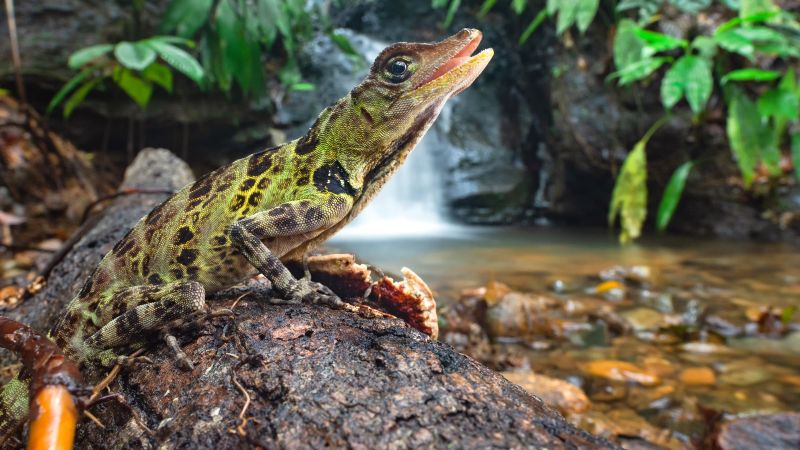
3. Dwarf spiny iguana (Enyalioides heterolepis). “This lizard lives in the leaf litter of pristine forests and has a variety of scales that give it a striking appearance, which I wanted to highlight through macro photography.” The image won first prize in the Flora and Fauna category.
4. Glass frog tadpoles (Teratohyla spinosa). “These small glass frogs live in the vegetation that grows along streams. They lay their eggs in gelatinous clusters on leaves. When the eggs hatch, the tadpoles develop inside this gelatinous mass until they are large enough to drop into the streams and complete their development.”
5. Broad-headed anole (Anolis latifrons). “This photograph was taken with a wide-angle macro lens, combining the detail of macro photography with part of the animal’s surroundings. This lizard species lives in vegetation near streams. In the photograph, I wanted to capture both its remarkable details and the habitat where it is usually found.” (top photo)
These images remind us how important it is to coexist responsibly with local wildlife and to make nature protection part of how we deliver our projects. Learning about the species that live in the areas where we work is the first step toward helping conserve them.
Another colleague who participated in RevelaVerde with his photographs is Manuel Alejandro Posso Gaviria, Environmental Birds' Route Project Coordinator at Unión Vial Camino del Pacífico.
Photo 1. Divine Poison
Poison dart frog (Oophaga anchicayensis). Located near the tunnels, along the Pepitas River. This frog is endemic to the region.
Photo 2. Blessed Fortune
Tree frog (Ecnomiohyla phantasmagoria). Located in San Cipriano. Virtually nothing is known about its ecology and behaviour, as this species lives high in the forest canopy, between 20 and 40 metres above the ground. It was discovered after a rainy night on a fallen branch. This species is literally a ghost, with only a handful of recorded sightings.
Photo 3. Wonders of Nature
Bridal Veil Fungus (Phallus indusiatus). Observed at Venado Verde during a birdwatching survey conducted for the Birds' Route project.
Photo 4. The Nap After a Meal
Boa constrictor (Boa imperator). Recorded more than six metres above the ground in San Cipriano, resting on a tree branch. It can be recognised by the yellowish coloration on its tail.
Photo 5. Give and Take
Mating ritual of two Squirrel Cuckoos (Piaya cayana). The male brings food to the female, and the female rewards him with mating. Photograph taken in Río Bravo.
We rescued a turtle at our Skikda desalination plant
Our commitment to biodiversity is reflected in practical action, showing the responsibility and care our teams bring to the ecosystems around us.
A recent example took place at the Skikda Desalination Plant O&M Joint Venture in Algeria, where the plant team stepped in to rescue a sea turtle that had become trapped on the premises. Thanks to the team’s swift response, the animal was safely released and returned to the sea in good condition.
Zenina Hadjer, a laboratory technician and the author of the images submitted to the RevelaVerde competition, explains: “During operations at the plant, a sea turtle was found trapped in the facility’s intake basin. Aware of our responsibility to the ecosystem, our team acted immediately. We carefully rescued the animal and took it to Srigina Island, where it was safely released back into its natural habitat.”
“These images show how our industrial operations can coexist with the preservation of local biodiversity,” says our colleague.
Actions like this show that sustainability is also shaped by everyday decisions and efforts.
Thanks to our teams’ commitment and dedication, we help protect biodiversity and preserve the natural value of the environments where we operate.
SacyrNewsBlogThe Rise of the Underground: How Cities Are Finding Space Below the Surface
Share:
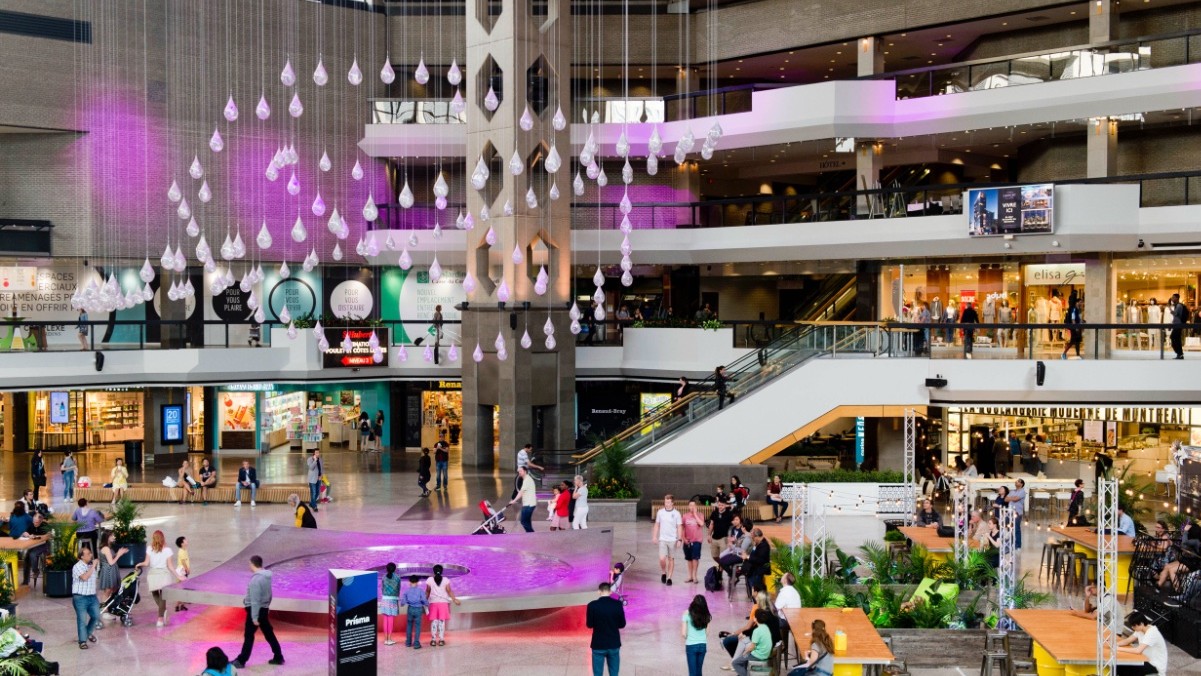
Beneath the Complexe Desjardins, RÉSO connects this large downtown Montreal complex with other buildings and spaces throughout the city via its underground pedestrian network. Credit: Jean-Marc ZAORSKI/Gamma-Rapho via Getty Images.
The Rise of the Underground: How Cities Are Finding Space Below the Surface
As land at the surface becomes increasingly scarce, some cities are looking underground for room to grow. Beneath streets and buildings, an expanding network of infrastructure is doing far more than carrying utilities and moving people: it is becoming an integral part of urban development.
05/10/2026
María Gómez Bravo | Tungsteno
In their search for more space, cities first reached skyward. Skyscrapers and landmark towers reshaped skylines and often became symbols of major capitals. Yet a quieter revolution was also taking place underground. It began with a practical aim: moving the infrastructure that keeps a city running beneath its streets. First came sewers and water mains, followed by railways, subway lines, utility cables, parking garages, and even roads.
As land at the surface becomes scarcer, the space below is increasingly valuable. Every new tunnel, cable or facility must fit among the infrastructure already there without blocking what future projects may require. Yet pressure on surface land is only part of the story. Geology, climate, and other local conditions also shape the way cities develop underground.
A City Carved Out of Rock
The granite bedrock beneath much of Helsinki has helped shape the city’s underground development. For decades, it has been excavated to create tunnels, parking garages, energy facilities, and sports venues. Helsinki has made systematic use of its distinctive geology since the 1960s. By the time it began drafting its first dedicated underground plan, around nine million cubic meters of rock had already been excavated for some 400 facilities and tunnels.
Many of these spaces have a dual role. In everyday life, underground facilities house swimming pools, sports centers, and other recreational spaces carved out of the bedrock. In an emergency, they can also serve as civil defense shelters. Shared tunnels carry district-heating and cooling pipes, high-voltage power cables, and telecommunications networks, which together extended for around 300 kilometers when the plan was drawn up.
The underground swimming pool in Itäkeskus is located in bedrock 50 meters below the surface, inside one of Helsinki’s civil defense shelters that has been adapted for everyday use. Credit: ALESSANDRO RAMPAZZO/AFP via Getty Images.
As demand for underground space grew, Helsinki had to consider not only where to build new facilities, but also which parts of the bedrock should be left untouched for future use. The result was the Underground Resources and Master Plan, which mapped existing and planned caverns, facilities, and tunnels, while reserving space for long-term projects. The first plan identified 40 new areas as rock reserves and more than 100 sites for future construction. Ilkka Vähäaho, who headed Helsinki’s geotechnical division for many years, has explained that the rapid expansion of underground construction since the beginning of this century has made it increasingly necessary to manage where excavation takes place.
Helsinki’s first underground plan put it simply: bedrock can be excavated only once. Buildings can be replaced and plots of land repurposed, but caverns carved into the rock are permanent and may obstruct future infrastructure. Helsinki therefore began planning not only what to build underground, but also the empty space that would need to remain available.
A Shield Against Winter
In Montreal, Canada, winter shapes not only how people get around, but also how they use the city. Beneath its streets, a network of pedestrian walkways links offices, universities, hotels, shopping centers, and other buildings without requiring people to step outside. Used by about 500,000 people a day, this underground city allows residents and visitors to travel across much of downtown sheltered from the cold.
Yet the nearly 32 kilometers of walkways that make up RÉSO, Montreal’s underground pedestrian network, were not originally built as a response to the climate. The network began to take shape around Place Ville Marie between 1962 and 1967, expanding alongside major downtown property developments and the growing metro system, particularly in the years leading up to Expo 67.
The Montreal Trust shopping center is part of RÉSO, the underground network that connects buildings, stores, hotels, and metro stations in downtown Montreal via nearly 32 kilometers of walkways. Credit: Pascal QUITTEMELLE/Gamma-Rapho via Getty Images.
There was no single master plan. Instead, connections were added over the decades as new buildings were incorporated into the system. This organic growth turned this underground network into an extraordinary asset for both the downtown economy and the everyday mobility of its residents during the coldest months. Today, RÉSO is so woven into the life of the city that it is hard to separate its economic role from its practical value as a way of getting around.
Cold weather does affect how people move around Montreal. A study by Luis F. Miranda-Moreno and Aleksiina Lahti found that outdoor pedestrian traffic declines in winter, with temperature, humidity, wind, and precipitation all influencing the decision to walk. Yet RÉSO has become so embedded in the workings of downtown that the weather outside makes surprisingly little difference to how residents use it.
An analysis by Professor John Zacharias on underground pedestrian trips in the city found that weather has no impact on the distance people walked or the proportion of the journey spent underground. The starting point mattered far more. What began as a series of separate connections has become part of the everyday experience of crossing downtown Montreal, regardless of the weather.
150 Meters Beneath Singapore
Beneath Jurong Island, off the coast of Singapore, five enormous caverns lie hidden about 150 meters below ground. The Jurong Rock Caverns can store up to 1.47 million cubic meters of liquid hydrocarbons for Singapore’s energy and chemical industries. Building them freed about 60 hectares at the surface for other industrial activities. In a country with a land area of just over 730 square kilometers, that is a significant gain.
For decades, Singapore has been waging a battle to create room in a city-state with little land to spare. It has reclaimed land from the sea, built upward, and increasingly looked below ground. Mining engineer Yingxin Zhou captured the idea vividly at the 2018 World Urban Forum: “Singapore doesn’t have gold, oil, or diamonds. But we mine something equally precious: space.”
In total, Singapore already has about 300 kilometers of tunnels and plans to add a further 60 kilometers over the next decade, according to the Master Plan 2025. Credit: John Seaton Callahan.
The Jurong Rock Caverns are perhaps the most spectacular manifestation of Singapore’s search for underground space, but much of this transformation remains out of sight. On the main island, the underground levels closest to the surface accommodate shops, parking garages, services, and pedestrian links. Deeper down are rail lines, roads, and networks for water, sewer, and electricity. In total, Singapore already has about 300 kilometers of tunnels and plans to add a further 60 kilometers over the next decade, according to the Master Plan 2025.
As Singapore has made increasing use of its subsurface, long-term planning has become necessary. In 2007, the government established a dedicated inter-agency task force. Three years later, underground development was incorporated into the country’s economic strategy, as Zhou and Jian Zhao describe in a study published in Tunnelling and Underground Space Technology. The Master Plan 2025 now explores new possibilities, from storage caverns and utility tunnels to energy infrastructure, while reserving room for future needs.
Creating space at the surface can also lead to costs underground. Subterranean spaces require lighting, ventilation, and often dehumidification. A study published in Sustainable Cities and Society also identified potential benefits associated with transportation, more compact land use, infrastructure, and geothermal energy. Depth alone does not make a project sustainable. What matters is what is moved underground, how much room that creates above ground, and how long the space can be put to good use.
Tungsteno is a journalistic laboratory that explores the essence of innovation.
SacyrNewsBlogColossal Sculptures That Vanished Without a Trace
Share:
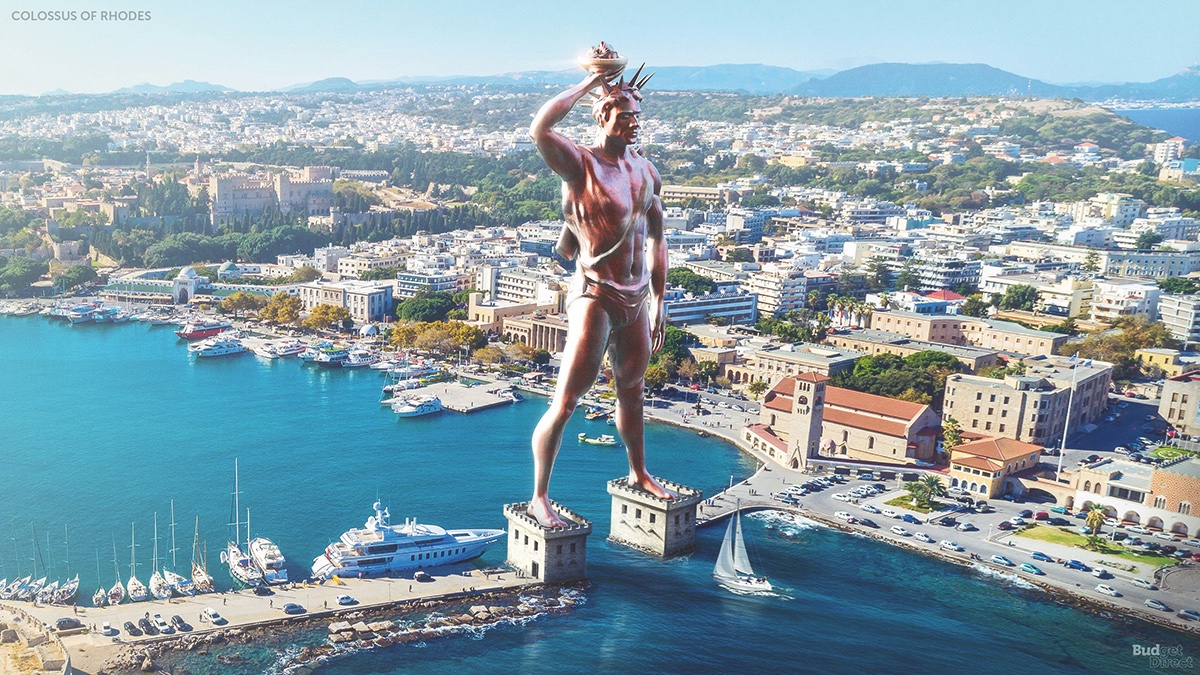
The depiction of the Colossus guarding the port of Rhodes dates from centuries after the statue disappeared but eventually became the image we still have of this monumental figure of the god Helios. Credit: ÁTICO DE LOS LIBROS.
Colossal Sculptures That Vanished Without a Trace
Earthquakes, wars, and the passage of time itself have caused some of history’s most monumental sculptures to vanish. What remains of them are texts, archaeological remains, and—in more recent cases—images that allow us to reconstruct part of what was lost. From the Colossus of Rhodes to the Buddhas of Bamiyan, these traces provide insight into how they were erected and, in some cases, help us decide what to do with what remains.
In March 2001, television viewers around the world watched the destruction of the Afghan Buddhas of Bamiyan. For weeks, explosions ordered by the Taliban regime gradually reduced the two ancient sculptures to rubble. Twenty-five years later, those images have become a symbol of the deliberate destruction of cultural heritage and continue to fuel the debate about what happens when monumental works—designed to last for centuries—disappear.
Long before Bamiyan, earthquakes, fires, wars, the passage of time, and the reuse of their materials caused some of the colossal monuments of antiquity to vanish. Of many of these magnificent sculptures, only traces remain: the texts that described them, the sites where they once stood, scattered fragments, or the imprints they left on the landscape. Today, these traces are complemented by new tools that allow us to reconstruct and study monuments that no longer exist physically.
A Colossus in Constant Reconstruction
Few sculptures have inspired as much literature while leaving us with so little certainty as the Colossus of Rhodes. The image of the giant towering over the entrance to the harbor is part of the collective imagination, although we do not know whether it actually stood there. This interpretation emerged centuries after the bronze statue disappeared and ultimately shaped the way we still imagine the colossal figure dedicated to the god Helios today.
Today we know that the Colossus was erected between 295 and 283 BC to commemorate Rhodes’ victory following the siege led by Demetrius Poliorcetes and that it stood approximately 34 meters tall. Nathan Badoud, author of The Colossus of Rhodes: Archeology of a Lost Wonder, suggests that it may have been located near the present-day Palace of the Grand Master. There is also broad consensus on the cause of its destruction: an earthquake toppled it barely half a century after its construction.
Beyond these facts, much remains uncertain. No identified fragments of the statue have survived, and ancient sources offer only sparse descriptions. Archaeologists and historians have reviewed the topography of ancient Rhodes, classical texts, and the political context in which it was erected to try to determine where it stood, what it looked like, and what it meant to a city that had by then become one of the great powers of the eastern Mediterranean.
Research drawing on classical literature, combined with disciplines such as topography and engineering, challenges the image and location traditionally associated with the Colossus. Photo: Culture Club/Getty Images.
Engineering also plays an important role in this research. Knowledge of Hellenistic metallurgy, materials, and the structural behavior of bronze makes it possible to assess the feasibility of the various hypotheses regarding its construction. Ancient sources, including the texts of Pliny the Elder, remain fundamental, but they are no longer the only tools available for attempting to reconstruct a colossus that disappeared more than two thousand years ago.
Reconstructing from the Original Site
We do not know for certain when or how the Statue of Zeus at Olympia disappeared. We do know that around 430 BC, a monumental figure of Zeus presided over the temple dedicated to him at the Greek sanctuary in the Peloponnese. The building had been erected a few decades earlier, in the first half of the 5th century BC, and its pediments and metopes were decorated with an extensive sculptural ensemble. Opposite the temple, outside the sacred precinct of the Altis, stood the workshop where Phidias worked—the sculptor responsible for the monumental depiction of Zeus.
Excavations at the site uncovered terracotta molds, ivory fragments, and materials used for glassworking. A small cup bearing the inscription Pheidiou eimi (“I belong to Phidias”) was also found. The chronology of the finds dates activity in the building to the third quarter of the 5th century BC, coinciding with the period when the sculpture—one of the Seven Wonders of the Ancient World—was constructed.
The materials used in Phidias’s great sculpture of Zeus and the methods used to make some of its components are known from molds found at his workshop,outside the sacred precinct of the Altis. Credit: Hulton Archive/Getty Images.
The Statue of Zeus was a chryselephantine sculpture of extraordinary dimensions. Art historian Judith M. Barringer estimates its height at around 13.5 meters, a scale that required the figure to be constructed using an internal framework—likely made of wood—over which various materials were applied, primarily ivory for the skin and gold for the garments. The molds found in the workshop allow us to study how some of these components were made, although we still do not know precisely how the entire figure was assembled.
The combination of materials also affected its preservation. Ivory and wood are sensitive to changes in humidity. When the Greek traveler and geographer Pausanias visited Olympia in the 2nd century CE, he noted the presence of olive oil in a depression in front of the statue. This has been interpreted as a possible measure to protect the ivory from environmental conditions, although later research also suggests an optical function: the surface may have helped reflect light onto the figure. Both interpretations remain possible.
The Images That Survived the Buddhas
After the explosions, the two large niches at Bamiyan were left virtually empty, and the remains of the sculptures lay scattered at their feet. To study them, researchers had access to something that never existed in the case of the Colossus of Rhodes or the Statue of Zeus at Olympia: photographs taken before their destruction.
The world’s tallest standing Buddha statue, located in the province of Bamiyan, was destroyed by explosions ordered by the Taliban regime in 2001. Credit: JEAN-CLAUDE CHAPON/AFP/GETTY.
Just three years later, Armin Grün, Fabio Remondino, and Li Zhang of ETH Zurich drew on three collections of images from before 2001 to digitally reconstruct the Great Buddha. The study, published in The Photogrammetric Record, combined photographs taken by visitors with others taken specifically for measurement purposes. Photogrammetry made it possible to reconstruct its shape and dimensions and generate a three-dimensional model.
Digital techniques were also applied to the cliff face. Laser scanning and photogrammetry were used to document the niches and remains and obtain an accurate record of their condition. Years later, some projects incorporated these data into virtual environments to study different conservation and restoration measures before undertaking any work on the site.
In 2017, a study published in PLOS ONE analyzed the layers of paint adhering to some fragments to reconstruct part of the history of their decoration. The analyses identified egg proteins used as a binder in the original layers and cow’s and goat’s milk in later repaintings, making it possible to distinguish between different stages and materials used on the Buddhas over time.
Reconstructing or Preserving the Absence
Digital technologies have made it possible to reconstruct the appearance of the Buddhas with a precision that was unthinkable a few decades ago. But turning those models into a physical reconstruction raises a different debate. Twenty-five years after their destruction, the future of the Bamiyan niches remains unresolved.
Proposals have ranged from leaving them empty to partially or fully reconstructing some of the figures. UNESCO and experts who have worked on the site have spent years analyzing the various possibilities. It is not merely a matter of determining what can be reconstructed: it is necessary to assess the stability of the cliff, the original fragments that could be reused, the authenticity of any potential intervention, and its significance for the communities connected to the valley.
The possible reconstruction of the Bamiyan Buddhas, destroyed by the Taliban regime in 2001, has kept alive the debate about how much of their absence should be preserved. Credit: KAMRAN SHAFAYEE/AFP via Getty Images.
Added to these questions is the historical value of the destruction itself. The 2001 explosions forever altered the site, and their traces are now part of Bamiyan’s recent history. For this reason, one proposal is to leave at least one of the niches empty as a testament to what happened, while others advocate restoring, to varying degrees, the presence of the Buddhas.
Tungsteno is a journalistic laboratory that explores the essence of innovation.
SacyrNewsBlogDriving more sustainable pavement solutions
Share:
Driving more sustainable pavement solutions
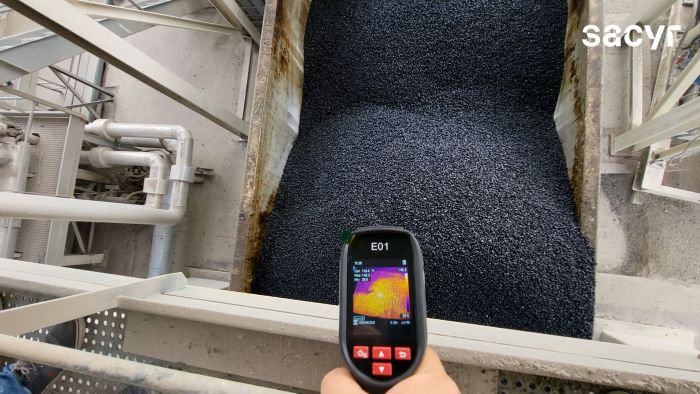
On the Eresma Expressway (A-601) in Segovia, we used recycled material from the road surface that we removed to renew the wearing course. The project incorporates 30% milled material.
23/09/2026
Sacyr Concesiones is putting circular pavement maintenance to the test on the Autovía del Eresma (A-601). Along a one-kilometer stretch, the concessionaire has reused milled asphalt from the existing roadway as feedstock for a new surface course.
The paving works incorporate 30% reclaimed asphalt pavement (RAP) from the highway’s aged wearing course into the new bituminous mix—double the 15% currently recommended by regulations for this type of layer.
A field test with long-term potential
The pilot section, located between kilometer markers 81 and 82 in direction to Segovia, is designed to prove that today’s recycled asphalt technology can increase RAP content in surface mixes without compromising ride quality, durability or overall pavement performance.
“On this pilot section, we are cutting the amount of virgin aggregate needed in the mix,” said Miguel Ángel Moreno, from Sacyr Concesiones’ Pavements Department. “We also reduce material sent to landfill and lower the carbon footprint associated with asphalt production,” he added.
The trial will allow the team to track the mix in service, monitor its long-term behavior and assess whether the approach can be scaled to future maintenance campaigns.
“We want to see how this mix holds up in the field and whether the solution is sustainable, technically viable and cost-effective over time,” said Ángel Delgado, manager of the Autovía del Eresma.
Technology and collaboration drive the pavement trial
The recycled asphalt mix—a BBTM 11B gap-graded surface mix with 30% RAP—was manufactured at Padecasa’s plant in Aldeavieja, Ávila.
The project brings together the Regional Government of Castile and León, Sacyr’s Pavements Department, Sacyr Concesiones’ Innovation team and Padecasa. It builds on a 2024 test section that used 15% RAP, the maximum share currently recommended for this type of wearing course.
The initiative supports circular economy targets and aligns with Castile and León’s regulatory framework, which requires at least 3% of aggregates used in pavement rehabilitation works to come from recycled materials.
With pilots like this, Sacyr continues to test lower-impact road maintenance solutions that conserve natural resources, reduce waste and support more sustainable infrastructure management.
SacyrNewsBlogWe use AI to automate carbon footprint calculations
Share:
We use AI to automate carbon footprint calculations
We have developed a solution that automates and optimizes the tracking of energy consumption in our projects.
25/09/2026
Our Quality and Environment Department, together with the IT Department, has developed an artificial intelligence solution that automates and optimizes the recording of energy consumption in our projects.
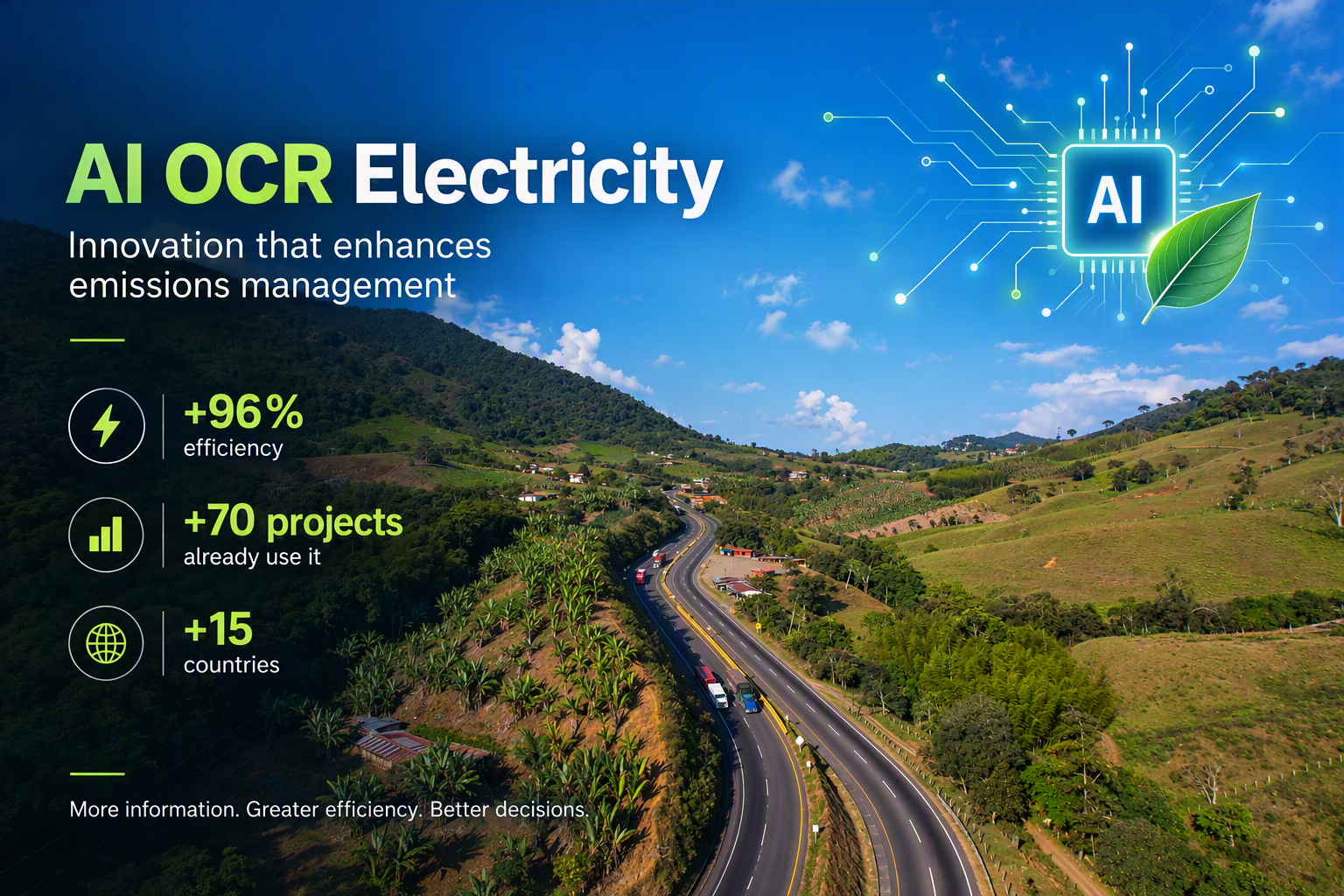
AI OCR Electricity automates the reading and processing of electricity bills, automatically capturing the data needed to calculate our carbon footprint.
Integrated into our CYMAE application, the tool is now available for use across all projects and countries, improving efficiency, traceability, and data quality. Since the launch of AI OCR Electricity, we have been monitoring the entire process, achieving 96% accuracy in data extraction and recording.
Its launch addresses one of the challenges identified in our 2024–2027 Strategic Plan: having reliable and traceable information on energy consumption and associated greenhouse gas (GHG) emissions, facilitating more efficient, data-driven management.
Key Benefits of “AI OCR Electricity”
The in-house development of AI OCR Electricity generates direct benefits for Sacyr, improving operational efficiency, data quality, and our scalability. Among its main advantages, we highlight:
1. Financial Return and Operational Efficiency
• Rapid return on investment, with an estimated payback period of less than two years.
• Reduced costs and processing times thanks to the automation of invoice processing.
• Greater technological autonomy, reducing dependence on external solutions.
• Fostering internal talent, strengthening our capabilities in artificial intelligence and digitalization.
2. Data Quality and Internationalization
• Greater accuracy and traceability of information, facilitating reporting and audit processes.
• International scalability, allowing for agile deployment in any project or country without additional costs.
• Generating cross-functional knowledge, with insights already being applied to new features and use cases within the organization.
With this launch, we are optimizing daily processes and demonstrating how internal innovation and digitalization are key drivers for moving toward a more efficient and environmentally friendly business model.
RevelaVerde, our employee photography competition, invited us to see the natural richness of the places where our projects take shape — and the importance of protecting it by reducing our impact wherever we can.
24/08/2026
We launched RevelaVerde to mark World Environment Day, inviting employees to take part in an environmental photography competition.
The idea was simple: to capture images that show how our teams live and work alongside nature, helping to protect and transform the places where we operate.
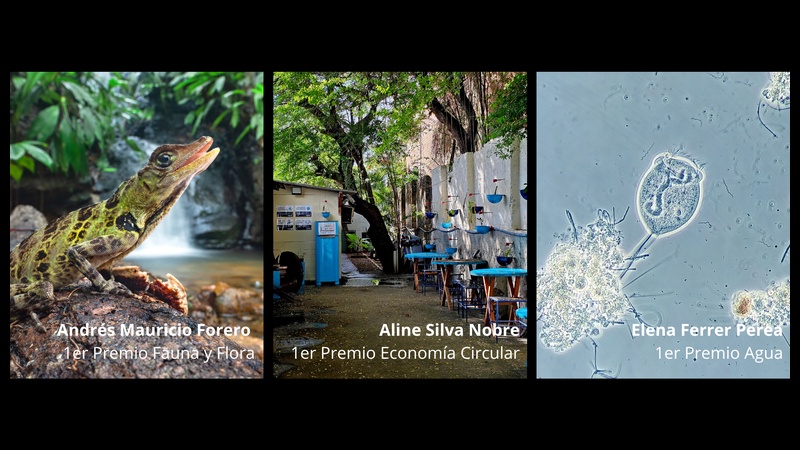
More than 100 photographs from 30 projects across eight countries were submitted.
Together, they reveal the biodiversity that surrounds our worksites, creative ways of giving resources a second life, landscapes shaped by water and small details that often go unnoticed but speak volumes about why environmental care matters.
The winning and finalist entries, featured here, capture that commitment from different perspectives.
From a small lizard hidden in the vegetation in Colombia to water-purifying microorganisms in Spain and material reuse initiatives in Brazil, these images invite us to look more closely at the world around us.
More than a competition, RevelaVerde is a reminder of the value of stopping to observe: to recognize the environmental richness around us and celebrate the people working every day to deliver projects that are more respectful of natural spaces.
SacyrNewsBlogInnovation beneath the surface at Binningup
Share:
Innovation beneath the surface at Binningup
An innovative repair was carried out on the transition chamber at our desalination plant in Perth, Australia, which not only maintained the integrity of the seawater intake system but also ensured that the marine environment was protected at all times.
One key component of the seawater intake system is the Stage 1 Transition Box, a buried concrete structure that connects two 1.6 m HDPE intake pipelines to the plant’s intake tunnel. Operating beneath the seabed in a challenging marine environment, this structure plays an important role in maintaining the integrity and reliability of the plant’s seawater intake system.
Following the identification of progressive structural degradation and sand ingress, Sacyr Agua worked closely with Water Corporation and specialist delivery partners to develop a low-impact remediation solution. The objective was clear: restore functionality and extend asset life without requiring full replacement of the structure.
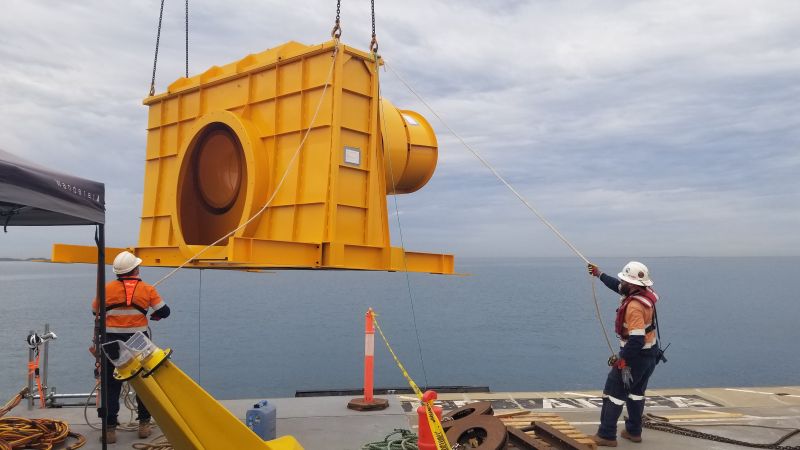
Developed in collaboration with SEA Global, SF Design and Fremantle Commercial Diving, the solution involved the installation of a precision-machined modular HDPE lining system. Reinforced in key locations and grouted in place, it created a sealed, load-bearing internal flow path. Computational Fluid Dynamics (CFD) modelling, structural verification and full-scale dry and wet testing were used to validate the design ahead of offshore installation.
The project was delivered under demanding offshore conditions, including subsea construction, restricted access, limited weather windows and stringent environmental controls. Specialist diving teams installed more than 75 custom-machined HDPE components within the existing structure, restoring intake integrity while minimising disturbance to the surrounding marine environment.
“This was more than a repair – it was a coordinated effort across design, fabrication and marine execution,” said Paul Oosthuizen, Maintenance Manager at the Southern Seawater Alliance.
By rehabilitating the existing structure rather than replacing it, the project reduced seabed disturbance, minimised operational impacts and extended the service life of a critical element within the plant’s intake infrastructure.
Australian Water Award
In 2025, the Transition Box Remediation project received industry recognition through an Australian water sector award for innovation in marine infrastructure delivery.
SacyrNewsBlogArtificial Intelligence as a Driver of Transformation at Sacyr
Share:
Artificial Intelligence as a Driver of Transformation at Sacyr
Artificial intelligence has become a key element in addressing the major challenges facing the infrastructure sector: sustainability, operational efficiency, safety, and improving the user experience. At Sacyr, AI is not treated as a standalone technology, but rather as a strategic tool integrated into the design, operation, and management of complex assets, both in the context of concessions and corporate processes.
10/08/2026
From optimizing road maintenance to the smart management of urban spaces, including energy efficiency in large-scale infrastructure and the improvement of bidding and procurement processes, Sacyr is driving solutions based on data, machine learning, predictive models, and generative artificial intelligence that enable the company to anticipate issues, make better decisions, and generate a positive and measurable impact on society.
Here are some of the most significant projects in which the company is applying artificial intelligence in a tangible way.
1. APROMAC: Artificial Intelligence to Anticipate Pavement Deterioration
Sacyr Concesiones is developing APROMAC, an advanced predictive analytics module designed to transform pavement management and maintenance through machine learning and deep learning techniques. The project’s main objective is to anticipate changes in key indicators of pavement condition—such as ruts, macrotexture, and the transverse friction coefficient (TFC)—based on real-world operational and road inspection data.
APROMAC was developed in response to the limitations of traditional prediction models, which are based on empirical formulations that struggle to represent nonlinear behavior and the simultaneous interaction of multiple factors. To address this, the project systematically investigates the construction, climatic, and traffic variables that influence pavement deterioration, applying big data and artificial intelligence technologies to real historical data from roads managed by Sacyr.
Following a rigorous data cleaning and standardization phase, new predictive models have been trained and validated that are capable of significantly improving accuracy compared to current approaches. The result is a tool that enables long-term prediction of pavement behavior and supports more efficient maintenance planning.
The project also relies on a digital platform designed for infrastructure managers, which facilitates the visualization of projected trends by homogeneous sections and the analysis of different maintenance scenarios, promoting proactive, data-driven decision-making. APROMAC is co-funded by the European Union, the Ministry of Finance, and the CDTI, through the Ministry of Science, Innovation, and Universities.
2. SUSTAIN: Digital Twins for Smarter, More Human-Centered Urban Management. The Example of “Las Setas de Sevilla”
The SUSTAIN project explores the potential of digital twins and artificial intelligence in the smart management of unique urban spaces. Within this framework, Sacyr has developed an advanced digital twin of Las Setas de Sevilla, an iconic landmark that combines a public square, a market, a viewpoint, and access to an archaeological site.
The solution combines real-time data from IoT sensors, computer vision systems, and mobility data to create a dynamic digital representation of the site and how users interact with the space. Thanks to this information, the digital twin provides insights into usage patterns, environmental conditions, and visitor volumes, as well as the ability to simulate different event scenarios and configurations of the public space.
Using predictive models based on artificial intelligence, SUSTAIN is able to anticipate peaks in demand, visitor behavior, and operational needs, tangibly improving the efficiency of management, planning, and the citizen experience. The project also incorporates indicators related to the condition and maintenance of the infrastructure and is designed as a tool for designing and evaluating urban improvement strategies with a comprehensive approach.
Universal accessibility, inclusion, quality of life, and integration into the urban fabric are cross-cutting themes of the project, aligned with Sacyr’s vision of developing infrastructure with a positive social impact. The initiative, funded by the CDTI with Next Generation funds from the European Union, lays the groundwork for scaling these solutions to other concession assets such as transit hubs, airports, hospitals, and large public spaces.
3. Artificial Intelligence to Optimize Energy Efficiency at Madrid’s Transit Interchanges
Sacyr Concesiones has implemented an advanced energy optimization solution based on artificial intelligence at the Moncloa and Plaza Elíptica transit interchanges, high-traffic infrastructure facilities that together serve more than 260,000 users daily.
Both transit hubs feature complex HVAC and ventilation systems, managed through building management systems (BMS), and are subject to a highly demanding concession framework, with requirements for thermal comfort and environmental quality throughout their operation. To optimize their operation, Sacyr has integrated the Respira solution, developed by Sener, which acts as an autonomous virtual operator supported by advanced analytics and AI.
The system continuously analyzes variables such as indoor and outdoor temperatures, the building’s thermal inertia, occupancy, weather conditions, and historical equipment performance. Unlike traditional models based on rules and reactive responses, the solution introduces predictive control capable of anticipating temperature changes in the spaces and activating the HVAC systems more efficiently.
Thanks to this approach, it is possible to take advantage of favorable environmental conditions, optimize the use of thermal inertia, or adapt climate control to anticipated changes in occupancy, thereby reducing energy consumption without compromising user comfort. The result is a more sustainable and efficient operation that is aligned with infrastructure decarbonization goals.
4. AI Agents to Transform Bidding and Procurement Processes
Beyond physical assets, Sacyr is applying artificial intelligence to its corporate processes, with a special focus on bidding and procurement—highly complex and document-intensive areas. The company is working on the development of a suite of AI agents that comprehensively cover the entire process cycle.
In the area of bidding, the approach is based on an ecosystem of specialized agents capable of automatically analyzing bid documents, detecting changes and addenda, structuring requirements, supporting strategic go/no-go decisions, generating technical documentation, and strengthening quality controls prior to the submission of bids. The goal is to move toward more standardized, traceable, and robust decision-making processes.
In the area of purchasing and procurement, AI agents enable the standardization of tender documents and requests for proposals, the analysis of suppliers, the objective comparison of proposals, the detection of contractual deviations, and support for negotiations. The process is rounded out by the generation of clear executive summaries that can be defended in the face of audits and before management.
These solutions are designed to act as co-pilots that enhance the work of teams by eliminating repetitive tasks and reducing ambiguity, allowing professionals to focus on strategic analysis and value creation.
SacyrNewsBlogMembranes That Continue to Generate Value Sacyr Agua Gives Them a Second Life
Share:
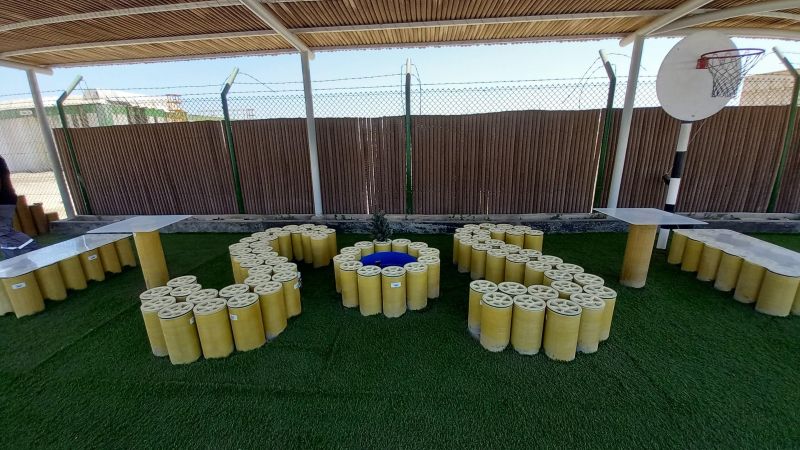
Treatment facility using reused membranes for water filtration and desalination.
Membranes That Continue to Generate Value Sacyr Agua Gives Them a Second Life
With a circular approach, Sacyr Agua has been promoting the reuse of desalination membranes for years, transforming the end of their useful life into a new opportunity.
07/08/2026
This is an example of how we promote circular economy solutions, while also generating social benefits in the regions where we operate.
With a circular approach, Sacyr Agua has been promoting the reuse of desalination membranes for years, transforming the end of their useful life into a new opportunity. This practice extends the useful life of a key technical material in desalination plants, preventing its premature disposal as waste and promoting a more efficient use of resources.
Dozens of membranes from desalination plants await a second life thanks to reuse and recycling technologies.
New Applications for a Valuable Resource
Membranes that have reached the end of their useful life in the seawater desalination process can have a second life. At Sacyr, we reuse them for new applications that enhance their value:
• Treatment of reclaimed water for agricultural use, where quality requirements are less stringent. This initiative is already underway at EDAM Skikda O&M and the Honaine Desalination Plant (Algeria), Sohar Operation Services (Oman), and Southern Seawater (Australia).
• Reuse at other company facilities, where the membranes are utilized as filters for various water treatment processes. For example, membranes from IDAM Torrevieja UTE have been transferred to IDAM Alicante to continue serving in new applications.
• Wastewater treatment, where they are used as part of tertiary treatment processes or MBR (Membrane Bioreactor) systems.
• Creation of recreational spaces and landscaping features at the desalination plants themselves, transforming them into planters, as has already been done at Sohar Operation Services (Oman).
Through this initiative, at Sacyr Agua we give the membranes a second life, reducing waste and preventing their disposal in landfills. This action is part of our Zero Waste Plan and contributes to advancing the company’s circular economy objectives. It aligns with our strategies focused on preventing the generation of non-hazardous waste and fostering partnerships that avoid its disposal, while promoting sustainable solutions across all our operations.
Technical staff perform monitoring and commissioning tasks on a membrane filtration system.
More Than 10,000 Reused Membranes
Between 2023 and 2025, more than 10,000 desalination membranes have been reused.
This initiative is already being implemented in various Sacyr Agua projects, both in Spain and in other countries, promoting a more circular approach to materials management by extending their useful life and encouraging new uses before disposal. Additionally, it has a positive impact on the communities where we operate by supporting solutions related to water treatment for agricultural and productive activities.
SacyrNewsBlogBuilding for the Unpredictable: Redesigning Urban Flood Defenses
Share:
The Thames Barrier prevents London from being flooded by exceptionally high tides or storms coming in from the sea. Credit: Dafydd Owen/Construction Photography/Avalon/Getty Images
Building for the Unpredictable: Redesigning Urban Flood Defenses
Designed to activate only during extreme events, much of the infrastructure that protects cities was developed using historical hydrological records. Today, rising sea levels and increasingly frequent torrential rains are forcing a reevaluation of systems built for a climate that is no longer predictable.
On November 4, 1966, the acqua alta in Venice reached 1.94 meters, the highest level recorded in the city since systematic measurements began. The rising tide inundated streets, homes, shops, and historic buildings. That flood marked a turning point in the protection of the Venice Lagoon and set in motion a process that, decades later, led to the MOSE system: 78 movable floodgates designed to temporarily isolate Venice from the Adriatic Sea when exceptionally high tides threaten to overwhelm the city.
Venice is not an isolated case. More and more cities are turning to infrastructure that is activated only when the risk exceeds certain thresholds. Many of these systems were developed using historical records that made it possible to estimate the probability of floods, storms, or exceptionally high water levels with reasonable accuracy. Rising sea levels and the increasing intensity of some extreme weather events are now altering those reference points. The latest IPCC (Intergovernmental Panel on Climate Change) report warns that the risk of coastal and river flooding will increase during this century—a trend that calls for a reassessment of both existing infrastructure and the criteria used to design new urban flood defense systems.
Barriers Lying in Wait Beneath the Sea
St. Mark’s Square submerged under water will remain a familiar sight in Venice. For now, however, the MOSE system remains inactive most of the time. The flood-control system is activated only when forecasts predict an exceptionally high tide capable of flooding the city. When that happens, the barriers rise from the bottom of the lagoon to block the sea from entering. Once the danger has passed, they sink back beneath the water.
The MOSE system’s movable gates temporarily isolate the Venice Lagoon from the Adriatic Sea when the tide rises to approximately one meter. Credit: VINCENZO PINTO/AFP via Getty Images
Since becoming operational in 2020, the system has protected Venice from several episodes of acqua alta that would otherwise have flooded much of the historic center. Yet its implementation has not put an end to the debate over the lagoon’s future. In fact, a study published last year by researchers at Italy’s Istituto Nazionale di Geofisica e Vulcanologia (INGV) suggests that rising sea levels, combined with the gradual subsidence of the land on which the lagoon sits, will likely require the MOSE system to be activated more frequently over the course of this century.
Protecting Venice is no longer simply a matter of keeping the water out. The challenge extends beyond raising the barriers when floodwaters threaten the city. It is about doing so in a way that preserves the lagoon that has shaped Venice’s identity for centuries.
London: Learning to Adapt Infrastructure
The 1953 North Sea storm surge changed the way the United Kingdom understood flood risk. The storm and the resulting flooding claimed the lives of hundreds of people along England’s east coast and exposed London’s vulnerability to extreme weather events. Three decades later, the Thames Barrier became operational.
The Thames Barrier is one of the key components of the Thames Estuary Plan 2100, the strategy to adapt the estuary to rising sea levels and reduce the risk of flooding. Credit: Tim Motion/Construction Photography/Avalon/Getty Images
Today, the Thames Barrier remains the cornerstone of London’s flood protection system, but the challenge is no longer simply to operate the barrier—it is to determine when it will no longer be sufficient. The Thames Estuary 2100 project, led by the UK Environment Agency, reassesses the estuary’s evolution and climate projections every five years to determine when to reinforce dikes, raise flood walls, or adapt existing defenses. Rather than a completed project, protecting the estuary has become an ongoing process of adaptation, driven by changes in both the climate and the infrastructure itself.
Rotterdam: Protection Without Halting Activity
While the United Kingdom responded to the 1953 storm surge disaster by building the Thames Barrier, the same storm also caused catastrophic flooding in the Netherlands, prompting the creation of the National Delta Program, one of the world’s largest hydraulic engineering initiatives. The Maeslantkering (Maeslant Barrier), inaugurated in 1997 at the entrance to the Port of Rotterdam, was the final major component of that program. It was designed to solve a problem that the massive dikes built decades earlier could not: protecting the coastline without blocking access to Europe’s largest port.
Its two steel arms, each 237 meters long, remain open to allow ships to pass and close only when hydrological and meteorological models predict sea levels high enough to threaten the safety of the estuary. The decision is made automatically, although it remains under the supervision of Rijkswaterstaat, the Dutch agency responsible for water management and national infrastructure. To make that decision, the system relies on a network of sensors, measuring stations, and numerical models that integrate data on sea level, wind, waves, and river flow to anticipate the progression of each storm.
The Maeslant Barrier’s closure system is fully automated and controlled by a centralized decision-support system called Beheerscentrale (BOS). Source: Rijkswaterstaat7u
The barrier was designed to be activated only a few times each year. The rest of the time, it remains open and the port operates normally. This approach reflects a broader shift in hydraulic engineering: infrastructure is no longer kept active at all times but is instead activated only when the level of risk demands it.
Diverting Water Beneath the City
Containing the sea is only part of the challenge. Extreme rainfall can cause rivers to overflow and overwhelm urban drainage systems in a matter of hours. Tokyo chose to tackle this risk underground. Recurring floods caused by typhoons and torrential rains in the Tokyo metropolitan area led Japan to develop the G-Cans system, an underground complex designed to divert excess water.
At a depth of about 50 meters, a 6.3-kilometer network of tunnels connects several waterways, diverting excess water into the Edo River. The system began operating in 2002 and has since become one of the primary defenses for northern Tokyo, as well as an unexpected tourist attraction. During Typhoon Hagibis in 2019, it diverted more than 12 million cubic meters of water and reduced the number of flooded homes in the Nakagawa and Ayase river basins by about 90 percent, according to Japan’s Ministry of Land, Infrastructure, Transport, and Tourism. Unlike coastal barriers, it does not prevent water from entering the system; instead, it redirects and channels the water along a controlled route.
G-Cans, the world’s largest underground flood control system, diverts excess water into the Edo River to protect the Tokyo metropolitan area. Credit: John S Lander/LightRocket via Getty Images
Kuala Lumpur took the concept a step further. The SMART Tunnel, which opened in 2007, combines two types of infrastructure into a single structure: an urban highway and a flood-drainage tunnel. When heavy rainfall threatens to cause the rivers in the Malaysian capital to overflow, traffic is halted, the tunnel is closed to vehicles, and it becomes part of the city’s flood-control system. Once the floodwaters recede, the tunnel is cleaned and reopened to traffic. Rather than trying to hold back water at all costs, modern engineering increasingly seeks to redirect its flow, minimizing its impact on the city.
From Containing the River to Giving It Space
Sometimes, the most effective engineering solution is not to contain a river, but to give it back some of the space it once occupied. The Dutch Room for the River program was developed around this principle. The Rhine and Meuse floods of 1993 and 1995, which forced the evacuation of some 250,000 people, exposed the limitations of continually raising river defenses while the space available to the rivers continued to shrink.
The program transformed more than 30 river sections by moving dikes inland, creating secondary channels, and restoring areas that can temporarily store floodwaters. According to a study published in the journal Geosciences, this approach reduces pressure on the dikes and mitigates the impacts of flooding. Rather than replacing existing flood defenses, it complements them by making the river itself part of the solution.
None of these interventions completely eliminates flood risk. Instead, they are based on the recognition that flooding will continue to occur and that the most effective protection comes from systems capable of adapting to changing conditions. The rigid concrete solutions and static calculations of the past have given way to infrastructure designed to manage uncertainty. The paradox of these systems is that their greatest success is measured by what does not happen: an extreme weather event passes without disrupting the city’s daily life, becoming just another entry in the hydrological record.
Tungsteno is a journalistic laboratory that explores the essence of innovation.
SacyrNewsBlogInnovation to cut concrete use in tunnels
Share:
Innovation to cut concrete use in tunnels
We have carried out a pilot project on Line 5 of Bilbao Metro to test an additive that can cut concrete waste by 40% in tunnel construction.
29/07/2026
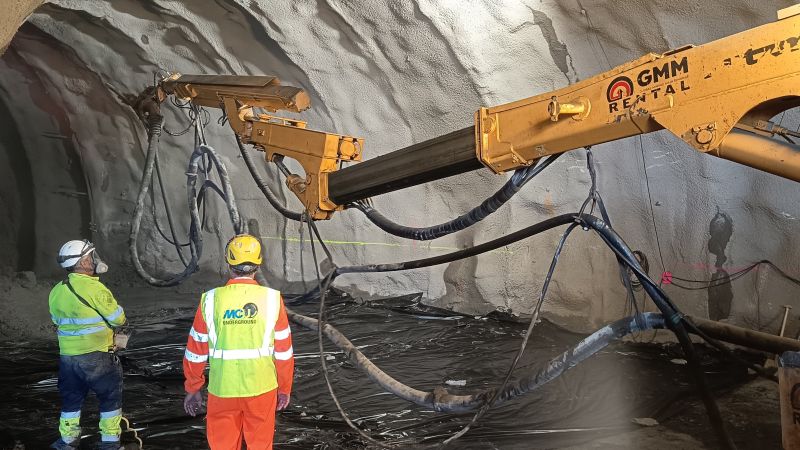
Shotcrete is essential in tunnel construction: it stabilizes excavations and helps ensure safe working conditions.
However, not all material adheres to tunnel surfaces. Some falls to the ground, creating waste and material losses, increasing cleanup work and adding to environmental impact. Under normal conditions, waste can exceed 15% of concrete used in the process.
At Sacyr Engineering and Infrastructure, we have launched ECO-Shot, a pilot project during construction of Line 5 of Bilbao Metro to address this issue. The project assessed performance of MC-Montan Shotsol, an additive designed to improve concrete cohesion and significantly reduce rebound. We had previously used this additive on a project in Colombia.
“The trial was carried out under real site conditions, comparing two identical mixes that differed only in the additive used,” explains Pablo García del Campo, technical director at Cavosa. “To ensure reliable results, all application factors were kept constant: same spraying robot, same operator, same working environment and same sprayed volume,” he adds.
In trials, rebound material fell from 12.5% to 7.6%, a reduction of nearly 40%.
“During tests, the mix showed more stable behavior and more continuous pumping, reducing adjustments needed during application. This led to a smoother process, less equipment wear and improved productivity,” says García del Campo.
The most significant impact is environmental. Because less concrete is needed to achieve the same result, cement consumption falls. Cement is one of construction’s highest-carbon materials.
According to our estimates, this improvement could avoid around 253 metric tons of CO₂ equivalent on the metro works, thanks to lower material consumption and fewer transport movements linked to the project.
Initiatives like this help us keep moving toward more efficient, competitive and sustainable construction. They also show that innovation applied on site can deliver economic, operational and environmental benefits.
SacyrNewsBlogWho Pays for Pollution? New Investment Opportunities in Water
Share:
Who Pays for Pollution? New Investment Opportunities in Water
In this new installment of our “Con Acento Sacyr” section, our colleague Domingo Zarzo explains the implications of the new European Wastewater Directive for industries that emit emerging pollutants.
23/07/2026
Domingo Zarzo Martínez
Sacyr Water Director of Strategic Projects, Communications, and Institutional Relations
Sacyr Agua
Directive (EU) 2024/3019 on urban wastewater treatment was published in the Official Journal of the European Union on December 12, 2024. It requires Member States to transpose the new rules into national legislation within 30 months, by July 2027. In Spain, the first steps are already underway through a draft law submitted for consultation in June 2026.
The Directive marks a major shift for wastewater treatment. It promotes water reuse, sets a 2045 decarbonization target for the sector, and expands the requirements of the previous 1991 directive, both in terms of the size of municipalities covered (>1,000 inhabitants) and the quality standards they must meet. It also introduces advanced treatment processes, known as quaternary treatment, to remove contaminants of emerging concern (CECs), including pharmaceutical residues, personal care products, drugs and other substances, with part of the cost to be covered by the producers of those products.
This is where the Directive introduces the concept of Extended Producer Responsibility (EPR). Under this approach, the pharmaceutical and personal care product industries will be required to finance at least 80% of the cost of implementing treatments designed to remove CECs, in line with the “polluter pays” principle.
Each EU Member State will have to design and implement its own EPR scheme for this purpose. In practice, this means there will not be a single Europe-wide model; each country will adapt the system to its own legal and administrative framework.
The funds collected will be earmarked to cover the capital and operating costs associated with installing and maintaining quaternary treatment systems at wastewater treatment plants. The Directive also encourages these fees to be “modulated,” meaning they may vary according to the hazard, persistence or volume of micropollutants contained in each product. This should encourage producers to design and market products with a lower environmental impact.
Several pharmaceutical companies have challenged the EPR regime, arguing that it unfairly penalizes the sector and lacks sufficient empirical rigor and proportionality. Over the coming months and years, we will see how these responsibilities are defined in practice and how Spain shapes and implements its own EPR framework. It is also likely that industry will pass part of these costs on to the final price of products, although the EU’s objective is for any impact to be proportionate and to encourage innovation toward more sustainable products.
A similar concept, although in a different area of water management, can be found in Spain’s new Royal Decree 1085/2024 on water reuse.For the first time, it opens the legal door for industries and private companies in Spain to finance water treatment or reuse infrastructure to offset their water footprint and move toward the concept of being Water Positive. It could also create new opportunities for public-private partnership models in water infrastructure, which, unlike in other countries, remain relatively uncommon in Spain.
Water Positive
Many of the world’s largest corporations—including Amazon, Microsoft, Google, Coca-Cola and Tesla—have committed to becoming Water Positive by 2030. Technology companies, among the largest consumers of water because of their data centers, are already making significant investments in this area.
For example, Amazon Web Services has committed €17 million to the Government of Aragon to offset the water footprint of its new data centers under construction, while Microsoft is also financing irrigation improvements for farmers in Spain and projects to reduce losses in municipal drinking water networks.
Sacyr Group is already Water Positive. Since 2022, our water footprint has been measured and certified under ISO 14046. Thanks to our production of desalinated and reused water, we have a positive net water balance across the Group, in every country where we operate and across all our activities: we produce more water than we consume.
Together, these new regulations open up significant investment and business opportunities for Sacyr in Spain and across Europe. In Spain alone, the Ministry for the Ecological Transition and the sector’s main associations estimate that €24.5 billion in investment will be needed to comply with the new Urban Wastewater Treatment Directive.
Sacyr is well positioned to take on these challenges and investments. As early as 2015, Sacyr Agua built the advanced treatment system at the La Gavia wastewater treatment plant in Madrid, which we also operate today. With a capacity of 1 m³ per second, it is one of the largest facilities of its kind in Spain. We have also carried out numerous innovation projects, including pilot tests of different technologies to remove emerging contaminants and microplastics.
In the same way, Sacyr Agua has promoted the Water Positive approach from the outset and has defined a strategy to address this emerging market, identifying potential internal offset projects that can be offered to companies and industrial clients.
SacyrNewsBlogFrom drawings to smart data: the AI revolution at Sacyr Proyecta
Share:
From drawings to smart data: the AI revolution at Sacyr Proyecta
The AI P&IDs Project was launched to address a recurring challenge at our engineering subsidiary: extracting technical information from complex piping and instrumentation diagrams.
15/07/2026
P&IDs are piping and instrumentation diagrams that schematically represent all the equipment, pipes, associated components, instrumentation and controls in an industrial plant. These are highly complex drawings due to the vast amount of information they contain.
To make them easier to read and work with, Sacyr Proyecta, together with the ICT team, has created the P&IDs AI Project. The aim is to significantly improve the productivity of the engineering teams by extracting the lists associated with these documents – a task that used to take our specialists a great deal of time due to the high complexity of the drawings.
“This tool represents a significant step forward in the digitalisation of engineering processes. It enables us to transform static drawings into sources of structured data that are reusable and can be linked to other corporate systems,” emphasises Raúl López Perdiguero, director of Sacyr Proyecta.
Combination of advanced techniques
The technological solution combines advanced computer vision, optical character recognition (OCR) and machine learning techniques to process P&IDs in digital format and generate a structured file containing the detected elements.
This file is then refined using post-processing algorithms that eliminate false detections and improve recognition accuracy.
The tool features an interactive graphical interface that allows the user to review, edit and validate the results generated by the AI before exporting them to the final lists.
“To deliver real value in engineering, it is not enough simply to recognise symbols and carry out a basic count. It is essential to link each symbol to the line on which it appears in order to obtain key information, such as its size, material, etc.,” explains Ana Silva Balaguera, a mechanical engineer at Sacyr Proyecta.
Transforming traditional processes
“The smart P&ID digitisation project is a strong example of how technological innovation can transform traditional processes and have a direct impact on productivity,” says López Perdiguero.
The project’s architecture has been designed from the outset with scalability in mind, with the aim of extending the solution to other Sacyr business units, such as Water, Engineering and Infrastructure.
SacyrNewsBlogThe Tower Reshaping the Sagrada Familia
Share:
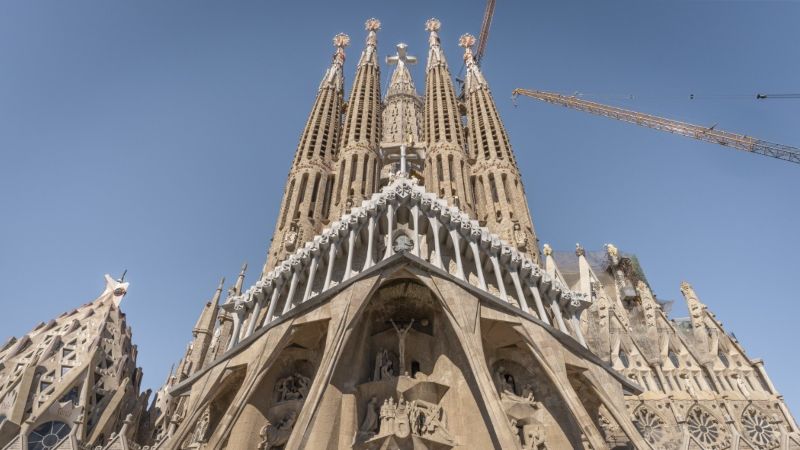
The completion of the Tower of Jesus Christ has made the Sagrada Família the tallest church in the world. Credit: Fundació Junta Constructora del Temple Expiatori de la Sagrada Família / Pep Daudé
The Tower Reshaping the Sagrada Familia
The completion of the Tower of Jesus Christ brings the Sagrada Família closer to the vision Antoni Gaudí imagined more than a century ago. Its construction has required combining the architect’s legacy with technologies that were unknown when the project was conceived. Now, new challenges lie ahead: completing the project without losing sight of the city that has grown up around it.
At eleven o’clock on the morning of February 20, 2026, a crane hoisted into place the final arm of the cross that crowns the Tower of Jesus Christ at the Basilica of the Sagrada Família in Barcelona. With that, a major chapter in the basilica’s 144-year construction history reached its culmination. With the installation of the steel, glass, and ceramic structure, the Roman Catholic basilica attained the 172.5-meter height envisioned by Antoni Gaudí and became the tallest church in the world. The solemn blessing and inauguration ceremony, presided over by Pope Leo XIV on June 10 as part of the events commemorating the centennial of the architect’s death, underscored the tower’s symbolic significance.
Yet the completion of the tower represents more than just an architectural record. It is one of the most complex exercises in heritage continuity in contemporary architecture: completing a project conceived in the 19th century using tools, materials, and construction systems that its creator could never have imagined.
The basilica’s changing silhouette also marks the beginning of a new chapter for a building that continues to face questions that engineering alone cannot answer.
The installation of the final arm of the cross that crowns the Tower of Jesus Christ marked the culmination of a 144-year construction process. Credit: Fundació Junta Constructora del Temple Expiatori de la Sagrada Família / Pep Daudé
A Mountain as a Limit
When Gaudí took over the project in 1883, he transformed a conventional Neo-Gothic church into a complex architectural organism in which every element responded to a geometric, natural, and symbolic order. The Tower of Jesus Christ was not simply the tallest of the 18 planned towers—it was the axis around which all the others were arranged.
The architect did not design a building composed of independent parts, but rather a system in which form arises from complex mathematical and structural relationships. Surrounded by the towers of the Evangelists and that of the Virgin Mary, the central position of the Tower of Jesus reflects a spatial and theological hierarchy in which height expresses the order of the whole. Its location also strengthens the building’s visual relationship with two defining features of the Barcelona landscape: Montjuïc and the Mediterranean.
The Tower of Jesus Christ acts as a connector between Montjuïc and the Mediterranean Sea. Credit: Fundació Junta Constructora del Temple Expiatori de la Sagrada Família / Pep Daudé
This decision reveals much about Gaudí’s conception of architecture. The Catalan architect specified that the structure should reach 172.5 meters in height, deliberately placing the tower just below the 173-meter summit of Montjuïc in order to integrate the basilica with the city’s natural skyline rather than compete with it.
Between Legacy and Interpretation
Gaudí conceived the Sagrada Família as an intergenerational project. He understood that the technical complexity of his vision, combined with its reliance on private donations, made it impossible for him to see it completed. As architect Joan Bergós, one of his closest collaborators, later recalled, Gaudí often said: “What I cannot do, others will continue.”
When he died after being struck by a tram in Barcelona in June 1926, the Tower of Jesus Christ remained more idea than reality. Gaudí had defined its role within the overall composition, its general proportions, and many of its geometric principles, but he never lived to see its construction begin. The destruction of many of the models and documents stored in the Sagrada Família workshop during the Spanish Civil War dealt the project a further blow. The surviving legacy had to be pieced together and interpreted to meet the challenge of completing the building’s unbuilt sections, including the great central tower.
The Tower of Jesus Christ has become one of the finest examples of collaboration between heritage and innovation. Credit: Basilica of the Sagrada Familia.
When construction began, many of the shapes envisioned by Gaudí were simply impossible to build. A century later, computers made it possible to visualize much of that geometry. Australian architect and researcher Mark Burry, one of the foremost academic authorities on the basilica, has played a key role in this process. His work has helped translate many of Gaudí’s designs into the digital realm using advanced modeling techniques and parametric design tools.
The construction of the Tower of Jesus Christ demonstrates the extent to which digital tools have transformed the way we preserve and restore historic heritage. Many of its components were manufactured off-site and later assembled using industrialized construction methods. Among the innovations employed, the so-called “post-tensioned stone” stands out, a system that combines stone and steel to increase structural strength without altering the building’s exterior appearance.
The crowning element of the tower—a four-armed cross standing over 15 meters tall—is itself the product of this convergence between Gaudí’s vision and contemporary engineering. The challenge was not merely to place a religious symbol atop the tower. Engineers had to design an element capable of withstanding powerful winds, temperature fluctuations, solar radiation, and decades of exposure to the elements.
The cross that crowns the Sagrada Família’s newest tower is made of steel, glass, and ceramic, engineered to endure the harshest weather conditions. Credit: Basilica of the Sagrada Família
According to information published by the basilica, Gaudí had specified in the Àlbums del Temple that the cross should shine during the day and glow at night. Based on this idea, the resulting solution combines glass, white enameled ceramic, and contemporary structural systems. For Jordi Faulí, the basilica’s architectural director, the incorporation of new technologies has not disrupted the continuity of the project: “If Gaudí were to see the Sagrada Família today, he would recognize it as his own.”
New Challenges
For decades, the unfinished image of the basilica served as both an icon of Barcelona and a metaphor for Gaudí’s nonconformist spirit. Although the Tower of Jesus Christ is now complete on the exterior, the Sagrada Família remains under construction. Work continues on interior spaces and various elements of the complex. Yet the greatest challenge still ahead has a name: the Glory Façade.
Its construction raises a question that extends beyond architecture itself: how do you complete a historic work when the city for which it was designed no longer exists? Conceived by Gaudí as the basilica’s main entrance, this façade was intended to be preceded by a monumental staircase opening onto Mallorca Street, according to the original sketches. Such an intervention would alter the current urban fabric and affect residential buildings that have stood there for decades.
Gaudí envisioned the Glory Façade as the main entrance to the basilica, which has significant implications for the urban environment surrounding the Sagrada Família. Credit: LLUIS GENE / AFP via Getty Images.
The dilemma now facing public authorities and those responsible for the basilica is no longer purely technical. On the one hand, there is the historical question: international organizations such as ICOMOS and UNESCO recognize only the Crypt and the Nativity Façade as part of the Works of Antoni Gaudí, since these are the areas that retain direct material authenticity from the architect’s lifetime. On the other hand, there is the social impact on a city under intense pressure from tourism and urban development. The Sagrada Família, which receives nearly 4.9 million visitors annually and operates with self-financed revenues that exceeded €134.5 million in 2025, functions as a major economic and urban infrastructure.
The cross that now crowns the Tower of Jesus Christ marks the end of one of the most complex chapters in the history of the Sagrada Família. But it also signals the beginning of another. Engineering has succeeded in reaching the height envisioned by Gaudí. The challenge now is to complete his vision in a Barcelona that has changed as profoundly as the basilica itself.
Tungsten is a journalistic laboratory that explores the essence of innovation.
SacyrNewsBlogFive stories of how we protect archaeological heritage
Share:
Five stories of how we protect archaeological heritage
Our projects often bring us face to face with traces of the past. Here’s how we recover, document, and preserve archaeological remains.
01/07/2026
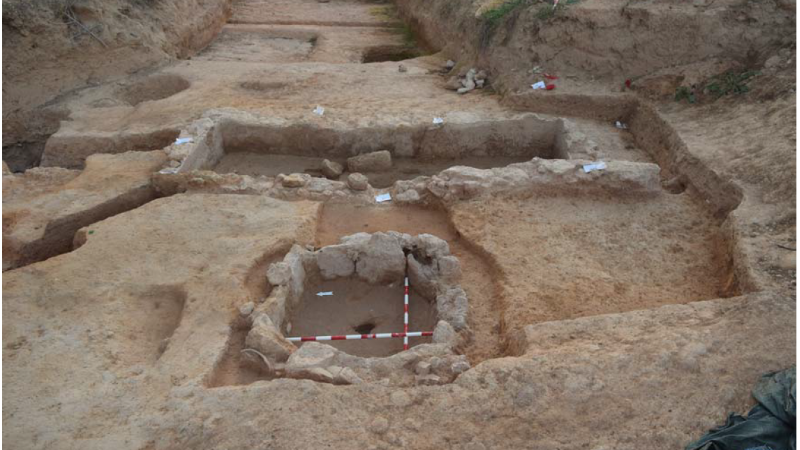
At Sacyr, protecting archaeological heritage is part of the way we deliver our projects.
We work to safeguard historical finds and heritage assets wherever they appear. This commitment is also reflected in our training: in 2025, our professionals completed more than 3,700 hours of awareness programs on heritage preservation.
These five recent projects show how we help protect the historical and cultural memory of the communities where we work.
Almudévar Reservoir (Huesca, Spain)
During construction of the Almudévar Reservoir, we recovered the remains of the south wall of the former Santo Domingo Hermitage, dating from the 12th and 13th centuries, and relocated it stone by stone.
The wall is now part of the new hermitage, preserving the structure and keeping the site’s historical story alive.
High-Speed Rail Line in Almería (Spain)
Around Almería’s former railway station, we identified a concentration of finds suggesting the presence of an Islamic settlement, including abundant ceramics and hydraulic structures. The importance of these discoveries prompted a review of the heritage protection boundaries established in the urban planning framework.
We also documented remains of Spanish Civil War air-raid shelters, including the so-called “workshops shelter” beneath the station’s former canopies. Although its condition made preservation impossible, it was recorded through 3D scanning and photography, and a commemorative marker was installed to preserve its memory.
Loja Bypass, Antequera-Granada High-Speed Rail Line (Spain)
In this project, we documented an extensive archaeological area around the site known as “Cerro de la Estación.” The preventive archaeological work allowed us to excavate more than 5,000 m² and identify dozens of structures, including pits, silos, and burial sites. The volume and spread of the remains meant the initially planned protection perimeter had to be expanded, contributing both to scientific knowledge and to the safeguarding of the site.
Test excavations confirmed the presence of archaeological structures from periods spanning the Neolithic and the final stage of the Stone Age through to Late Antiquity, in the 5th century AD.
The work documented Neolithic silos and burials, as well as rooms belonging to a Roman villa, together with a large quantity of archaeological material.
Ibiza Wastewater Treatment Plant (Spain)
The Ibiza Wastewater Treatment Plant project revealed a Roman road, a 16th-century irrigation channel, a Roman aqueduct and a Phoenician archaeological site of significant heritage value. Wall structures, a hydraulic structure, amphorae and a well were also found.
“Taking part in this project was particularly interesting from both a technical and heritage perspective, as the works revealed a broad and diverse archaeological context,” explains Cristina Alonso Comba, site manager for the wastewater treatment plant.
From a construction standpoint, this posed a major challenge. Construction solutions had to be continuously adapted so the project could move forward while preserving the most valuable elements. In some areas, the alignment and gradient were adjusted; in others, pipe jacking was used to protect significant structures and avoid direct impact.
The archaeological remains and materials were handed over to the Museu Arqueològic d’Eivissa i Formentera for study and cataloging.
Railway adaptation works in Mato Miranda (Portugal)
In Mato de Miranda and Arneiro das Malhadas, we found a range of archaeological materials from the Late Neolithic or Chalcolithic period, including ceramic fragments, lithic artifacts, and remains of ancient domestic occupations. Found during archaeological monitoring of the work, these discoveries offer new insight into how this territory was inhabited over time.
The ceramic fragments and lithic artifacts were handed over to Portugal’s Direção Geral do Património Cultural.
Would you like to know more about how we protect the places where we operate? Read our Natural Capital Report
This international standard ensures our operations align with rigorous social criteria, with a steadfast focus on human rights in the workplace.
22/06/2026
At Sacyr, we believe that every project we undertake carries a responsibility to the environment, our team, and our entire value chain. While we build infrastructure, our primary focus is working with and for people. Therefore, fostering fair, safe, and respectful workplaces is central to how we drive growth.
In this context, the SA8000 standard has become vital. This international standard ensures our operations align with rigorous social criteria, with a steadfast focus on human rights in the workplace. It is not merely about compliance, but about embedding these principles into our corporate culture and daily practices.
From Commitment to Action
To achieve this, we translate these principles into concrete actions within our daily operations. Our Human Rights and Community Relations Policy is publicly available and applies to everyone across our organization, as well as our stakeholders.
Furthermore, we foster a culture rooted in active listening. To support this, we provide confidential channels that allow anyone to raise concerns safely. This is complemented by our continuous reinforcement of occupational health and safety, with dedicated committees at every construction site to help protect our teams.
The Role of the Social Performance Team
Within this framework, the Social Performance Team (SPT) plays a pivotal role. Comprising representatives from both management and the workforce, it serves as a forum for dialogue and collaboration.
Its mission is to bridge gaps, facilitate open communication, and identify areas for improvement. Ultimately, it ensures that the standard's principles translate from theory into practice across our construction sites and workplaces every day.
Assessment and Continuous Improvement
All of these efforts are subject to ongoing review. Our construction division in Spain is SA8000-certified, having successfully passed an independent audit that verified compliance with all requirements for the third consecutive year.
These assessments involve private and confidential interviews with employees and suppliers. This provides first-hand insight into how these commitments are implemented on the ground, enabling us to drive continuous improvement.
A Global Commitment
Furthermore, this approach aligns with our commitment to international standards such as the Universal Declaration of Human Rights, the OECD Guidelines, and the International Labour Organisation (ILO) principles.
SA8000 certification is not a destination, but a tool for ongoing progress. It drives us to strengthen a working model that puts people first. At Sacyr, we believe that only by prioritizing respect, equality, and safety can we deliver a truly positive and sustainable impact.
Jesús Alcanda Vergara, a forestry engineer in the Energy area at Sacyr Agua, explains in this article how forests should be properly managed to ensure their maintenance and tree regeneration.
16/06/2026
Jesús Alcanda
Sacyr Energy
Public opinion naively believes that Spanish forests are neither born, nor do they grow or die: they simply remain. The public assumes forests require no human intervention to ensure their continuity, and that they will always be there, unless they are devoured by summer wildfires.
In the Iberian Peninsula, Forestry—the science dealing with the care and management of forests—is older than the Emperor Trajan. This was documented in the first century by the writer Columella, from Cádiz, in both De Re Rustica ("The Twelve Books of Agriculture") and De Arboribus ("On Trees").
Just as Agronomy is the science of the agro (the field), Forestry (traditionally termed Dasonomy) is the science of the daso (the forest).
Like almost all sciences, forestry has steadily expanded its boundaries of certainty, branching into various specialties. Among the disciplines that make up forest science, two—Silviculture and Forest Management (traditionally known as Dasocracy)—underwent a major systematization of knowledge from the mid-19th century to the late 20th century. It is precisely these two disciplines that are responsible for ensuring that forests successfully regenerate.
Forest Management (Dasocracy, from daso, forest, and cracy, power in the sense of governance or order) is the discipline that deals with the regulation of forest lands. It consists of a suite of techniques designed to organize the forest to ensure its long-term succession.
The analytical techniques of Forest Management guide the forest toward a balanced population pyramid. This means achieving a structure without gaps or inversions, containing all tree age classes distributed in a way that demonstrates equilibrium, proving that the forest is sustainably managed.
The other pillar of forestry, Silviculture, is to the forest what agriculture is to the field: a set of treatments and interventions that ensure maximum vitality, appropriate density, and the protection of the forest stand.
Each age class (e.g., 25 to 50 years) must be represented by a specific number of trees within a given area. In other words, for every age class, there is an optimal canopy density—represented by a range of trees per hectare—which silvicultural practices must achieve so that the trees grow with the greatest possible strength and vigor.
What does Forest Management do to secure the regeneration of the forest shown in Figure 1?
First, it divides the forest land into compartments (or periodic blocks), one for each distinct age class. The compartment containing the oldest age class (trees over 100 years old) is set aside as a biodiversity conservation zone.
A total renewal plan is then applied to the other four compartments, to be executed over the next 100 years. To achieve this, every 25 years, the oldest compartment (aged 75 to 100 years) is designated as the regeneration block.
This means that for 25 years, regeneration cuts will be carried out in this compartment using the "uniform shelterwood system" to open gaps in the canopy, allowing new saplings (the offspring of the surrounding trees) to establish themselves and grow.
It is called a uniform shelterwood system because, over a 25-year period, successive, uniform cuts are made to gradually open up clearings in the regeneration compartment. Meanwhile, in the other three compartments, thinning cuts are applied to adjust tree density to their age. This maintains their vigor and strength, preventing them from growing in overstocked conditions that would significantly weaken them.
After these first 25 years, the regeneration compartment will contain young trees aged between 0 and 25 years (at which point the stand is considered regenerated), while the remaining compartments will have aged by 25 years.
This shelterwood harvesting process is repeated every 25 years in whichever compartment is the oldest at the time, until regeneration cuts have been applied to all four compartments, as shown in the following diagrams, where the first frame represents the "parent forest":
After 100 years, a completely new forest has been established—a descendant of the parent forest shown in the first frame. This is achieved by applying uniform shelterwood regeneration cuts over 25 years in each compartment, while managing the density of the remaining compartments through thinning.
The timber harvested from each of these cuts generates enough revenue to finance subsequent operations, thereby self-funding the forest's regeneration plan.
It is highly inadvisable to apply regeneration cuts to excessively old forest stands. Extremely old trees have a significantly reduced capacity to produce seeds, and the germination rate of those seeds also declines. Leaving the future of a forest in the hands of overmature stands is highly reckless.
When well-meaning individuals oppose the harvesting of trees in a managed forest, in the vast majority of cases, they are unwittingly contributing to the amputation of that forest's future. They are also driving its abandonment—the precursor to devastating wildfires, which are the particular hell of Spanish forests.
But as we all know, the road to hell is paved with good intentions.
SacyrNewsBlogRobotic Dog Deployed for Dam Inspections
Share:
Robotic Dog Deployed for Dam Inspections
A new robotic system is now navigating the intricate galleries within dam infrastructure, capturing images to enhance surveillance and maintenance.
08/06/2026
Sacyr Maintenance has started deploying a robotic quadruped to inspect the extensive, kilometer-long galleries deep inside dams. These critical hydraulic structures often have thick concrete walls, which severely restrict external connectivity and make traditional inspections challenging. An autonomous robot, therefore, offers an ideal solution. This advanced machine assists professionals with routine checks and can identify potential hazards like dangerous gases or excessive moisture before they become critical.
The Duero Hydrographic Confederation originally proposed this autonomous robotic inspection project. They specifically suggested deploying the quadruped at the Pontón Alto dam, situated between Segovia and La Granja.
This system significantly enhances both inspector health and safety, alongside boosting operational efficiency by allowing for more frequent inspections. Jose Luis Barragán, COEX Dam Manager for Zone F of the Duero Hydrographic Confederation (where Sacyr Maintenance operates), explains: "The galleries the robot explores contain vital components such as water supply valves and sluice gates. While existing sensors monitor parameters like pressure, flow, and displacement, our goal is for the robot to photograph specific, predetermined points."
"These different gallery levels are connected by stairways, enabling UGV (Unmanned Ground Vehicle) robots to move freely between them for thorough inspections. This represents our first time incorporating such advanced technology into dam conservation," Barragán adds.
The challenge is in the location
The immediate challenge lies in implementing an effective robot localization system, particularly since GPS signals are unreliable deep inside the dam. To overcome this, Sacyr Maintenance is exploring solutions like creating a detailed 3D map or developing a digital twin of the galleries.
"In the future, the robot could be trained to do more than just capture images. It could also extract and analyze data, proactively preventing issues like cracks, moisture ingress, and excessive seepage," the expert suggests.
Initial navigation tests have already been successfully conducted, with ongoing development planned for the coming months.
SacyrNewsBlogThe Archaeologist Who Finds Lost Cities from Space: How Sarah Parcak Works
Share:
Egyptologist Sarah Parcak emphasises that remote-sensing technologies do not replace archaeological excavations, but rather help to guide and focus archaeological fieldwork. Credit: GLENN CHAPMAN / DigitalGlobe/ScapeWare3d.
The Archaeologist Who Finds Lost Cities from Space: How Sarah Parcak Works
For years, archaeologists searched for lost cities through ground excavations. Sarah Parcak decided to look for them from space. Using satellite imagery, this American researcher can detect subtle changes in the landscape that reveal archaeological remains hidden beneath the surface.
In the Nile Delta, many ancient Egyptian cities disappeared centuries ago beneath layers of sediment, farmland and modern development. From ground level, they are almost impossible to identify. Seen from space, however, some leave faint traces in the form of geometric lines, tonal variations or slight differences in soil moisture. Sarah Parcak, an Egyptologist and professor at the University of Alabama at Birmingham, has turned these subtle signals into a tool for locating potential archaeological sites without the need for prior excavation.
In the early 2010s, she participated in a number of projects focusing on ancient Egyptian settlements. In the Nile Delta, the contrast between cultivated land and desert areas makes it easier to detect small changes in the terrain that are invisible to the naked eye. Satellite imagery revealed geometric lines and subtle surface variations that corresponded to buried ancient structures. These were not visible ruins or cities emerging from the sand, but rather physical traces that the landscape had preserved for centuries.
Parcak began working with this type of imagery during her doctoral research at the University of Cambridge. Unlike conventional photographs, multispectral images capture information that the human eye cannot perceive. Her aim was to locate tells—mounds formed by successive layers of human occupation—and possible buried structures across the Middle East based on these minute alterations detected through infrared sensors. “To try to map the past, I have to look at it in a different way,” Parcak has said, summarising a central idea that runs through her research: landscapes preserve physical evidence of the people who inhabited them centuries ago.
Sarah Parcak explains how space archaeology uses satellite imagery to locate traces of ancient civilisations hidden beneath the ground. Credit: TED.
A new way of interpreting the landscape
The use of aerial imagery to study the terrain was not entirely new. After the First World War, photographs taken from military aircraft began to reveal ancient shapes and structures that were difficult to identify from the ground. Decades later, satellites from NASA’s Landsat programme made it possible to extend this observation to vast swathes of the planet and analyse how landscapes changed over time. But the real breakthrough lies not in conventional photography, but in understanding how buried structures affect soil, vegetation and temperature.
For example, a buried wall can alter the moisture content of the soil above it. Similarly, an adobe structure can change soil compaction and affect vegetation growth. Some constructions also generate temperature differences that become detectable at specific times of day. By analysing these subtle variations, researchers can identify areas with archaeological potential, which must then be investigated on the ground. Parcak herself insists that these tools do not replace excavation, but rather help to guide and focus archaeological fieldwork.
From isolated sites to landscape-scale analysis
The ability to analyse entire regions rather than just specific sites is one of the main contributions of this methodology. One of the best-known examples is the work carried out at Tanis, an ancient Egyptian city located in the northeastern Nile Delta. Although the site had been known for decades, satellite imagery helped researchers reconstruct parts of its buried urban layout, revealing streets, structures and occupation zones hidden beneath sediment and modern agricultural land.
The value of this type of research lies in understanding how ancient urban and agricultural landscapes were organised on a large scale. Parcak applied this same approach to the study of the funerary complexes and tombs of El-Lisht, one of the principal centres of Egypt’s Middle Kingdom, as well as to Petra in Jordan. There, she identified a monumental structure that had gone unnoticed despite Petra being one of the most intensively studied archaeological sites in the world.
This shift in perspective has influenced other projects around the world. In Guatemala, the Pacunam LiDAR Initiative, involving the Polytechnic University of Valencia in Spain and Tulane University in the US, identified thousands of Maya structures concealed beneath the dense jungle canopy, including elevated roadways and agricultural terraces.
In Cambodia, a combination of satellite imagery, radar, and large-scale LiDAR surveys confirmed the existence of an extensive urban network beneath the forests surrounding Angkor Wat. In the United Kingdom, the Stonehenge Hidden Landscapes project used ground-penetrating radar and remote sensing to detect prehistoric monuments buried around the megalithic complex.
In each of these cases, archaeology has moved beyond the study of isolated monuments to examine entire landscapes and the relationships between settlements, infrastructure, and the natural environment.
This website uses its own and third-party cookies to improve the user experience and analyze their behavior in order to improve the service offered.
You can consult additional information about the cookies installed on our Cookies policy.
These cookies are exempt from compliance with article 22.2 of the LSSI in accordance with the recommendations indicated by the European authority on privacy and cookies. In accordance with the above and although configuration, acceptance or denial is not possible, the editor of this website offers information about them in an exercise of transparency with the user.
Name: LFR_Session_STATE_*, Provider: Liferay, Purpose: Manages the session as a registered user , Expiration: Session, Type: HTTP
Name: GUEST_LANGUAGE_ID, Provider: Liferay, Purpose: Determines the language with which you access , to show the same in the next session, Expiration: 1 year, Type: HTTP
Name: ANONYMOUS_USER_ID, Provider: Liferay, Purpose: Manages the session as an unregistered user , Expiration: 1 year, Type: HTTP
Name: COOKIE_SUPPORT, Provider: Liferay, Purpose: Identifies that the use of cookies for the operation of the portal, Expiration: 1 year, Type: HTTP
Name: JSessionID, Provider: Liferay, Purpose: Manages login and indicates who is using the site, Expiry: Session, Type: HTTP
Name: SACYRGDPR, Supplier: Sacyr, Purpose: Used to manage the cookie policy , Expiration: Session, Type: HTTP
ANALYTICS
These cookies allow us to count visits and sources of circulation in order to measure and improve the performance of our site. They help us know which pages are the most or least popular, and see how many people visit the site. All the information collected by these cookies is aggregated and, therefore, anonymous.
Name: _ga_<container-id>, Provider: Google, Purpose: Collects data about the number of times a user has visited the website in addition to the dates of the first and most recent visit. Used by Google Analytics, Expiration: 2 years Type: HTTP
Name: _ga, Provider: Google, Purpose: Registers a unique ID that is used to generate statistical data about how the visitor uses the website, Expiration: 2 years Type: HTTP