Clean Air in Underground Construction

Air quality is critical in underground construction. That’s why we have strengthened our monitoring systems and continuously measure respirable crystalline silica levels, placing the health and safety of our workforce at the forefront.

Mining and underground works involve the presence of crystalline silica, a naturally occurring mineral known to be carcinogenic. To address this risk, we have implemented a continuous, real-time monitoring system designed to protect the professionals working on our projects.

Royal Decree 1154/2020 classified Respirable Crystalline Silica (RCS) as a carcinogenic agent, significantly reinforcing employers’ obligations in the field of occupational health and safety. In addition, the General Regulations on Basic Mining Safety Standards require an accredited Administration Collaborating Entity (ECA) to take dust samples every four months at workstations where there is a risk of exposure.

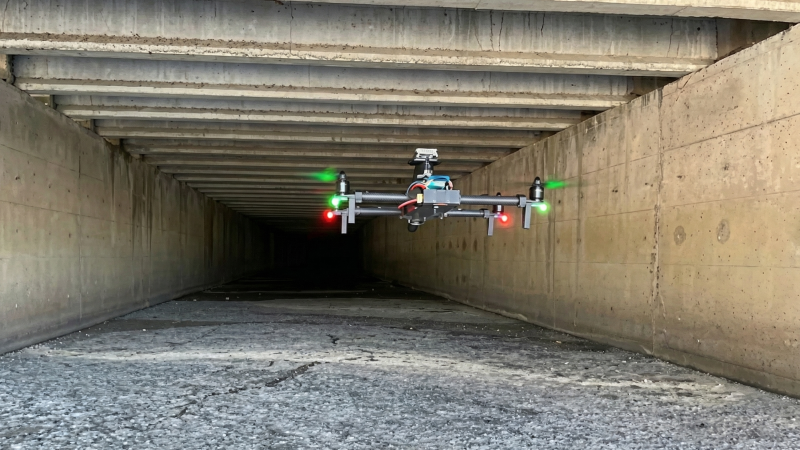
Our Health and Safety Department has gone beyond regulatory requirements by deploying a mobile system for continuous, real-time silica monitoring: the AIR S Silica Monitor.

“Having access to real-time data raises awareness of RCS exposure for both workers and management,” explains David Barreda, Prevention Manager at Sacyr Engineering and Infrastructure in Northern Spain.

Crystalline silica is a very common mineral found in rocks, sand, and soil. It is present in construction materials such as concrete and brick, as well as in activities like mining, quarrying, and construction. When its fine dust particles are inhaled, respirable crystalline silica becomes a serious health hazard, increasing the risk of lung cancer, silicosis, and chronic obstructive pulmonary disease (COPD).


The AIR S Silica Monitor was used during excavation works in the tunnels of the Access to the Outer Port of Langosteira project and will later be deployed during ballast spreading for track installation.

RCS levels can vary significantly depending on the stage of construction, with different exposure levels during blasting, debris removal, and drilling operations.

“This new system allows us to make informed decisions and continue reducing our employees’ exposure to RCS,” says David Barreda.

“The company is committed to protecting both our employees and our subcontractors. They value our concern for their health and the continuous control we maintain over the working environment,” he adds.


How the Monitor Works


The system analyzes multiple parameters in real time to detect RCS, including particle size, symmetry, and a range of unique optical markers characteristic of respirable crystalline silica particles.

At the same time, it uses optical refraction technology combined with light-scattering photometry, analyzing each sampled particle and classifying it according to its identifiable optical properties.

This approach allows the system to detect all forms of RCS — including alpha and beta quartz, cristobalite, and tridymite — across all relevant particle sizes within the respirable fraction.

The resulting data is combined with particle mass analysis to provide measurements in both mg/m³ and particles per liter.
Thanks to this comprehensive information, site management can make timely, well-informed decisions to ensure the safety of everyone working on the project.

  • Transport infrastructures

Belfast Grand Central Station: a new, modern, and sustainable transport hub

The new transport hub will have 26 bus stops and 8 train platforms that will improve connections with the rest of the region

Belfast Transport Hub

In a joint venture with Farrans, we are to develop the main construction works of the new Belfast Grand Central Station Interchange in Belfast (Northern Ireland) within 4 years.

The new transport hub will replace the current Europa bus center and Great Victoria Street train station in an eight-hectare site in Weavers Cross, a new neighborhood in the center of the city that will contribute to the regeneration of that area.

This facility will be a multimodal transport hub with 26 bus stops, 8 train platforms, as well as bike lanes that will foster sustainable mobility in the city and enhance connectivity in the region. It will also have design and construction elements to promote efficient mobility, respect for the environment and energy conservation.


This project, awarded by Translink, the public transport services operator in Northern Ireland will bring numerous social and collaborative initiatives with the community to regenerate the area and it will create 500 jobs during construction.

For Duane McCreadie, Project director of Farrans-Sacyr JV on the project "Belfast Transport Hub will be crucial in shaping the future of the city and promoting sustainable transport. Social value will play a significant role during construction, and we will be engaging closely with community groups, charities and schools to create local employment, training, and apprenticeship opportunities to deliver a positive and lasting impact".

Belfast Grand Central Station started bus line services in September 2024, and continues to make progress towards the full opening of rail services.


More information about Belfast Grand Central at: https://www.translink.co.uk/corporate/media/improvementsandprojects/thehub

8

HECTARES

26

BUS STOPS

500

JOBS

Full marks on CSS audit

Farrans Sacyr joint venture score full marks following a Considerate Constructors Scheme monitoring visit, which assesses and scores how well a site is doing under the three main areas of the Code: respecting the community, caring for the environment and valuing their workforce.

The report noted that this was “an impressive score, evidenced though the significant investment in the community, environment and workforce".

Considerate Constructors Scheme (CCS) helps improve the image of construction, by supporting and driving positive change in the industry through its Code of Considerate Practice and independent monitoring of sites.

  • UK

Artificial Intelligence for Predicting Road Condition

The Apromac project allows us to estimate key road surface indicators. By integrating these indicators with external factors such as weather conditions, we obtain an accurate view of the actual condition of the roads, both in the short and long term.

At Sacyr we build and maintain thousands of kilometers of road infrastructure around the world. Knowing its condition and anticipating its evolution is vital to guarantee its functionality and safety.

The Report on Investment Needs in Conservation 2025 of the Spanish Road Association estimates that the required amount to fine-tune the national road network is €13.5 Bn. This all-time record figure represents a 43% increase compared to 2022.

Recognizing this need, Sacyr is developing Apromac, a tool that predicts the state of road surfaces. To do this, we apply technologies such as Big Data and artificial intelligence to predict the evolution of the main parameters of the condition of road infrastructure.

"Not only do we use data from the infrastructure itself, but in the analysis we also incorporate standardized information from other Sacyr Concesiones roads and studies on the influence of factors like temperature and rainfall," explains Sergio Campos, project manager.

This tool allows us to improve planning through predictive models for deterioration indicators such as macrotexture, ruts (depressions in the wheel path), and the transverse friction coefficient (TFC), an indicator of skid resistance. In addition, various types of models have been trained and validated to identify which one offers greater accuracy in predictions.

The first project milestone was reached at the end of 2023 and the second is planned for the end of 2025.


Apromac was developed using data from several roads managed by Sacyr: Ruta del Desierto and Limarí (Chile); Turia, Pamasa, Eresma and Aunor (Spain); Pamplona-Cúcuta (Colombia); and Pirámides-Tulancingo-Pachuca (Mexico).

This project has a €500,000 budget and will run until December 31, 2025. Once completed, Sacyr Concesiones will have an advanced tool for long-term prediction of road behavior.

Apromac is co-financed by the European Union, with funding from European Funds, the Spanish Ministry of Finance, and CDTI through the Ministry of Science, Innovation and Universities.

In the future, this tool will have two major impacts: it will allow for better-informed reinvestment strategies in road tenders, considering factors such as project year and financial impact; and it will facilitate monitoring in the operation phase, enabling more efficient planning and execution of necessary road maintenance based on predicted degradation.

The Binningup Desalination Plant, in Perth, is one of our star projects in Australia. In fact, winning this contract opened the door to this strategic market for us. This desalination plant has been operating for over 15 years and is recognized as one of the best in the world, winning the title ‘Desalination Plant of the Year’ in 2012.

Our first steps in Australia

Markets

Australia

Our commitment to sustainable innovation in this country makes our projects market leaders in water management.

Innovation is our hallmark

We believe in innovation as a responsible and sustainable business management model. In Australia, we develop infrastructures capable of exponentially improving integrated water cycle processes. We currently run the Binningup Desalination Plant.

In figures

810

€ MILLION

Total investment in Australia

5

PROJECTS

Managed

35%

WATER

Used by the Perth Metropolitan Area comes from the Binningup desalination plant supply

BINNINGUP DESALINATION PLANT

Our first steps in Australia

The Binningup Desalination Plant, in Perth, is one of our star projects in Australia. In fact, winning this contract opened the door to this strategic market for us. This desalination plant has been operating for over 15 years and is recognized as one of the best in the world, winning the title ‘Desalination Plant of the Year’ in 2012.

VIEW MORE

Lane Closures: An Immersive View

We make drone and 360º camera recordings of various operations of assembly and disassembly of lane cutting in highway or freeway, in real situation, in order to analyze from the aerial view the process of execution of such operations and increase their safety.

Simón B. Maestra Navarro 

Southern Zone Delegate, Sacyr Conservación


Marco A. García Fraga 
HSE Business Partner, Sacyr Conservación


At Sacyr, accident prevention is not a separate business function, but an integral element considered in all tasks that may involve risk. Occupational Health and Safety (OHS) is integrated into technical and operational processes, planning, and working conditions from the start.

Sacyr Conservación guarantees a comprehensive service, adhering to the strictest Health, Safety, and Environmental (HSE) standards, including Road Safety and Quality, to which Sacyr Maintenance has dedicated significant resources in recent years.

While lane closures may not cause the most incidents, they are among the riskiest road maintenance operations. This is due to both the need for vehicles to stop on the shoulder and the exposure of operators crossing the road to place signage and beacons. 

Sacyr Conservación anticipated the guidelines of Service Note 02/2021, "Recommendations for Improving Safety in Maintenance and Other Work Affecting State Roads and Highways." We pioneered aspects outlined in the note, such as in-person road safety training, the acquisition of double-gate vans, and innovative training proposals like "Lane Closures: An Immersive View."


There is no doubt that the advancement in the use of light signaling in maintenance vehicles has greatly improved the protection of equipment, maximizing visibility and minimizing risks. The goal is to visualize the behavior of road maintenance personnel during lane closure setup and takedown and to understand how they are affected by traffic. The goal is not strictly limited to improving the material signalling equipment and compliance with the elements set out in current regulations.

This focuses on visualizing the actions of road maintenance personnel during lane closure setup and takedown and how these actions are impacted by the traffic conditions of the worksite.


New Technologies in Road Management

In an increasingly demanding, digital, and complex environment, where specialization and technology are key factors for the large-scale transformation of service standards, Sacyr Maintenance is committed to innovation, developing a large number of certified projects and lines of research.

The use of drone and 360° camera recording significantly improves the training of our technicians and operators during lane closure setup and takedown on highways. The "immersive vision" approach facilitates interactive training, enabling personnel to minimize on-road risks.


First and foremost, safety


The "Lane Closures: An Immersive View" project involves recording various lane closure setup and takedown operations on highways using drones and 360° cameras in real-world conditions. The aim is to analyze the execution process from an aerial perspective.

The purpose is to analyze the movements of our operators and user reactions to establish procedural guidelines that minimize risks for both workers and road users.


Using these audiovisual media, it is intended to:

  1. Identify the critical points of the process in which maintenance teams and road users interact.
  2. Reduce risks and improve road safety for both operators and users.
  3. Achieve a new approach to improving road safety through the use of new audiovisual technologies.
  4. Improve procedures and establish instructions for assembling and disassembling lane closures to reduce risk.
  5. Design training actions based on specific actions for the type of risk to which workers are exposed. Analyze the operation with the workers, from a drone view, to define situations of greater risk.
  6. Improve the preventive culture in the field of Occupational Road Safety.
  7. Complement Sacyr Conservación's Road Safety Management System.
  8. Seek new methodologies to improve the influence on user behavior, as well as to raise awareness, through possible media campaigns, of the need for their collaboration to reduce risks on the road.

In short, the drone's perspective during lane closure setup and takedown allows for an in-depth analysis of the associated risks. Interactive sessions with technicians and operators have identified the safest procedures for moving around the work zone with the necessary vehicles, signage, and beacons.

Analyzing the time taken also allows us to assess the available equipment (types of signals, transport supports, etc.), identifying opportunities for improvement and optimization. The aerial perspective also helps us assess the characteristics of the road and identify infrastructure improvements (specific problem areas, narrow shoulders, etc.).

Plaza Europa 34 Office building in Hospitalet de Llobregat, Barcelona. We have applied circular economy measures in this project.

10 keys to driving circular transformation in infrastructure development

Encarna Mateos, Quality, Environment and Energy Director explains how we can transition to a circular economy model that differentiates us from other countries. She also adds some insight on what actions Sacyr is taking in this direction.

Encarna Mateos

Quality, Environment and Energy Director


The construction and infrastructure development sector plays a crucial role in transitioning to a more circular economic model, given its significant impact on resource consumption and waste generation. However, considerable challenges persist: construction and demolition waste (CDW) accounts for a third of the total waste produced in the European Union, and circularity rates in countries such as Spain lag behind other European nations.

In light of this, the circular economy offers a transformative strategy for redesigning processes, minimizing environmental impacts, and boosting efficiency. Achieving this requires coordinated action from all stakeholders across the value chain, integrating circular principles from the initial design phase through to operation. In my view, the following ten areas are key to advancing towards a circular model:


1.    Changing the mindset


Moving away from the traditional linear model (design-build-use-demolish) and embracing a circular approach (design-reuse-use-recycle-maintain-regenerate). This involves integrating circularity criteria right from the design stage and fostering collaboration among all participants throughout the infrastructure lifecycle.

2.    Boosting the Market for Secondary Raw Materials


Implementing regulatory and economic measures to stimulate demand for recycled and reused materials. This includes establishing quality certifications, technical standards, and traceability mechanisms that build confidence in the market.

3.    Supporting innovation 


Maintaining funding programs, such as those within the Recovery, Transformation and Resilience Plan (RTRP) and the Strategic Projects for Economic Recovery and Transformation (PERTE), that support projects promoting circular solutions in construction, waste management, and digitalization. Simplifying access to these grants is essential.


4.    Digitization and data management 


Promoting the use of tools like Building Information Modeling (BIM), digital twins, and collaborative platforms to manage information related to materials, maintenance, and reuse.

5.    Harmonized regulatory framework 


Establishing consistent and stable regulations at the European, national, and regional levels to facilitate the application of circular criteria, the approval of recycled materials, and investment in sustainable solutions.


6.    Green public procurement 

Incorporating environmental criteria into public procurement specifications, favoring proposals that integrate circular economy principles, and establishing monitoring mechanisms to ensure compliance.


7.    Public-private partnerships 


Encouraging collaboration between government bodies, businesses, technology centers, and universities to develop standards, methodologies, and pilot projects that advance circularity in the sector.


8.    Transparency in the supply chain


Establish traceability systems that allow information to be shared on the origin, composition and destination of materials, facilitating their reuse and recycling.


9.    Training and sector awareness


Promoting education and training for all actors in the value chain – architects, engineers, companies, manufacturers, and clients – on the principles, tools, and benefits of the circular economy.


10.    Repurposing Waste as a Resource


Encouraging the acceptance of recycled materials as a viable alternative, promoting their use in new construction processes, and reducing reliance on virgin raw materials.


Several years ago, Sacyr made a decisive move towards circular transformation, moving beyond the traditional linear model and embracing a regenerative approach in all our projects. Our Zero Waste Plan has become the cornerstone of our efforts to achieve our circular economy goals, implementing specific actions across all areas of the company.

This plan has three key objectives: to reuse, recycle, or recover 80% of our waste each year; to progressively reduce hazardous waste by 1% annually; and to ensure that 80% of non-hazardous construction and demolition waste is also recovered.

The results are already evident in our projects: over 93% of construction and demolition waste has been recovered, more than 92% of total waste has been recycled or reused, and over 20% of the materials we use now come from sustainable sources. The Zero Waste Plan allows us to embed a circular model throughout the organization, aligning our efforts, creating synergies, and strengthening our commitment to a more responsible future.

We deliver infrastructures to improve people’s lives.

LEARN MORE

Sacyr turns 40

Celebrate our four decades of history down memory lane with some of our most emblematic projects

sustainability

Sustainable concessions

Environmental and social sustainability project elements are central to our 2024-2027 Strategic Plan.

INTERNATIONAL

A global group that grows with you

We are present in over 15 countries with a diversified project portfolio.

ENGINEERING

Growth in the US

Sacyr develops road infrastructure in Florida and Texas.

ENVIRONMENTAL

We are #GenerationRestoration

We are firm believers that a responsible and sustainable approach to biodiversity conservation and management is key to our progress.

Sports

Sacyr DNA

We promote sporting values and healthy lifestyle habits both in and out of the company.

Commitment to SA 8000 standard

At Sacyr we are committed to compliance with the SA 8000 Standard, which promotes social responsibility, human rights and ethical working conditions. This applies to all its professionals, suppliers, contractors and collaborators, who must know and respect the standard, including signing a Letter of Commitment. The SA 8000 Standard is available for consultation by all interested parties to ensure responsible and sustainable management.

SA8000 Compliance Commitment Standard SA8000 2026 SA8000 2014 Standard

Sacyr begins construction on new urban highway access to Asunción, Paraguay

  • Paraguay’s President and Minister of Public Works inaugurated the groundbreaking ceremony, where they highlighted project benefits for the country. 
  • The project promises to significantly improve connectivity, reduce travel times, and enhance the quality of life for over a million people traveling to Asunción.


The Rutas del Este consortium (60% Sacyr Concesiones, and 40% Ocho A) has commenced construction of the new urban highway access to Asunción concession in Paraguay, a project poised to improve connectivity between the capital and inland cities. Total investment in the project is estimated at $180 million (€154 million).

Santiago Peña, President of Paraguay, and Claudia Centurión, Minister of Public Works and Communications, officially inaugurated the groundbreaking ceremony. President Peña emphasized: "This project will benefit all of Paraguay by adding two access roads that will alleviate traffic congestion on the main highway, which carries 80% of the country's commerce."

The project consists of a structuring road network, which has relevant works such as the Ypacaraí - Areguá variants and a 3.6-kilometer elevated urban highway, with two divided roads and four lanes and two new connections to route PY02, essential to improve connectivity between the capital and the interior:

  • The first connection, starting at kilometer 41 of Route PY02, will improve accessibility through Ypacaraí, Patiño, Areguá, and Luque.
  • The second connection, beginning at kilometer 43, will enhance accessibility to San Bernardino.

These corridors will be integrated to create a more efficient system for entering and exiting the metropolitan area.

The new road system will serve seven cities: Asunción, Luque, Areguá, Ypacaraí, San Bernardino, Nueva Colombia and Emboscada. 
 

Ruta PY02

Rutas del Este consortium previously undertook the Ruta PY02 widening and expansion project (151 km), a $520 million investment that became operational in 2023. This new section further expands its capacity and enhances its design.

This is one of the most significant road projects in the Eastern Region and the first to be executed as a Public-Private Partnership (PPP) in the country. The road stretches from kilometer 36 in Ypacaraí to kilometer 187 in Caaguazú.

The corridor impacts 11 municipalities across three departments of Paraguay. The concession covers the design, financing, construction, maintenance, and operation of the road for a period of 30 years.
 

This website uses its own and third-party cookies to improve the user experience and analyze their behavior in order to improve the service offered.
You can consult additional information about the cookies installed on our Cookies policy.

Cookie Settings

Cookie declaration

TECHNIQUES

These cookies are exempt from compliance with article 22.2 of the LSSI in accordance with the recommendations indicated by the European authority on privacy and cookies. In accordance with the above and although configuration, acceptance or denial is not possible, the editor of this website offers information about them in an exercise of transparency with the user.

  • Name: LFR_Session_STATE_*, Provider: Liferay, Purpose: Manages the session as a registered user , Expiration: Session, Type: HTTP

  • Name: GUEST_LANGUAGE_ID, Provider: Liferay, Purpose: Determines the language with which you access , to show the same in the next session, Expiration: 1 year, Type: HTTP

  • Name: ANONYMOUS_USER_ID, Provider: Liferay, Purpose: Manages the session as an unregistered user , Expiration: 1 year, Type: HTTP

  • Name: COOKIE_SUPPORT, Provider: Liferay, Purpose: Identifies that the use of cookies for the operation of the portal, Expiration: 1 year, Type: HTTP

  • Name: JSessionID, Provider: Liferay, Purpose: Manages login and indicates who is using the site, Expiry: Session, Type: HTTP

  • Name: SACYRGDPR, Supplier: Sacyr, Purpose: Used to manage the cookie policy , Expiration: Session, Type: HTTP