Info:The document preview may not show all pages. Download it to see the full document.
iPad Prize Draw: Winning Shareholders
Thank you for participating in Sacyr’s 2026 Annual General Meeting (AGM).
In accordance with the terms and conditions, following the conclusion of the 2026 AGM, a prize draw was held for 10 iPads (11” 2025 model, A16, Wi-Fi) among those shareholders who participated in the meeting by voting, proxy, or remote attendance, and who registered via the draw entry form.
The winning shareholders are:
Jose Nuno Henriques Lebre De Lima Felix
Concepcion Morell Garcia
Maria Del Rosario Velasco Hermoso
Susana Fernandez Pestaña
Prudencio Manrique Garcia
Francisco Manuel Becerra Rubiano
Carlos Gonzalez De Langarica Diez
Jaime Mendez Anes
Maria Teresa Martinez Climent
Carlos Ezama Martin
Info:The document preview may not show all pages. Download it to see the full document.
Read our Natural Capital Report 2024-2025!
In this second Natural Capital Report we present Sacyr's management approach to biodiversity, which includes the protection of natural areas, the measurement of impacts, risks and opportunities, the main policies and actions carried out.
This international standard ensures our operations align with rigorous social criteria, with a steadfast focus on human rights in the workplace.
22/06/2026
At Sacyr, we believe that every project we undertake carries a responsibility to the environment, our team, and our entire value chain. While we build infrastructure, our primary focus is working with and for people. Therefore, fostering fair, safe, and respectful workplaces is central to how we drive growth.
In this context, the SA8000 standard has become vital. This international standard ensures our operations align with rigorous social criteria, with a steadfast focus on human rights in the workplace. It is not merely about compliance, but about embedding these principles into our corporate culture and daily practices.
From Commitment to Action
To achieve this, we translate these principles into concrete actions within our daily operations. Our Human Rights and Community Relations Policy is publicly available and applies to everyone across our organization, as well as our stakeholders.
Furthermore, we foster a culture rooted in active listening. To support this, we provide confidential channels that allow anyone to raise concerns safely. This is complemented by our continuous reinforcement of occupational health and safety, with dedicated committees at every construction site to help protect our teams.
The Role of the Social Performance Team
Within this framework, the Social Performance Team (SPT) plays a pivotal role. Comprising representatives from both management and the workforce, it serves as a forum for dialogue and collaboration.
Its mission is to bridge gaps, facilitate open communication, and identify areas for improvement. Ultimately, it ensures that the standard's principles translate from theory into practice across our construction sites and workplaces every day.
Assessment and Continuous Improvement
All of these efforts are subject to ongoing review. Our construction division in Spain is SA8000-certified, having successfully passed an independent audit that verified compliance with all requirements for the third consecutive year.
These assessments involve private and confidential interviews with employees and suppliers. This provides first-hand insight into how these commitments are implemented on the ground, enabling us to drive continuous improvement.
A Global Commitment
Furthermore, this approach aligns with our commitment to international standards such as the Universal Declaration of Human Rights, the OECD Guidelines, and the International Labour Organisation (ILO) principles.
SA8000 certification is not a destination, but a tool for ongoing progress. It drives us to strengthen a working model that puts people first. At Sacyr, we believe that only by prioritizing respect, equality, and safety can we deliver a truly positive and sustainable impact.
SacyrNewsCapturing Industrial CO₂ to Enhance the Sustainability of Desalinated Water
Share:
Capturing Industrial CO₂ to Enhance the Sustainability of Desalinated Water
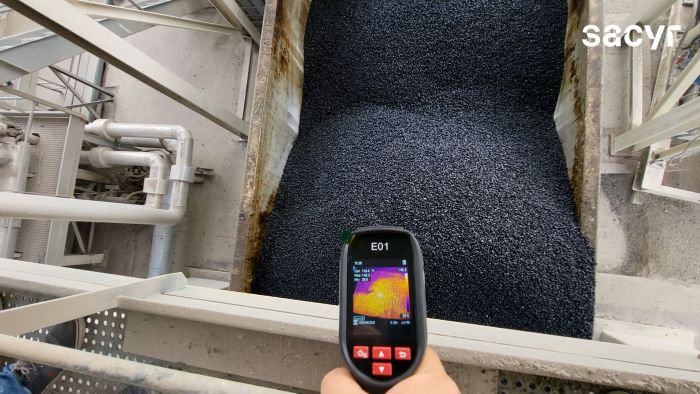
We have launched a pioneering initiative at the Sohar desalination plant in Oman, bridging industry and water management. This involves capturing CO₂ from industrial chimneys and utilizing it for the remineralization of desalinated water.
26/05/2026
This project demonstrates how cross-sector innovation and collaboration can reduce emissions, optimize costs, and accelerate sustainability.
While steel production and water desalination might appear to be unrelated activities, the Sohar industrial hub has demonstrated their potential for synergy.
The Sohar 4 IWP plant, managed by Sacyr Water, requires CO₂ to stabilize the pH of the treated water, prevent scaling in distribution networks, and ensure safe water suitable for human, agricultural, and industrial applications.
Traditionally, CO₂ is sourced from external suppliers, incurring high economic and energy costs. The presence of large industrial emitters within the hub itself presented an opportunity for a more efficient solution: capturing CO₂ at its source and reusing it locally.
Industrial Symbiosis: Environmental and Economic Impact
This initiative, spearheaded by Abdullah Al Sadi, Operations Service Director at the Sohar plant, transforms an industrial emission into a key resource for water treatment. This model of industrial symbiosis reduces emissions at their source, enhances the quality of the treated water, and optimizes operating costs.
"The use of captured CO₂ allows us to improve water quality while reducing emissions directly at their source," explains Al Sadi.
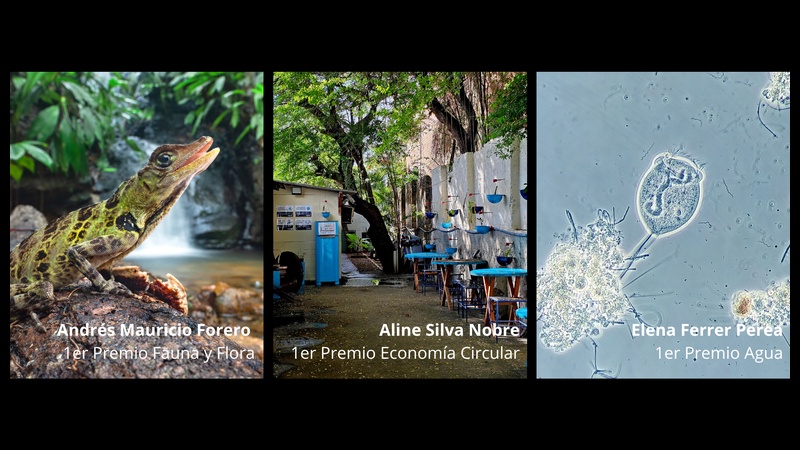
The project received Sacyr's 2025 Natural Innovators Award, in the 'We Are Excellence' category.
Operational Efficiency
The Sohar 4 IWP plant produces approximately 250,000 m³ of water daily. It currently consumes around seven tons of CO₂ per day, with projections to reach 12 tons in the coming years.
Local CO₂ capture virtually eliminates logistics costs and reduces CO₂ costs by approximately 40%.
Reduced Carbon Footprint and Chemical Usage
While the process does not reduce the energy required for desalination, it significantly lowers the carbon footprint of the treated water by substituting externally sourced fossil-based CO₂ with CO₂ captured from local industry.
Furthermore, the use of captured CO₂ reduces the need for other chemicals like hydrated lime, carbonate, or sodium bicarbonate, and optimizes chlorine usage. These benefits collectively lead to a lower environmental impact, reduced operating costs, and more efficient water chemistry.
This approach also provides access to regulatory advantages, fosters greater social acceptance, and strengthens our competitive position in markets with increasing demands for sustainability.
Looking to the Future
After two years of development, the project is now entering a new stage focused on consolidating pilots, obtaining permits, and scaling up to commercial solutions that can be replicated in other industrial environments.
This is another example of how innovation and cross-sector collaboration can transform significant environmental challenges into shared opportunities.
SacyrNewsInnovation to remove nitrogen in wastewater
Share:
EDAR Guadalajara donde se ha realizado la prueba piloto.
Innovation to remove nitrogen in wastewater
Our Denitox project develops a technology that consumes less energy and less organic matter during nitrogen removal in high-load streams in wastewater.
12/05/2026
Nitrogen pollution in wastewater is an increasingly prevalent environmental challenge due to industrial, urban, and agricultural activities. Conventional nitrogen removal processes require intensive energy and a sufficient amount of organic matter that is not always available.
To improve this process and make it more efficient, we are innovating with the Denitox project, which we are developing together with the University of Granada.
"With Denitox, we managed to reduce nitrogen by up to 80% and save energy by up to 50%," explains Elena Campos, head of Technical Support for Sacyr Agua's Treatment Area.
The nitrogen present in surface water bodies can promote uncontrolled algae growth, which can lead to high fish mortality, as has happened in the Mar Menor.
More restrictive European directive
The new European Wastewater Treatment Directive (TARU) drastically reduces the limits of nitrogen in discharge, which in many cases implies a real technological challenge.
The runoff stream in plants with anaerobic sludge digestion can reach up to 20% of the total nitrogen load that reaches the plant and needs to be retreated after removal. Hence the importance of treating these return streams that have a high nitrogen content, but a low organic matter content.
With our Denitox technology we can achieve lower nitrogen emissions in the discharge, with high polluting potential, economic savings and the reduction of greenhouse gas emissions.
Pilot test
"We have carried out a pilot test in the Guadalajara treatment plant, which was applied to the return stream of the sludge line, which has a lot of nitrogen. If wastewater normally has between 60 and 80 mg per liter, that stream has 500-1,000 mg per liter. In this study, which was carried out with real water and variable conditions, an 80% reduction was achieved in a stable way," explains Elena.
"Now, the main challenge is to maintain these high efficiencies at room temperature and shorter hydraulic retention times. If we manage to bring it to an industrial scale, Denitox would be a competitive solution for wastewater treatment applicable in many treatment plants to meet nitrogen removal targets," concludes Elena Campos.
Before this test, a stopover was made in the laboratory at the University of Granada, with which we have developed this technology.
"We have optimized the operating conditions, but we need to scale up to a larger size and see how to control the conditions well.
International award in Saudi Arabia
Recently, the Denitox project has won the Global Prize for Innovation in Water (GPIW), organized by the Saudi Water Agency, in the Sustainable Water Production and Environmental Conservation category.
This category values the balance in water supply with the protection of the ecosystem and the reduction of emissions.
Jesús Alcanda Vergara, a forestry engineer in the Energy area at Sacyr Agua, explains in this article how forests should be properly managed to ensure their maintenance and tree regeneration.
16/06/2026
Jesús Alcanda
Sacyr Energy
Public opinion naively believes that Spanish forests are neither born, nor do they grow or die: they simply remain. The public assumes forests require no human intervention to ensure their continuity, and that they will always be there, unless they are devoured by summer wildfires.
In the Iberian Peninsula, Forestry—the science dealing with the care and management of forests—is older than the Emperor Trajan. This was documented in the first century by the writer Columella, from Cádiz, in both De Re Rustica ("The Twelve Books of Agriculture") and De Arboribus ("On Trees").
Just as Agronomy is the science of the agro (the field), Forestry (traditionally termed Dasonomy) is the science of the daso (the forest).
Like almost all sciences, forestry has steadily expanded its boundaries of certainty, branching into various specialties. Among the disciplines that make up forest science, two—Silviculture and Forest Management (traditionally known as Dasocracy)—underwent a major systematization of knowledge from the mid-19th century to the late 20th century. It is precisely these two disciplines that are responsible for ensuring that forests successfully regenerate.
Forest Management (Dasocracy, from daso, forest, and cracy, power in the sense of governance or order) is the discipline that deals with the regulation of forest lands. It consists of a suite of techniques designed to organize the forest to ensure its long-term succession.
The analytical techniques of Forest Management guide the forest toward a balanced population pyramid. This means achieving a structure without gaps or inversions, containing all tree age classes distributed in a way that demonstrates equilibrium, proving that the forest is sustainably managed.
The other pillar of forestry, Silviculture, is to the forest what agriculture is to the field: a set of treatments and interventions that ensure maximum vitality, appropriate density, and the protection of the forest stand.
Each age class (e.g., 25 to 50 years) must be represented by a specific number of trees within a given area. In other words, for every age class, there is an optimal canopy density—represented by a range of trees per hectare—which silvicultural practices must achieve so that the trees grow with the greatest possible strength and vigor.
What does Forest Management do to secure the regeneration of the forest shown in Figure 1?
First, it divides the forest land into compartments (or periodic blocks), one for each distinct age class. The compartment containing the oldest age class (trees over 100 years old) is set aside as a biodiversity conservation zone.
A total renewal plan is then applied to the other four compartments, to be executed over the next 100 years. To achieve this, every 25 years, the oldest compartment (aged 75 to 100 years) is designated as the regeneration block.
This means that for 25 years, regeneration cuts will be carried out in this compartment using the "uniform shelterwood system" to open gaps in the canopy, allowing new saplings (the offspring of the surrounding trees) to establish themselves and grow.
It is called a uniform shelterwood system because, over a 25-year period, successive, uniform cuts are made to gradually open up clearings in the regeneration compartment. Meanwhile, in the other three compartments, thinning cuts are applied to adjust tree density to their age. This maintains their vigor and strength, preventing them from growing in overstocked conditions that would significantly weaken them.
After these first 25 years, the regeneration compartment will contain young trees aged between 0 and 25 years (at which point the stand is considered regenerated), while the remaining compartments will have aged by 25 years.
This shelterwood harvesting process is repeated every 25 years in whichever compartment is the oldest at the time, until regeneration cuts have been applied to all four compartments, as shown in the following diagrams, where the first frame represents the "parent forest":
After 100 years, a completely new forest has been established—a descendant of the parent forest shown in the first frame. This is achieved by applying uniform shelterwood regeneration cuts over 25 years in each compartment, while managing the density of the remaining compartments through thinning.
The timber harvested from each of these cuts generates enough revenue to finance subsequent operations, thereby self-funding the forest's regeneration plan.
It is highly inadvisable to apply regeneration cuts to excessively old forest stands. Extremely old trees have a significantly reduced capacity to produce seeds, and the germination rate of those seeds also declines. Leaving the future of a forest in the hands of overmature stands is highly reckless.
When well-meaning individuals oppose the harvesting of trees in a managed forest, in the vast majority of cases, they are unwittingly contributing to the amputation of that forest's future. They are also driving its abandonment—the precursor to devastating wildfires, which are the particular hell of Spanish forests.
But as we all know, the road to hell is paved with good intentions.
This website uses its own and third-party cookies to improve the user experience and analyze their behavior in order to improve the service offered.
You can consult additional information about the cookies installed on our Cookies policy.
These cookies are exempt from compliance with article 22.2 of the LSSI in accordance with the recommendations indicated by the European authority on privacy and cookies. In accordance with the above and although configuration, acceptance or denial is not possible, the editor of this website offers information about them in an exercise of transparency with the user.
Name: LFR_Session_STATE_*, Provider: Liferay, Purpose: Manages the session as a registered user , Expiration: Session, Type: HTTP
Name: GUEST_LANGUAGE_ID, Provider: Liferay, Purpose: Determines the language with which you access , to show the same in the next session, Expiration: 1 year, Type: HTTP
Name: ANONYMOUS_USER_ID, Provider: Liferay, Purpose: Manages the session as an unregistered user , Expiration: 1 year, Type: HTTP
Name: COOKIE_SUPPORT, Provider: Liferay, Purpose: Identifies that the use of cookies for the operation of the portal, Expiration: 1 year, Type: HTTP
Name: JSessionID, Provider: Liferay, Purpose: Manages login and indicates who is using the site, Expiry: Session, Type: HTTP
Name: SACYRGDPR, Supplier: Sacyr, Purpose: Used to manage the cookie policy , Expiration: Session, Type: HTTP
ANALYTICS
These cookies allow us to count visits and sources of circulation in order to measure and improve the performance of our site. They help us know which pages are the most or least popular, and see how many people visit the site. All the information collected by these cookies is aggregated and, therefore, anonymous.
Name: _ga_<container-id>, Provider: Google, Purpose: Collects data about the number of times a user has visited the website in addition to the dates of the first and most recent visit. Used by Google Analytics, Expiration: 2 years Type: HTTP
Name: _ga, Provider: Google, Purpose: Registers a unique ID that is used to generate statistical data about how the visitor uses the website, Expiration: 2 years Type: HTTP