
Sacyr Water formalizes award for Chile's first concessioned desalination plant

  • The desalination project, located in Coquimbo, foresees an investment of close to $318 million and will benefit more than 540,000 people.
  • The plant will have an initial production capacity of 800 liters per second, with the possibility of expanding to 1,200 liters per second.

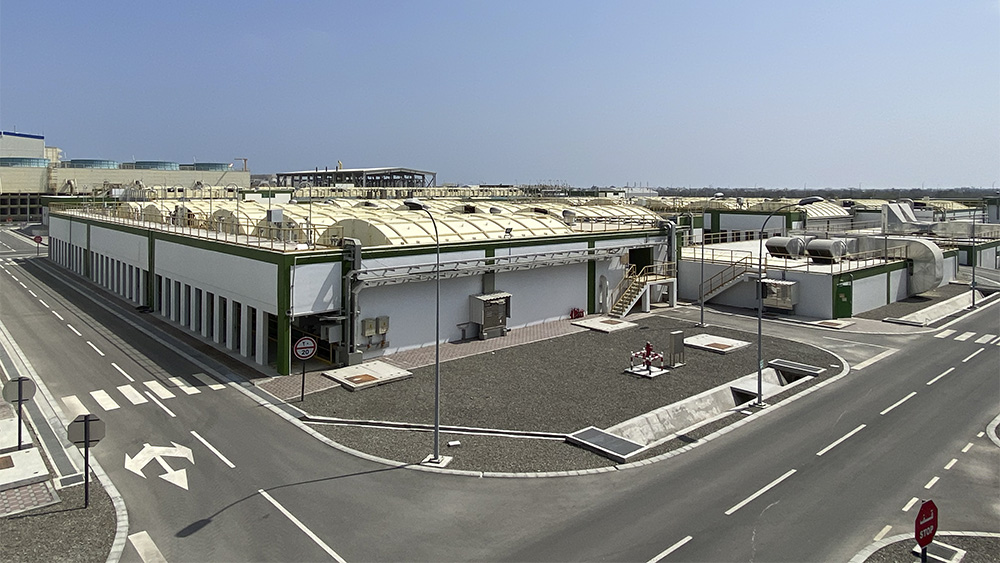
Sacyr Water has formalized the award for the design, financing, construction, and operation of the new desalination plant in Coquimbo, located in northern Chile.

This first desalination plant for human consumption in the Coquimbo region is a project promoted by the General Directorate of Concessions of Chile’s Ministry of Public Works, aimed at guaranteeing water supply in one of the areas most affected by drought in the country.

Investment and expansion

This project is the first concessioned desalination project in the country and foresees an estimated investment of $318 million. The desalination plant will have an initial capacity of 800 liters per second (l/s), with the possibility of expansion to 1,200 l/s. It will directly benefit more than 540,000 people in the communes of La Serena and Coquimbo.

The project also includes the construction of a desalinated water pipeline of approximately 20 kilometers, pumping stations, and a regulation tank, which will allow for efficient and secure distribution of the water resource.

"This initiative represents a key step in the development of resilient and sustainable infrastructure to confront the effects of climate change and water scarcity. We are proud to be awarded this project and to contribute innovative solutions that generate a positive and long-term impact on the communities," stated Lucas de Marcos de la Torre, Director of Sacyr Water in Chile.

Sacyr in Chile

Sacyr has been present in Chile since 1996 and has developed projects in its three key areas: Concessions, Engineering and Infrastructure, and Water. Currently, it operates five airports, 11 concessioned routes, seven hospitals in various stages of development, and five water treatment plants that cover the complete water cycle.

Furthermore, Sacyr Water operates a wastewater treatment plant and its subsequent commercialization in Antofagasta. There, pre-treated water from the existing Antofagasta plant, also operated by Sacyr Water, will be captured and conveyed to the Salar del Carmen area, where the new treatment plant will be located. This significantly improves regional sustainability indices and will create more than 500 jobs in the area.

With a presence in 14 of the country's 16 regions, Sacyr generates more than 4,100 direct jobs, reaffirming its commitment to sustainable development and the well-being of communities.

0 Folders
2 Documents

Artificial Intelligence to Transform Sanitation Management

VIDIA project consists of a model trained to detect, classify, and geolocate incidents within sewerage networks.

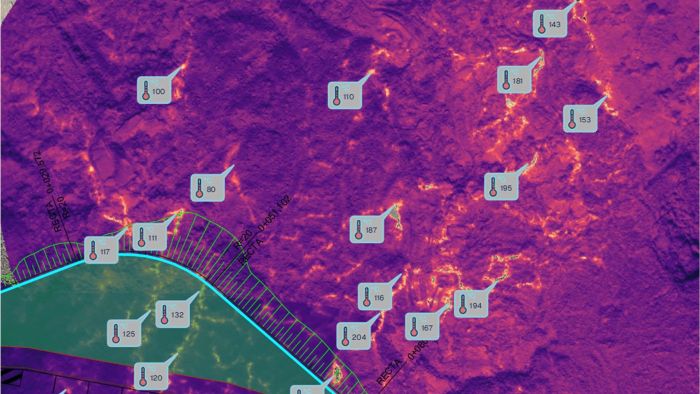
At Sacyr Water, we have a new system trained with artificial intelligence to detect damage in its collector networks. 
"We believe that AI can achieve very low error rate functionality by training a model that learns from common defects detected by the human eye, such as cracks, fissures, and blockages in the sewerage network.

This Machine Learning model helps us reduce the error rate in detecting these common defects. Additionally, Artificial Intelligence has been implemented to interpret text and generate final reports", explains Miguel Cebrián, head of digital transformation at Sacyr Water.

VIDIA is an asset intelligence platform developed by Sacyr for critical sanitation infrastructure management. 

This system transforms the traditional network inspection process into an automated, data-driven workflow. It doesn't just identify damage; it classifies it according to standardized typologies.

VIDIA utilizes generative artificial intelligence, advanced analytics, and integrated visualization, converting raw data into strategic information for decision-making. It is a tool that unifies everything: people, processes, and technology, providing a 360º view of the service. 


"First, camera footage is captured, which can be done via a drone or a robot within the sewage network. Then, this video is fed into our VIDIA system which, thanks to ML technologies, identifies images, and with Generative AI, analyzes texts and automatically generates reports," states Miguel Cebrián.

Furthermore, VIDIA is integrated with the GIS system. This means all alerts are georeferenced on a city map, allowing for the prioritization of actions in strategic or sensitive areas.

This machine learning model, trained with generative AI, has been jointly developed by Sacyr Water's technical department and the company's IT department. 

VIDIA differs from all similar systems in the water sector because it automates the entire workflow. It not only identifies damage but also contextualizes it: classifying it according to standardized typologies and precisely geolocating it within the collector.

VIDIA is positioned as a key tool to anticipate incidents, reduce operational costs, and ensure service continuity. 

"Digital transformation in sewage network management is no longer an option, but a necessity. This tool transforms a traditionally slow and costly process into an automated, intelligent, and results-oriented workflow", concludes Cebrián.

Semi-Submersible Drones: Bringing Aquatic Environments to Light

We operate a semi-submersible Uncrewed Surface Vehicle (USV) capable of collecting seabed data even in the most adverse conditions.

Understanding the seabed is key before initiating any marine construction project. Bathymetry, or detailed seabed mapping, consistently faces numerous challenges, including the inherent conditions of the sea itself.

These challenges have arisen during the Central Pier Extension, Phase 2, project at the Port of Bilbao. There, we conducted verification tests to enable operations with easily transportable semi-submersible uncrewed vehicles.

"We have innovated by installing a multibeam echosounder and a side-scan sonar on these units. Using acoustic waves, we acquire seabed elevation data," explains Alfredo Pérez, Head of Marine Works at Sacyr Engineering and Infrastructure’s Technical Services Department. Pérez was recently honored with the Natural Innovators 2025 award, a Sacyr internal program for the promotion and advancement of innovation.

"Thanks to this drone, we reduce CO2 emissions and enhance operational capability in the most unfavorable weather conditions," he explains.
"Tests have been conducted both in the open sea and within the port basin. This allows for a more thorough evaluation of the characteristics of this semi-submersible unit and enables a comparison with conventional methods," Alfredo Pérez adds.


Acoustic probes are the only ones that propagate effectively in turbid aquatic environments. This high-frequency echosounder generates a conical beam, providing a data point cloud with far more comprehensive seabed information than traditional single-beam echosounders. This point cloud is then used for data processing, interpolation, and noise reduction, ultimately rendered as contour maps for detailed seabed interpretation.

Bathymetric surveys performed with this method are compared with those obtained by conventional means, and an analysis is conducted to determine if the tolerances between both datasets are within acceptable values.

The echosounder used in Bilbao offers a scan that allows for real-time visualization of the seabed. It provides insights into the terrain's hardness and roughness and performs side scans for object detection. Its measurements can be taken in environments up to four times more challenging than those supported by conventional methods.

"In the future, our goal is to expand the inner data cone to 160 degrees. We also plan to install an antenna on the echosounder to use an airborne bathymetric lidar, which would provide both terrestrial and marine data in a single operation. This way, we will have complete terrain profiles, overlapping both the marine and terrestrial sections," says Alfredo.

S&P Global Ratings

Sustainalytics ESG Top Rated

Carbon Disclosure Project

Annual General Meeting

The 2025 Annual General Meeting will be held on June 11th, 2025, at 12:00 h, on first call or, if the necessary quorum is not reached, on second 
call, at the same place and time, on the following June 12th 2025.

The 2025 AGM is expected to be held on the second call.

You can watch the 2025 Annual General Meeting livestreamed at the following link.

0 Folders
4 Documents

This website uses its own and third-party cookies to improve the user experience and analyze their behavior in order to improve the service offered.
You can consult additional information about the cookies installed on our Cookies policy.

Cookie Settings

Cookie declaration

TECHNIQUES

These cookies are exempt from compliance with article 22.2 of the LSSI in accordance with the recommendations indicated by the European authority on privacy and cookies. In accordance with the above and although configuration, acceptance or denial is not possible, the editor of this website offers information about them in an exercise of transparency with the user.

  • Name: LFR_Session_STATE_*, Provider: Liferay, Purpose: Manages the session as a registered user , Expiration: Session, Type: HTTP

  • Name: GUEST_LANGUAGE_ID, Provider: Liferay, Purpose: Determines the language with which you access , to show the same in the next session, Expiration: 1 year, Type: HTTP

  • Name: ANONYMOUS_USER_ID, Provider: Liferay, Purpose: Manages the session as an unregistered user , Expiration: 1 year, Type: HTTP

  • Name: COOKIE_SUPPORT, Provider: Liferay, Purpose: Identifies that the use of cookies for the operation of the portal, Expiration: 1 year, Type: HTTP

  • Name: JSessionID, Provider: Liferay, Purpose: Manages login and indicates who is using the site, Expiry: Session, Type: HTTP

  • Name: SACYRGDPR, Supplier: Sacyr, Purpose: Used to manage the cookie policy , Expiration: Session, Type: HTTP