Ladrillos que transforman residuos en construcción sostenible

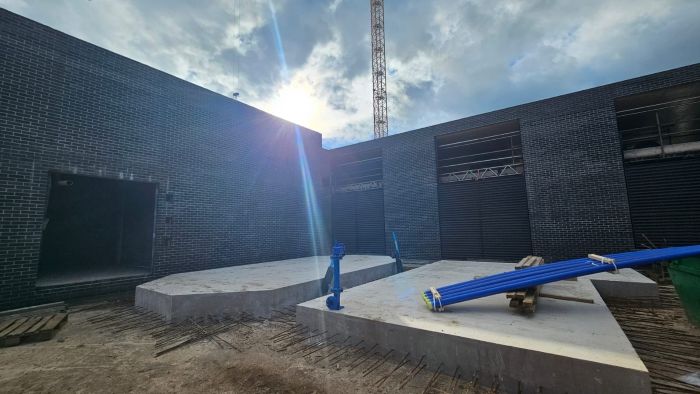
Utilizamos una solución innovadora de ladrillos elaborados con residuos de construcción para edificar el Hospital de Velindre (Gales), uno de los más sostenibles del Reino Unido.  

Estamos incorporando una solución pionera en la construcción del nuevo Velindre Cancer Centre de Cardiff (Gales, Reino Unido): ladrillos creados con residuos de construcción.  

La firma escocesa Kenoteq ganó en 2023 nuestro programa de innovación abierta, Sacyr iChallenges. De la colaboración entre ambos nació el ladrillo K-Briq, que ahora ayuda a Velindre a ser uno de los hospitales más sostenibles del Reino Unido.

“Esta tecnología desarrollada para impulsar la economía circular ha encontrado una aplicación real en un proyecto emblemático de Sacyr”, explica Vincenzo Nigro, Technical Manager del Velindre Cancer Centre. 

El hospital incorporará alrededor de 1.000 m² de estos ladrillos de baja huella de carbono, lo que equivale a unas 60.000 unidades y más de 151 toneladas de material.


“Lo que hace especialmente innovador al K-Briq es su composición. Estos ladrillos están fabricados con más del 90% de residuos reciclados procedentes de la construcción y demolición, lo que evita el uso de nuevas materias primas”, añade Vincenzo.

Su proceso productivo elimina la cocción tradicional de los ladrillos cerámicos, reduciendo de forma drástica la energía necesaria para su fabricación y situando su huella de carbono por debajo del 5% de la de un ladrillo convencional. 

Sus prestaciones han sido verificadas mediante ensayos realizados conforme a diversos estándares británicos y europeos y cuentan con el respaldo del BBA Agrément Certificate 25/7367.

Estos ensayos acreditan aspectos como su resistencia mecánica, su comportamiento frente al fuego, su durabilidad y su resistencia a la humedad, lo que confirma su aptitud para el uso en construcción. Además, los ladrillos mantienen sus prestaciones incluso tras ciclos de hielo y deshielo, un aspecto crítico para su uso en el Reino Unido.


En el Velindre Cancer Centre, los ladrillos se instalarán en el Service Yard, en el área de instalaciones y en la de Facility Management. Su uso tendrá un impacto significativo en la sostenibilidad global del proyecto.

“Ejemplos como este demuestran que la innovación abierta es una herramienta clave para acelerar la transformación sostenible de la construcción. Permite identificar, validar e incorporar soluciones que reducen el impacto ambiental de la construcción sin comprometer las prestaciones técnicas”, concluye Vincenzo.


Driving more sustainable pavement solutions

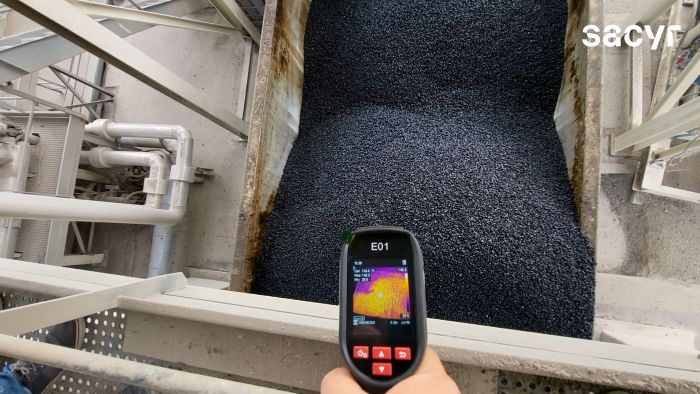
On the Eresma Expressway (A-601) in Segovia, we used recycled material from the road surface that we removed to renew the wearing course. The project incorporates 30% milled material.

Sacyr Concesiones is putting circular pavement maintenance to the test on the Autovía del Eresma (A-601). Along a one-kilometer stretch, the concessionaire has reused milled asphalt from the existing roadway as feedstock for a new surface course.

The paving works incorporate 30% reclaimed asphalt pavement (RAP) from the highway’s aged wearing course into the new bituminous mix—double the 15% currently recommended by regulations for this type of layer.

A field test with long-term potential

The pilot section, located between kilometer markers 81 and 82 in direction to Segovia, is designed to prove that today’s recycled asphalt technology can increase RAP content in surface mixes without compromising ride quality, durability or overall pavement performance.

“On this pilot section, we are cutting the amount of virgin aggregate needed in the mix,” said Miguel Ángel Moreno, from Sacyr Concesiones’ Pavements Department. “We also reduce material sent to landfill and lower the carbon footprint associated with asphalt production,” he added.

The trial will allow the team to track the mix in service, monitor its long-term behavior and assess whether the approach can be scaled to future maintenance campaigns.

“We want to see how this mix holds up in the field and whether the solution is sustainable, technically viable and cost-effective over time,” said Ángel Delgado, manager of the Autovía del Eresma.


Technology and collaboration drive the pavement trial

The recycled asphalt mix—a BBTM 11B gap-graded surface mix with 30% RAP—was manufactured at Padecasa’s plant in Aldeavieja, Ávila.

The project brings together the Regional Government of Castile and León, Sacyr’s Pavements Department, Sacyr Concesiones’ Innovation team and Padecasa. It builds on a 2024 test section that used 15% RAP, the maximum share currently recommended for this type of wearing course.

The initiative supports circular economy targets and aligns with Castile and León’s regulatory framework, which requires at least 3% of aggregates used in pavement rehabilitation works to come from recycled materials.

With pilots like this, Sacyr continues to test lower-impact road maintenance solutions that conserve natural resources, reduce waste and support more sustainable infrastructure management.
 

Results Presentation

Consult and download all the presentation of results from recent years, published in the National Securities Market Commission (CNMV).


The 9M 2026 results presentation will be held on 4th November 2026 at 12:00 CET.

To access the webcast click here.

9M 2026 Results Presentation

2025

Sacyr's 9M 2026 Results Presentation will be held on November 4th, 2026 at 12:00h CET.

Access to streaming. 

New Award Turin Health Complex

Italy: strategic market

SIS, a consortium comprising Fininc and Sacyr, will build and manage this project for 25 years, which will require an investment of €517 million. More info

Lousiana I-10 highway awarding. 

USA Strategic Market

A world-class consortium comprised of Sacyr, Acciona and Plenary Americas have signed a P3 project to design, build, finance, operate and maintain for 50 years the construction and improvement of a 10-km-long stretch including a new bridge. More info

Northern Chile Airport Network

Chile

The contract covers the operation and expansion of the Antofagasta and Atacama airports. This P3 calls for an investment of €266 million and has a concession term of 26 years. More info.

Peripherical Ring Road

Peru

We are developing a major 34.8 km urban motorway that will improve Lima's connectivity. The concession includes the design, financing, construction, management and maintenance of the road. More info.

  • Infrastructures

Pumarejo Bridge, an Icon of Barranquilla

In the tenth installment of our series on Sacyr’s 40th anniversary, we travel to Barranquilla (Colombia), where Natalia Ramos and David Ordín help us look back on the construction of the Pumarejo Bridge, one of the most iconic infrastructure projects in our history.

Measuring 3.2 kilometers long and 38 meters wide, the Pumarejo Bridge is the widest cable-stayed bridge in Latin America. Its construction posed a significant technical challenge and required the use of innovative solutions, such as a large-scale self-climbing formwork system, which enabled the structure to be built while maintaining high standards of safety, quality, and efficiency.

Spanning the Magdalena River, this structure has become a symbol of Barranquilla and the Colombian Caribbean, improving mobility and connectivity while contributing to the region’s economic development.

The Pumarejo Bridge is a testament to engineering, but also to the talent, innovation, and commitment of our professionals. It is a project that reflects our ability to tackle major challenges and build infrastructure that connects regions, creates opportunities, and leaves a lasting legacy.

Four decades after our founding, we continue to celebrate the projects and, above all, the people who have made these 40 years of Sacyr possible.
 

3.2

kilometers

long

38

meters

wide

Featured projects
3.2

kilometers

long

38

meters

wide

0 Subfolders
2 Articles
0 Folders
2 Documents

When Engineering Is the First Line of Defense Against Fire

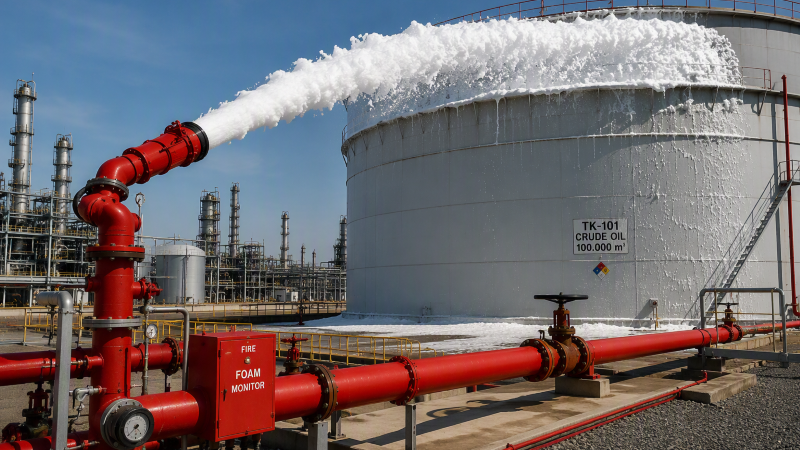
In this article, our colleague Nicolás Araúzo explains that in an industrial plant, fire protection does not begin when a pump, a network of fire hydrants, or a detection system is installed; rather, it is designed from the very beginning of the project.

Nicolás Araúzo Alemany
Senior HSE Engineer and Fire Protection Systems Specialist


In an industrial plant, fire protection doesn’t begin when a pump, a network of fire hydrants, or a detection system is installed. It begins much earlier, at the design table.

The safety of a facility depends largely on the decisions made in the early stages of a project, when engineers analyze risks, understand the process, and coordinate each element so that it functions as an integrated system.

In sectors such as energy, the chemical industry, or Oil & Gas—where any incident can have significant consequences for people, assets, and operational continuity—having a well-designed fire protection strategy is essential.

Engineering offers a unique advantage: it is the only discipline that has a comprehensive view of the project and detailed knowledge of the process, from operating conditions to the most demanding emergency scenarios.

An effective fire protection system isn’t simply installed—it’s designed from the very beginning of the project.

The key lies in anticipation. Thanks to access to technical information such as process flow diagrams (PFDs and P&IDs), fluid characteristics, and risk analyses, engineering teams can define solutions tailored to the actual needs of each facility. This approach allows vulnerabilities to be identified from the outset and measures to be taken that improve the safety and reliability of the entire system.


Another major strength of engineering is its ability to integrate disciplines. Fire protection systems are closely related to areas such as processes, piping, electrical systems, instrumentation, and civil engineering. When all these disciplines work in a coordinated manner from the earliest stages, interference, subsequent modifications, and costs associated with on-site changes are reduced.

Fire protection cannot be approached as an isolated element. Its success depends on coordination across disciplines and on understanding how each system interacts within the facility.

In addition to improving safety, a rigorous design helps optimize the facility’s entire life cycle. The application of recognized international standards, such as NFPA, along with specialized certifications like FM or VdS, helps reduce failures, minimize unplanned interventions, and facilitate maintenance through the use of standardized equipment. It can also lead to better insurance terms and greater long-term operational resilience.

Experience shows that many of the most costly problems arise when fire protection is not properly incorporated from the design phase. This article describes the case of a facility where, during commissioning, it was discovered that certain critical pieces of equipment had not been included in the protection system. Correcting this issue required resizing key infrastructure and rethinking part of the fire suppression strategy just a few weeks before the plant was scheduled to begin operations.

Designing correctly from the start not only reduces costs; it also protects people and enhances the reliability of facilities throughout their entire service life.

Because, ultimately, fire protection is not merely a matter of regulations or technology. It is a strategic decision that begins with engineering and has an indispensable goal: to ensure the safety of people and infrastructure when they need it most.
 

Members of the Corporate Governance, Appointments and Remuneration Committee
Name Role
Elena Jiménez de Andrade Astorqui Chairwoman
Demetrio Carceller Arce Director
José Manuel Loureda Mantiñán Director
Susana del Castillo Bello Director
María Elena Monreal Alfageme Director
Ana María Sala Andrés Secretary
Alfonso Aguirre Díaz-Guardamino Vicesecretary
Members of the Audit and Sustainability Committee
Name Position
José Joaquín Güell Ampuero Chairman
María Jesús de Jaen Beltrá Director
Luis Javier Cortés Domínguez Director
Elena Gómez del Pozuelo Director
Elena Jiménez de Andrade Astorqui Vocal
Ana María Sala Andrés Secretary
Alfonso Aguirre Díaz- Guardamino Vice secretary

This website uses its own and third-party cookies to improve the user experience and analyze their behavior in order to improve the service offered.
You can consult additional information about the cookies installed on our Cookies policy.

Cookie Settings

Cookie declaration

TECHNIQUES

These cookies are exempt from compliance with article 22.2 of the LSSI in accordance with the recommendations indicated by the European authority on privacy and cookies. In accordance with the above and although configuration, acceptance or denial is not possible, the editor of this website offers information about them in an exercise of transparency with the user.

  • Name: LFR_Session_STATE_*, Provider: Liferay, Purpose: Manages the session as a registered user , Expiration: Session, Type: HTTP

  • Name: GUEST_LANGUAGE_ID, Provider: Liferay, Purpose: Determines the language with which you access , to show the same in the next session, Expiration: 1 year, Type: HTTP

  • Name: ANONYMOUS_USER_ID, Provider: Liferay, Purpose: Manages the session as an unregistered user , Expiration: 1 year, Type: HTTP

  • Name: COOKIE_SUPPORT, Provider: Liferay, Purpose: Identifies that the use of cookies for the operation of the portal, Expiration: 1 year, Type: HTTP

  • Name: JSessionID, Provider: Liferay, Purpose: Manages login and indicates who is using the site, Expiry: Session, Type: HTTP

  • Name: SACYRGDPR, Supplier: Sacyr, Purpose: Used to manage the cookie policy , Expiration: Session, Type: HTTP